Animal Classification Normal Animals Worksheets for Ages 4-6
4 filtered results
-
From - To
Discover our "Animal Classification Normal Animals Worksheets" designed specifically for ages 4-6! These engaging and interactive worksheets introduce young learners to the fascinating world of animal classification. Children will explore various categories such as mammals, birds, reptiles, and more through fun activities. Each worksheet encourages critical thinking and helps enhance essential skills like sorting, matching, and identification. Perfect for homeschooling or classroom use, these worksheets cater to early childhood education, making learning enjoyable and accessible. Foster curiosity about nature while developing foundational scientific knowledge. Enrich your child's learning journey with our carefully curated resources to inspire a love for animals!
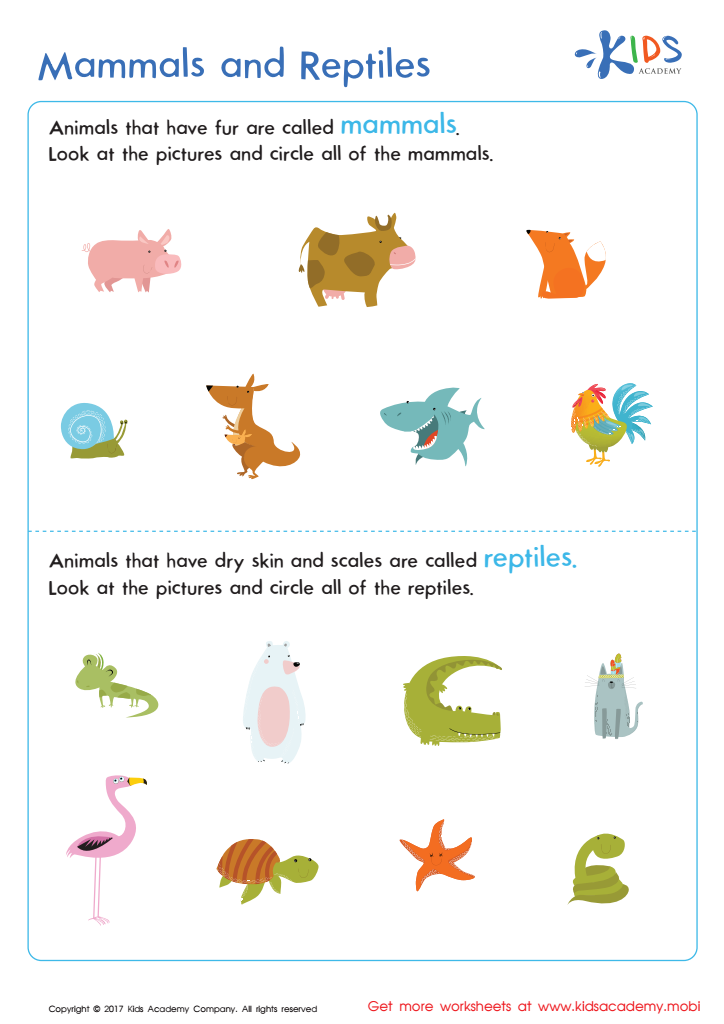
Mammals and Reptiles Worksheet
 Assign to My Students
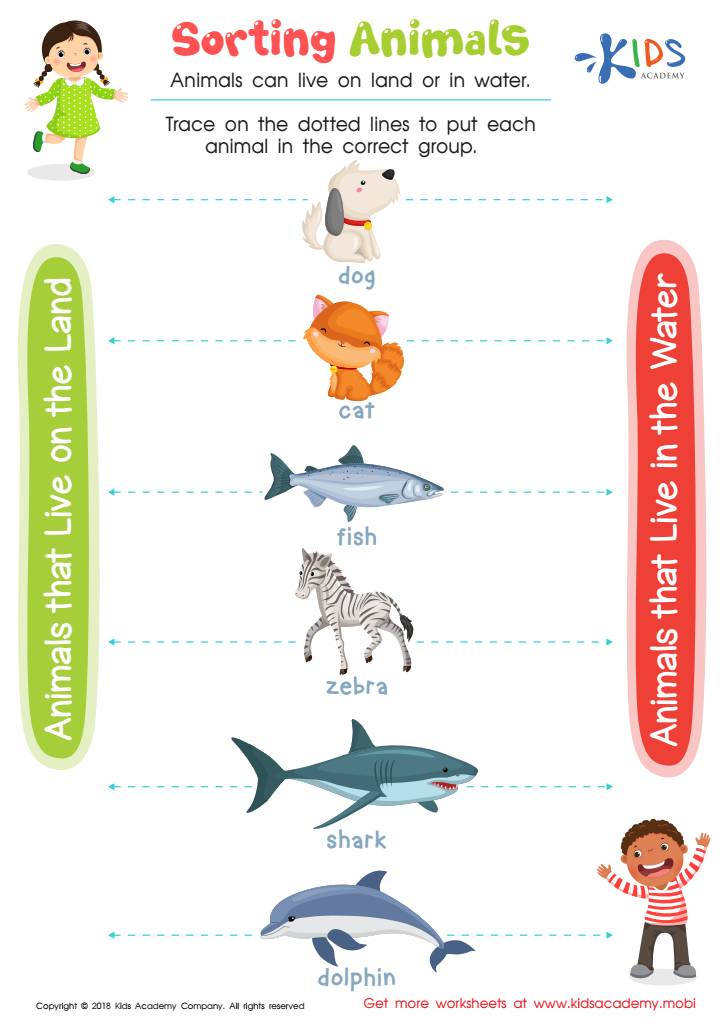
Sorting Animals Worksheet
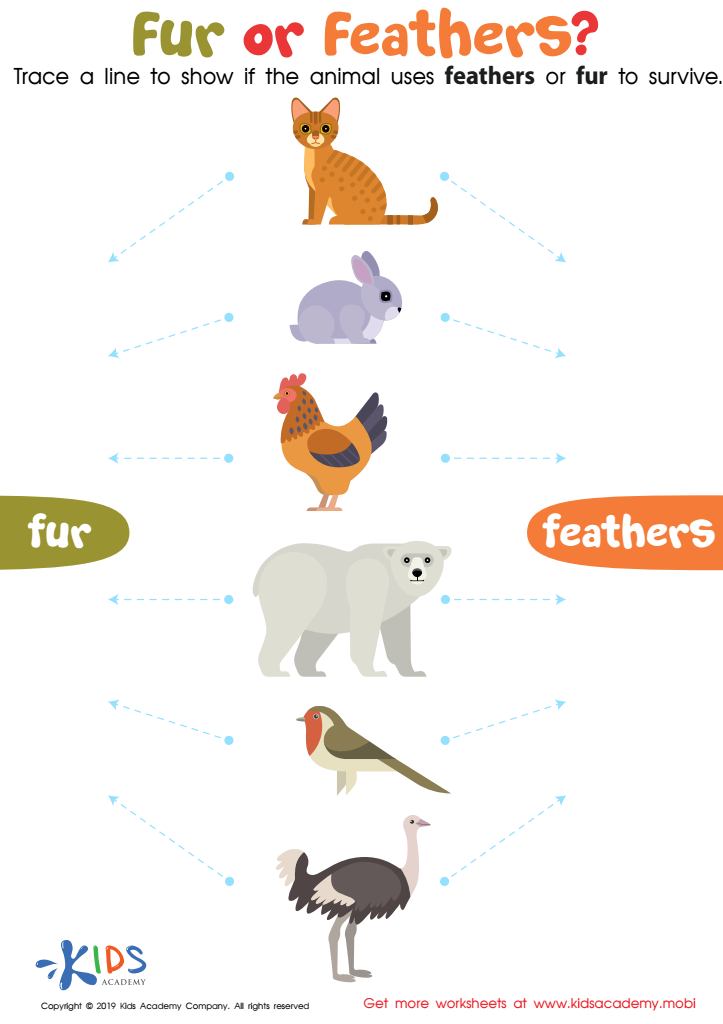
Fur or Feathers? Worksheet
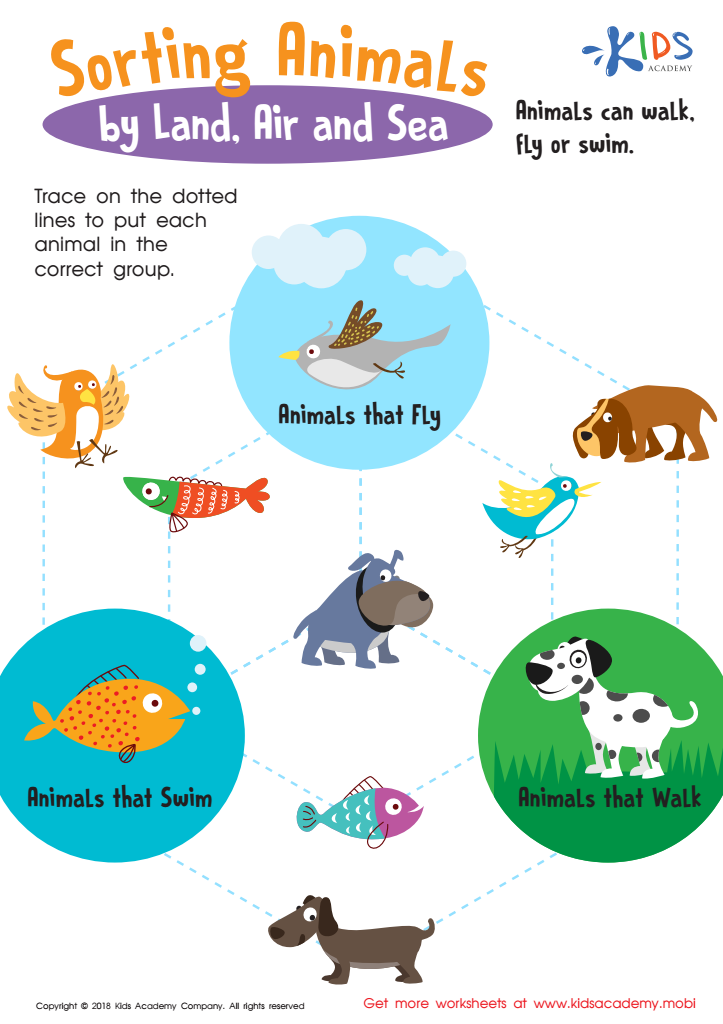
Sorting Animals by Land, Air and Sea Worksheet





Animal classification is essential for young learners aged 4-6 as it lays the groundwork for understanding the diversity of the natural world. By teaching children how animals are categorized—such as mammals, birds, reptiles, amphibians, and fish—parents and teachers nurture curiosity, critical thinking, and observational skills. This foundational knowledge helps children recognize patterns and relationships in nature, fostering a sense of connection to the environment.
At this age, kids are naturally inquisitive, and exploring animal classification allows them to engage with their surroundings meaningfully. It promotes discussions about habitats, diets, and behaviors, providing a rich context for language development. Moreover, learning about animals can introduce concepts of empathy and conservation, encouraging children to care for living creatures and understand their ecosystems.
By integrating animal classification into everyday learning, adults can encourage play-based exploration, using songs, stories, and hands-on activities. This method not only makes learning fun but also reinforces memory retention. In essence, introducing children to the concept of animal classification helps build their knowledge base while promoting an appreciation for life science, critical for their academic growth and development. Engaging with animals in this way can foster lifelong interests in science and environmental stewardship.








