Animal recognition Normal Science Worksheets for Ages 4-6
4 filtered results
-
From - To
Discover the exciting world of animal recognition with our Normal Science Worksheets designed for ages 4-6! These engaging printable worksheets help young learners identify various animals while developing essential cognitive and observational skills. Featuring vibrant illustrations and interactive activities, children will explore different animal habitats, characteristics, and behaviors in a fun and engaging way. Perfect for teachers and parents, these worksheets not only enhance scientific understanding but also encourage creativity and critical thinking. Support your child’s early education journey with our thoughtfully crafted Animal Recognition worksheets, making learning a delightful adventure into the animal kingdom! Download and start exploring today!
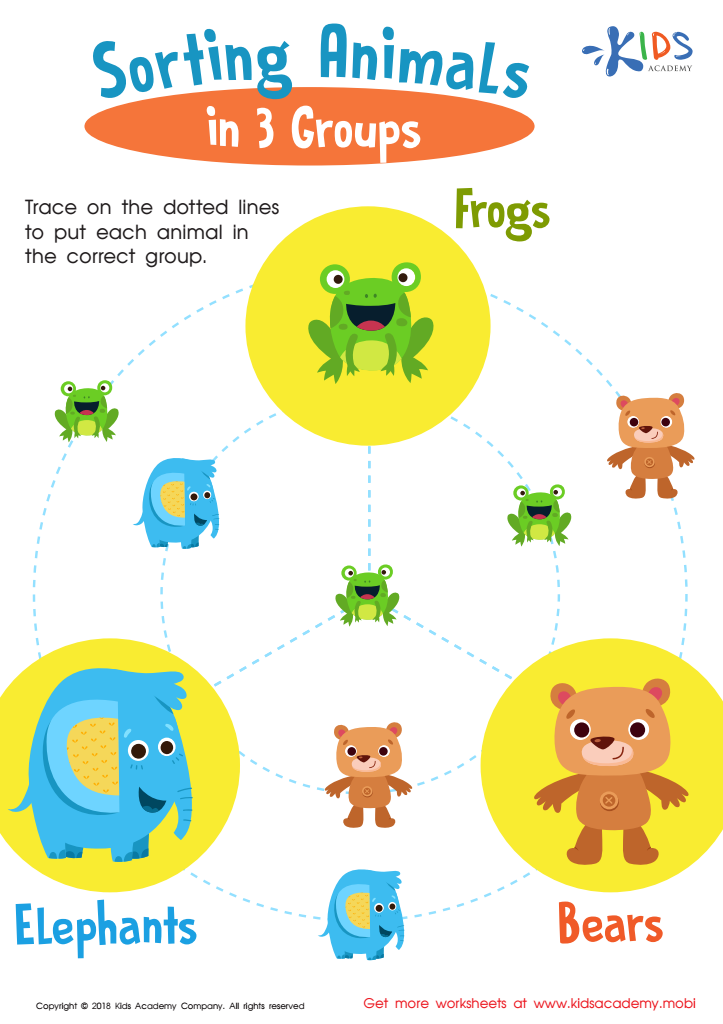
Sorting Animals in 3 Groups Worksheet
 Assign to My Students
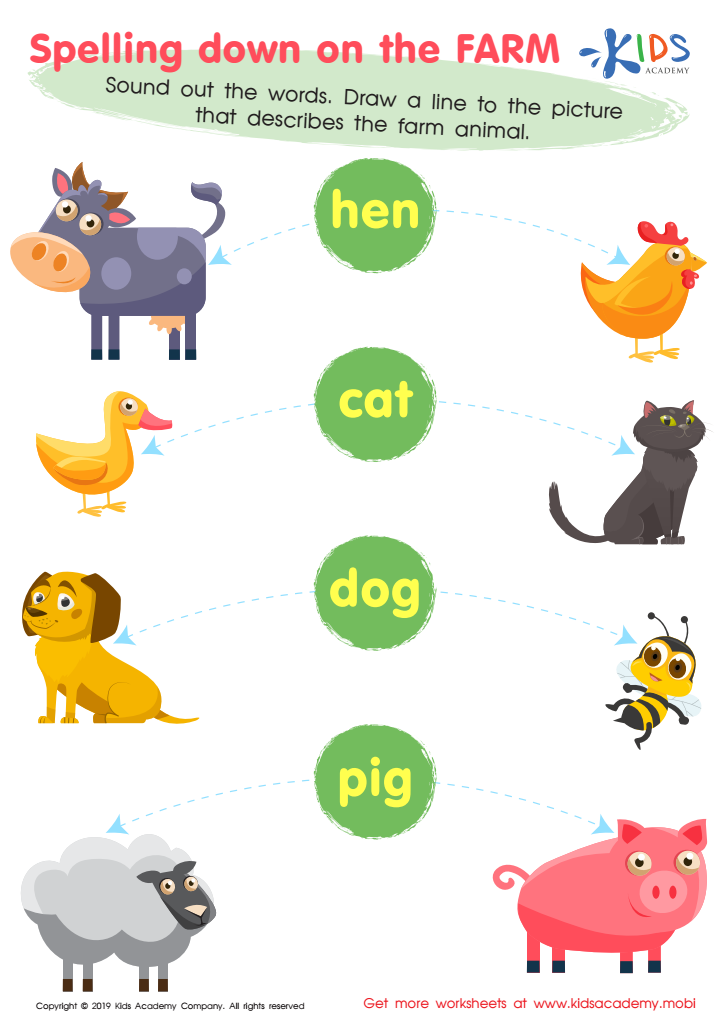
Spelling Down on the Farm Worksheet
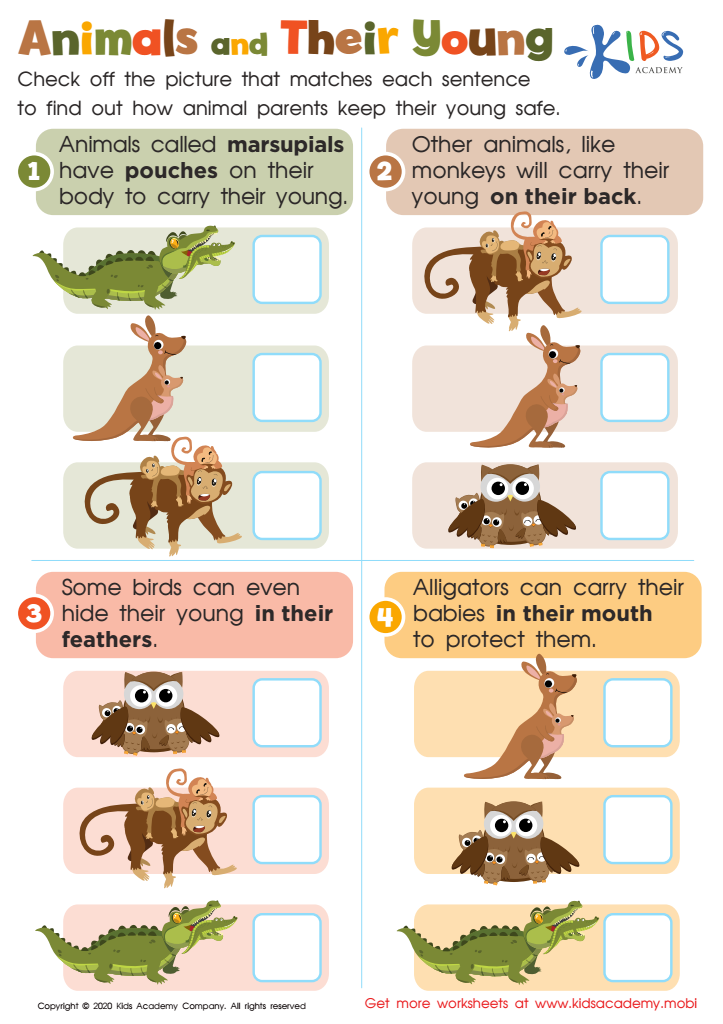
Animals and Their Young Worksheet
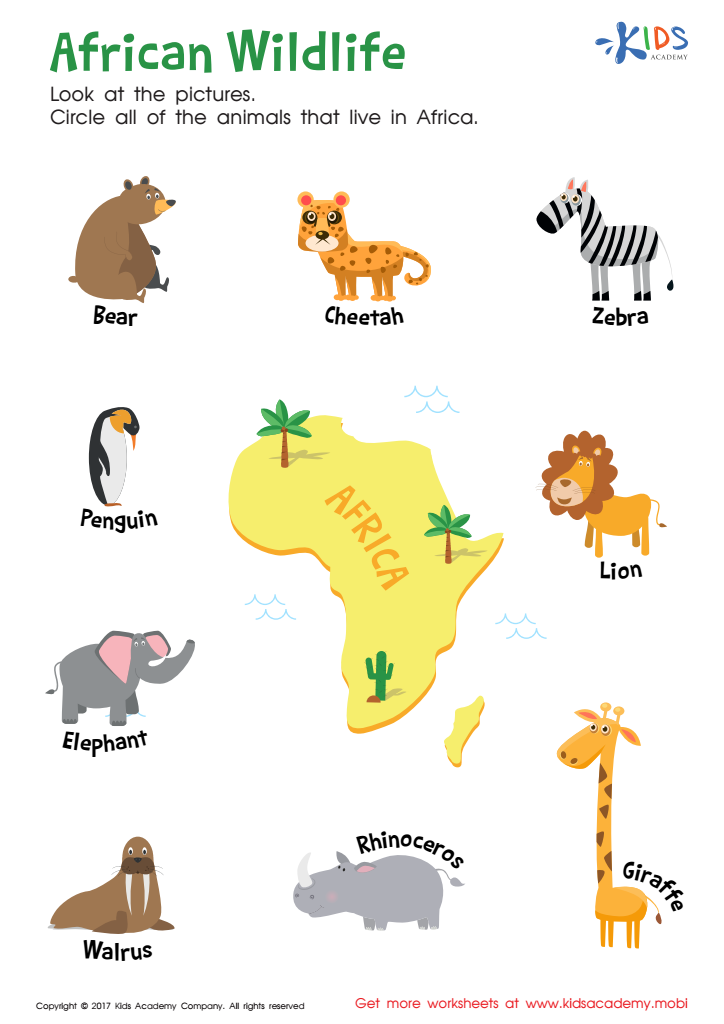







.jpg)
Animal recognition is a critical aspect of early childhood education that significantly impacts children's development. For parents and teachers, fostering this skill in children aged 4-6 provides numerous benefits. First, recognizing animals enhances cognitive development as children learn to identify and categorize different species, fostering pattern recognition and critical thinking.
Moreover, animal recognition helps in expanding vocabulary, as children learn the names of various animals, their habitats, and characteristics. This expansion of language contributes to better communication skills, laying the foundation for future literacy.
Furthermore, introducing children to animals through engaging activities creates emotional connections and promotes empathy. Children begin to understand the roles animals play in ecosystems and their importance to our world, encouraging a sense of stewardship and responsibility toward the environment.
In addition, animal recognition can also serve as a playful way to enhance social skills. Group activities involving identification or discussions about animals encourage teamwork, communication, and respect for peers’ opinions.
Overall, prioritizing animal recognition is essential for holistic development, making it a vital focus for parents and teachers in early education settings. This foundational knowledge not only captivates young learners but also nurtures their curiosity and love for the natural world.







