Critical thinking development Normal Science Worksheets for Ages 4-6
3 filtered results
-
From - To
Nurture your child's cognitive growth with our "Critical Thinking Development Normal Science Worksheets for Ages 4-6". Tailored for young learners, these fun and engaging activities encourage exploration and analytical skills through age-appropriate science challenges. Our carefully designed worksheets promote curiosity, problem-solving, and logical reasoning, laying a strong foundation for future academic success. Each exercise is crafted to be enjoyable, making learning an adventure that ignites a love for science. Perfect for at-home use or supplemental classroom activities, these worksheets are a great tool to support early childhood education and development. Start developing essential critical thinking skills today!
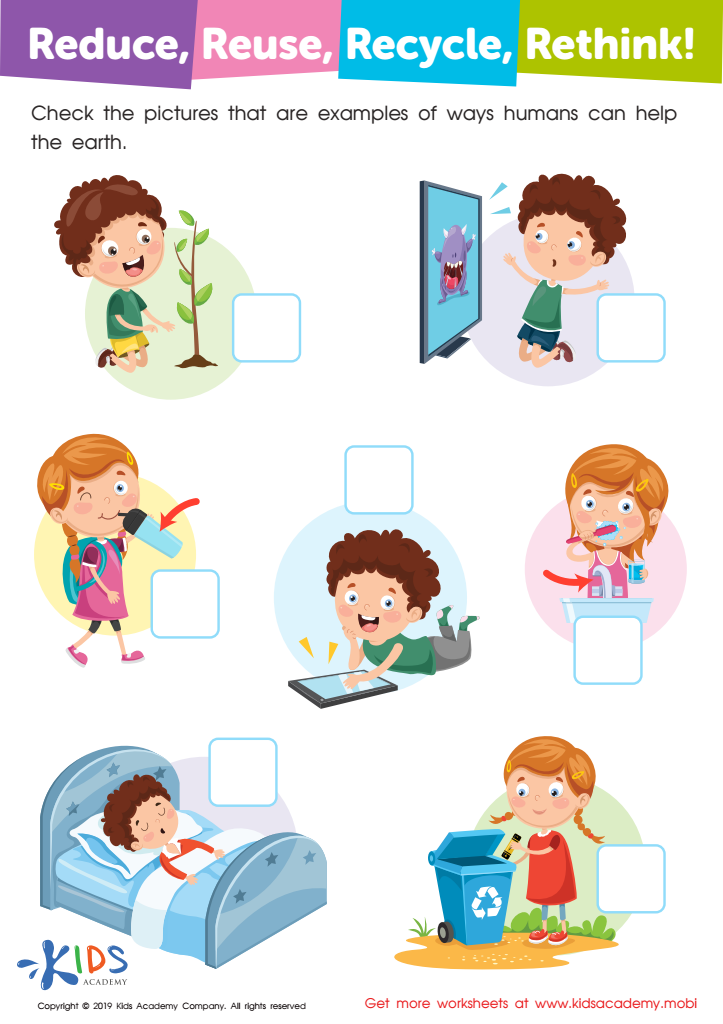
Reduce, Reuse, Recycle, Rethink Worksheet
 Assign to My Students

Lights for Safety Worksheet
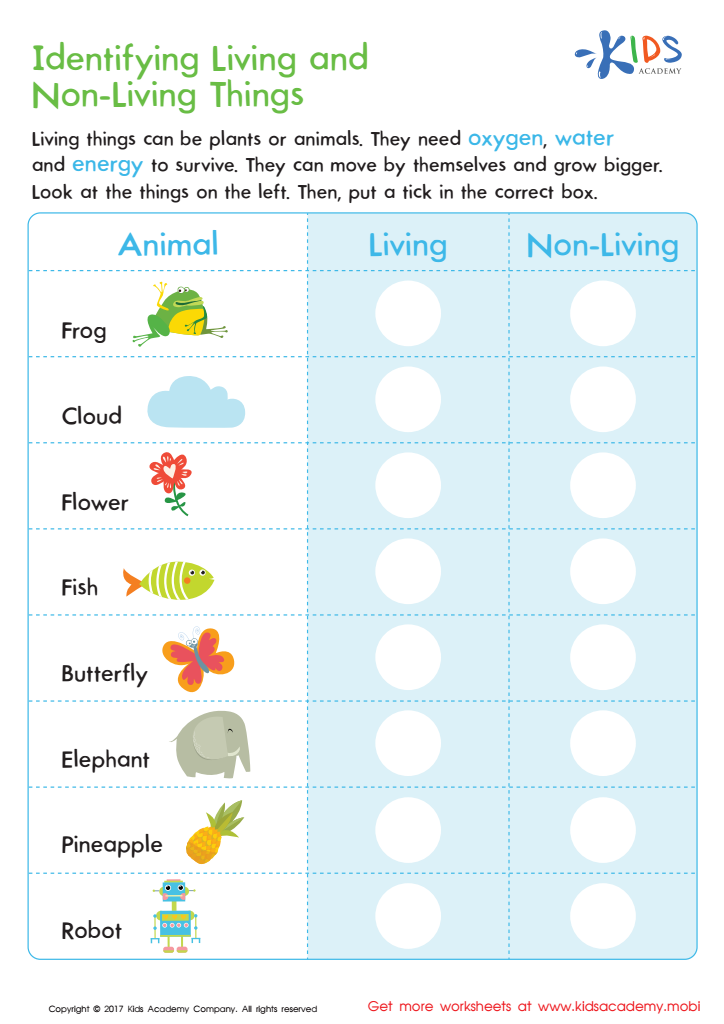
Identifying Living or Non–living Worksheet






.jpg)

Critical thinking and normal science development are important skills for young children, ages 4-6, to cultivate as they lay the foundational blocks for future learning. Parents and teachers should care about fostering these abilities because they are essential for cognitive development and lifelong learning.
For one, critical thinking encourages children to analyze situations, make decisions, and solve problems creatively and independently. These skills are applicable across all areas of learning and in everyday life. When a child learns to question, reason, and problem-solve, they become more adept at handling complex thoughts and tasks later on. Encouraging critical thinking from a young age helps children to develop resilience and adaptability, essential traits in an ever-changing world.
Secondly, normal science activities, such as simple experiments and exploration, introduce children to the scientific method – observation, hypothesis formation, experimentation, and conclusion. These activities naturally spark curiosity and allow children to engage with the world around them. By fostering a scientific mindset, children learn to take an evidence-based approach to understanding their surroundings. It helps in nurturing an early interest in STEM (Science, Technology, Engineering, and Mathematics) fields, which are crucial in today's increasingly technology-oriented society.
Together, these forms of development support each other, creating a well-rounded, inquisitive, and capable child who is prepared for future educational challenges. Parents and teachers play a crucial role in creating nurturing environments that inspire children to think critically and explore the natural world, ultimately setting them up for success.







