Science knowledge Normal Science Worksheets for Ages 4-6
3 filtered results
-
From - To
Discover our engaging Science Knowledge Normal Worksheets designed for children ages 4-6! These interactive resources introduce young learners to fundamental scientific concepts through fun and age-appropriate activities. From exploring the wonders of nature to understanding basic physics, our worksheets facilitate curiosity and foster a love for science. Each worksheet encourages critical thinking, creativity, and problem-solving skills while aligning with early childhood education standards. Perfect for classroom settings or home learning, these worksheets provide a hands-on approach to learning that captivates young minds. Unlock a world of discovery and inspire future scientists with our carefully crafted science worksheets today!
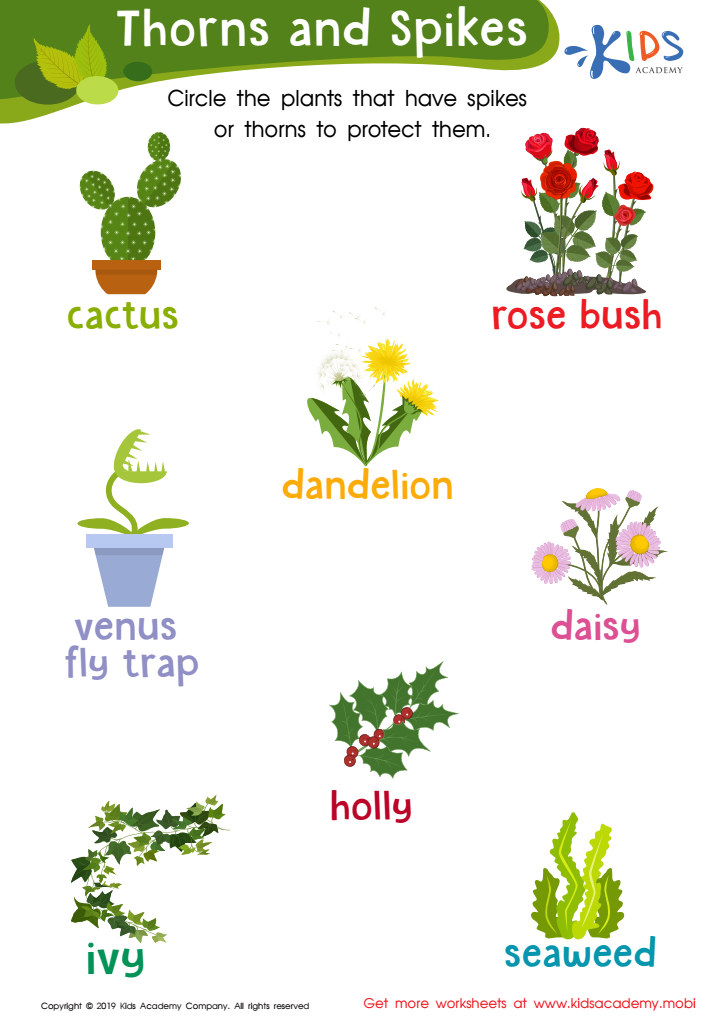
Thorns and Spikes Worksheet
 Assign to My Students
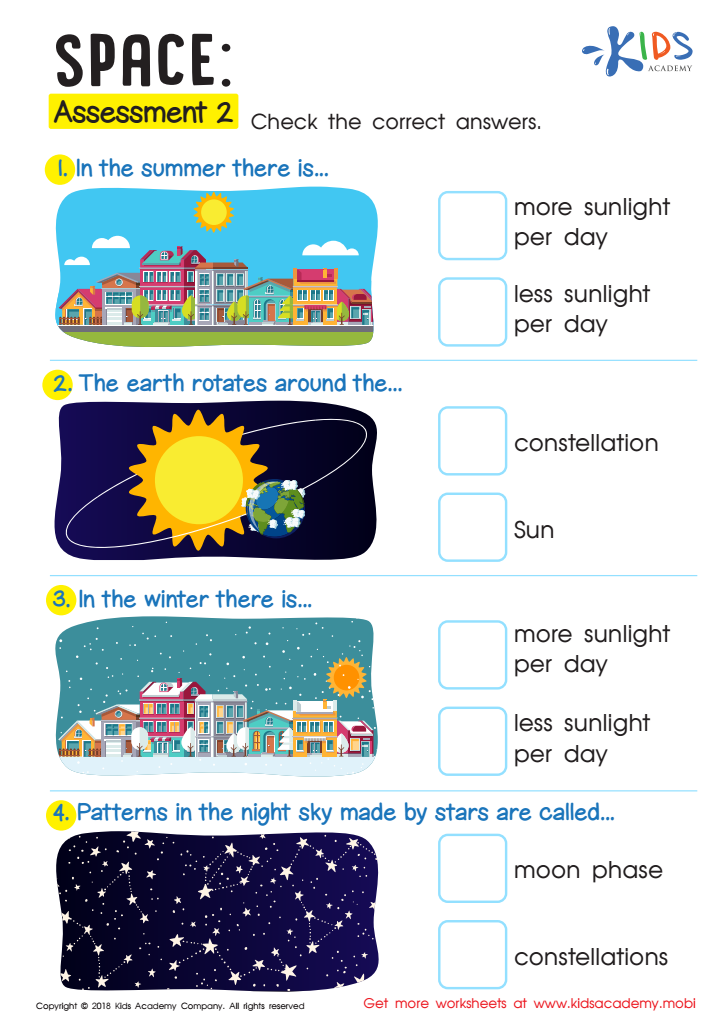
Space: Assessment 2 Worksheet







Parents and teachers should care about science knowledge for children ages 4-6 because it lays the foundational skills for critical thinking, curiosity, and problem-solving. Early exposure to scientific concepts fosters a sense of wonder about the world, encouraging kids to ask questions and seek answers. Normal science at this age isn't about memorizing facts; it focuses on exploration and hands-on experiences that cultivate inclinations to observe, experiment, and hypothesize.
At this developmental stage, children's cognitive abilities are rapidly growing. Engaging them in simple scientific activities—like observing insects, conducting basic experiments, or discussing the weather—enhances their language skills and boosts their emotional intelligence. Moreover, integrating science into play helps solidify concepts through practical understanding rather than passive learning.
Additionally, instilling a love for science early on serves to combat the misconceptions that science is difficult or unapproachable. It builds confidence in their abilities to engage with scientific topics in the future. Moreover, as these children mature, a strong foundation in science can lead to increased interest in STEM (Science, Technology, Engineering, and Mathematics) careers, contributing to a well-rounded and informed society. Thus, nurturing science learning from a young age is vital for both individual development and broader societal progress.







