Space knowledge Normal Science Worksheets for Ages 4-6
3 filtered results
-
From - To
Discover the wonders of the universe with our Space Knowledge Normal Science Worksheets, specifically designed for young explorers ages 4-6! These captivating worksheets introduce foundational concepts of space, including planets, stars, and the solar system, through engaging activities that promote learning and curiosity. Ideal for parents and teachers, our resources combine fun illustrations with simple exercises to enhance kids' understanding of the cosmos. Each worksheet is tailored to support early developmental skills, encouraging little learners to ask questions and explore further. Ignite your child's passion for science and the universe with our thoughtfully crafted space-themed worksheets today!
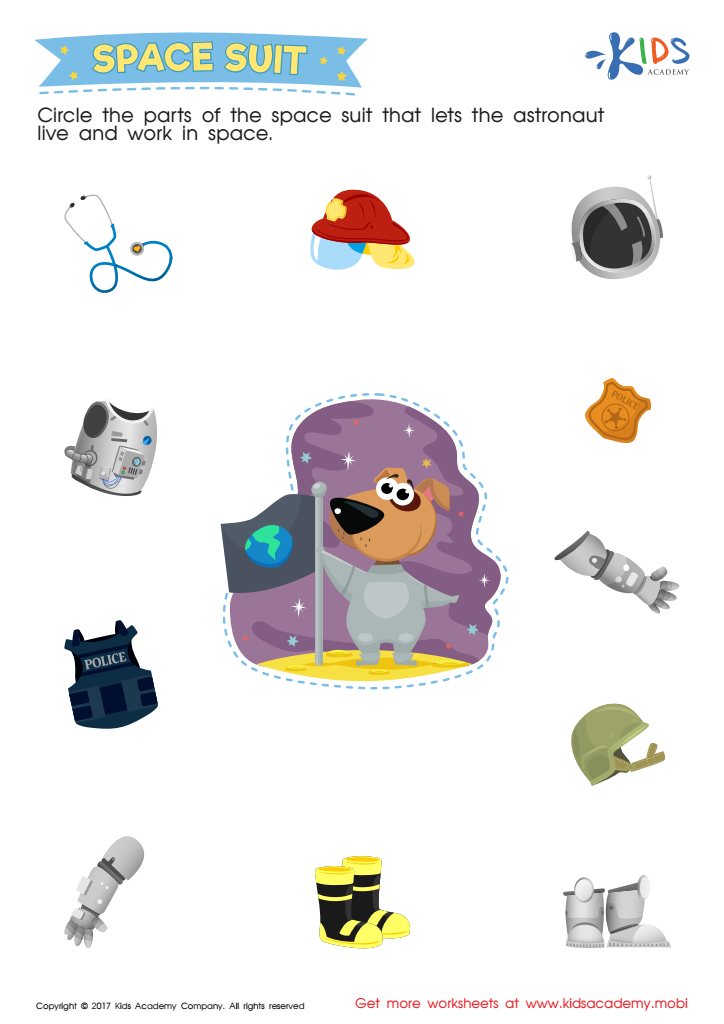
 Assign to My Students
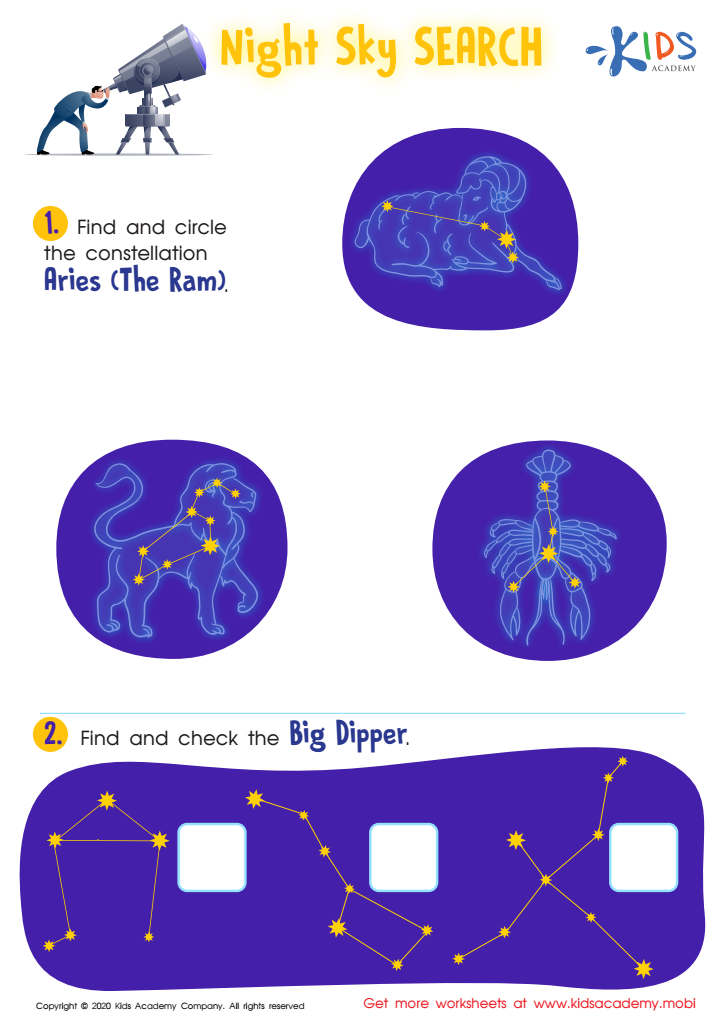
Night Sky Search Worksheet
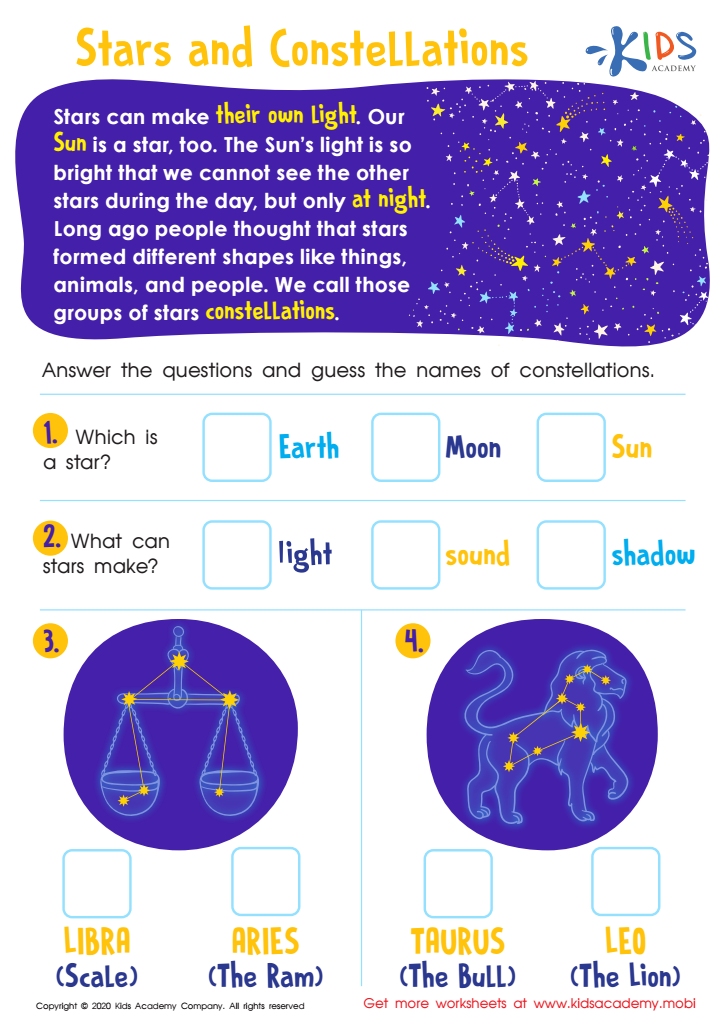
Stars and Constellations Worksheet








Parents and teachers should prioritize Space knowledge as part of Normal Science for children ages 4-6 for several compelling reasons. First, introducing young learners to concepts about space fosters curiosity and awe about the universe, igniting a passion for exploration and learning. At this age, children are naturally inquisitive, and discussing celestial bodies like the Sun, Moon, and stars captivates their imagination, making learning enjoyable.
Early exposure to space concepts supports the development of critical thinking skills. Children begin to ask questions about their surroundings, promoting inquiry-based learning and enhancing problem-solving abilities. Understanding basic astronomical concepts lays the foundation for more advanced scientific learning in later years.
Additionally, teaching space creates opportunities to discuss relevant themes such as community, collaboration, and the importance of environmental stewardship on Earth, contrasting our planet with the vastness of space. These discussions can nurture an appreciation for our world and the need to protect it.
Finally, engaging with topics in space science can encourage inclusivity in the STEM fields, sparking interest in subjects where traditionally underrepresented groups can see themselves as future scientists. By prioritizing space knowledge early on, parents and teachers can inspire the next generation to explore the mysteries of the universe!







