Observational skills Normal Space Worksheets for Ages 4-6
3 filtered results
-
From - To
Enhance your child's observational skills with our engaging "Observational Skills Normal Space Worksheets" designed specifically for ages 4-6. These fun and interactive worksheets encourage young learners to explore the wonders of space, fostering curiosity about the universe. Through a series of captivating activities, children will develop essential skills such as noticing details, making comparisons, and drawing conclusions. Each worksheet is thoughtfully crafted to promote critical thinking while making learning enjoyable. Perfect for early grade educators and parents alike, these resources provide a hands-on approach to learning about space, encouraging children to observe closely and express their findings. Start your space adventure today!
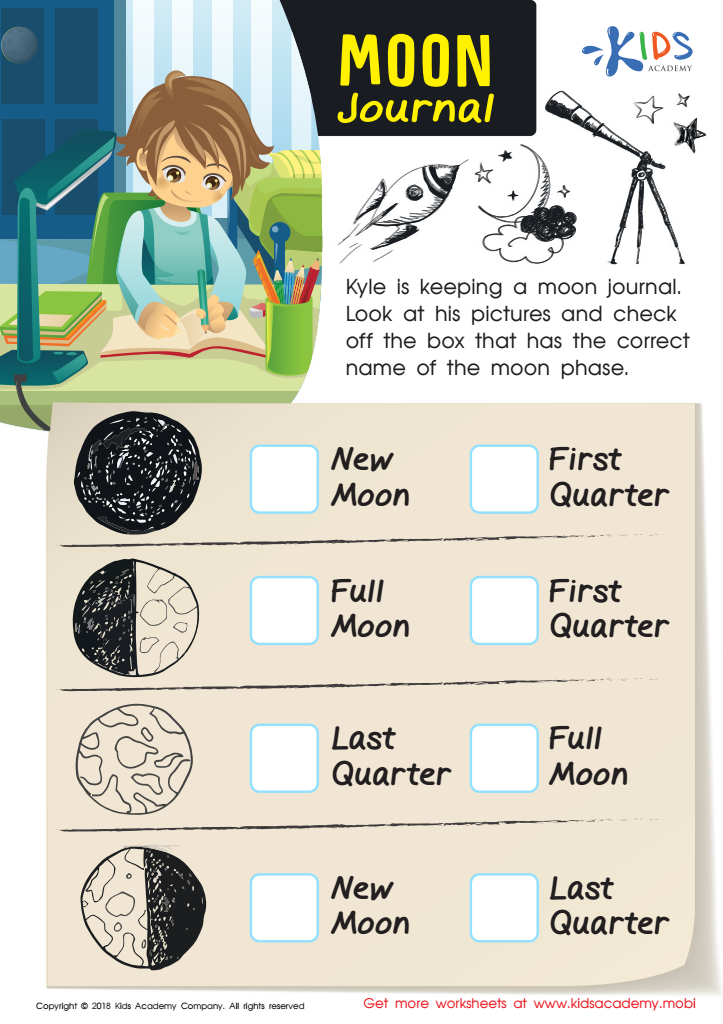
Moon Journal Worksheet
 Assign to My Students
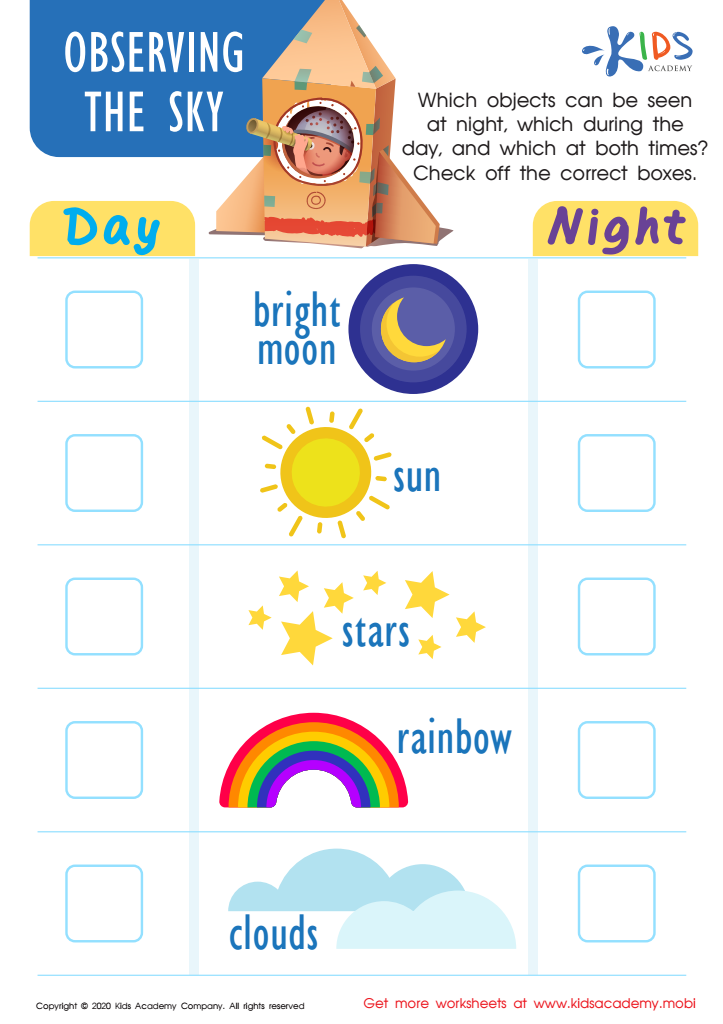
Observing the Sky Worksheet
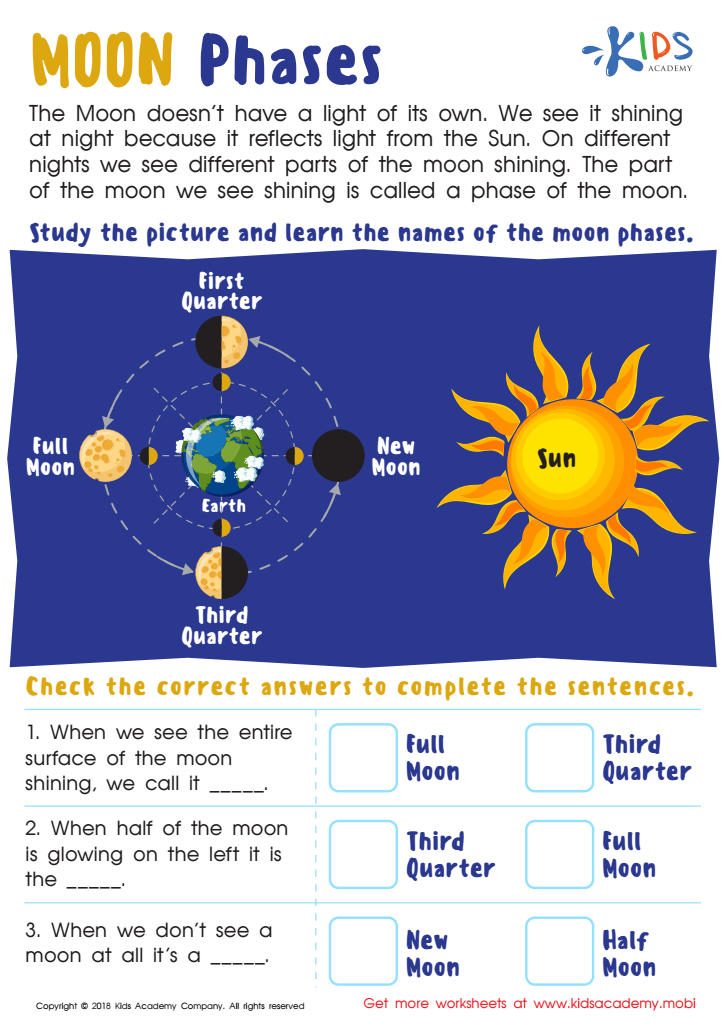
Moon Phases Worksheet








Observational skills are crucial for young children, particularly for those aged 4 to 6, as they form the foundation for learning and development. During this phase, children are naturally curious, and fostering these skills enhances their ability to notice details about their environment, people, and everyday situations. By incorporating Normal Space—understanding spatial relationships and how objects interact—children can make sense of their world more effectively.
Parents and teachers should care about developing these skills because they directly impact cognitive, social, and emotional development. Strong observational skills help children improve their problem-solving abilities, engage in critical thinking, and enhance their creativity as they explore and connect different concepts. This age group is also learning vital social skills; being attentive to others’ actions and emotions aids in developing empathy and communication abilities.
Additionally, immersive observational experiences such as nature walks or interactive play encourage active engagement and foster a love for learning. By investing in observational skill development, parents and educators lay the groundwork for children’s academic success and emotional intelligence, empowering them to navigate and contribute positively to their environments in the years to come.







