
Critical thinking skills Normal Social Studies Worksheets for Ages 4-6
3 filtered results
Difficulty Level
Grade
Age
-
From - To
Subject
Activity
Standards
Foster early cognitive development with our Critical Thinking Skills Normal Social Studies Worksheets designed for ages 4-6. These interactive and engaging worksheets encourage young learners to ask questions, explore different perspectives, and solve problems creatively. Perfect for classrooms or homeschooling, our specially crafted activities align with developmental milestones, promoting reasoning, analysis, and decision-making. Each worksheet covers essential social studies concepts in a fun, age-appropriate manner, helping children build a strong foundation for future learning. Spark curiosity and empower your child’s critical thinking abilities with our comprehensive resources tailored for little explorers.
Favorites
With answer key
Interactive
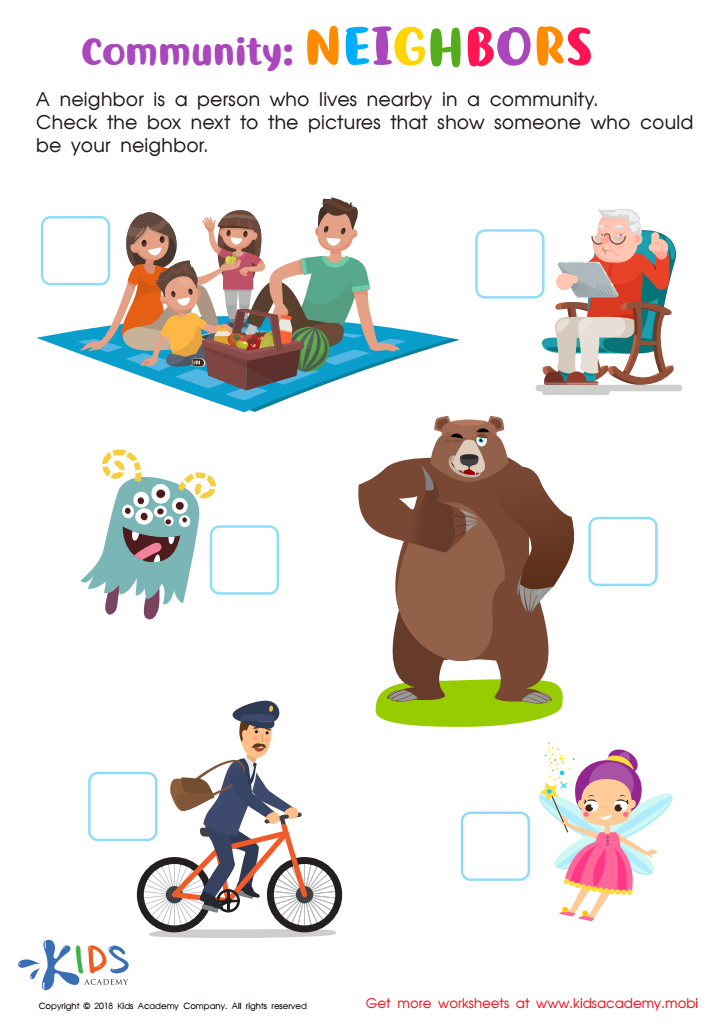
Community: Neighbors Worksheet
This free worksheet helps young learners understand who neighbors are and how they fit into their community. Have your student check out the options, decide which can and can't be neighbours and develop essential social and emotional skills. It's a fun and cheery way to learn about the social sciences!
 Assign to My Students
Community: Neighbors Worksheet
Worksheet
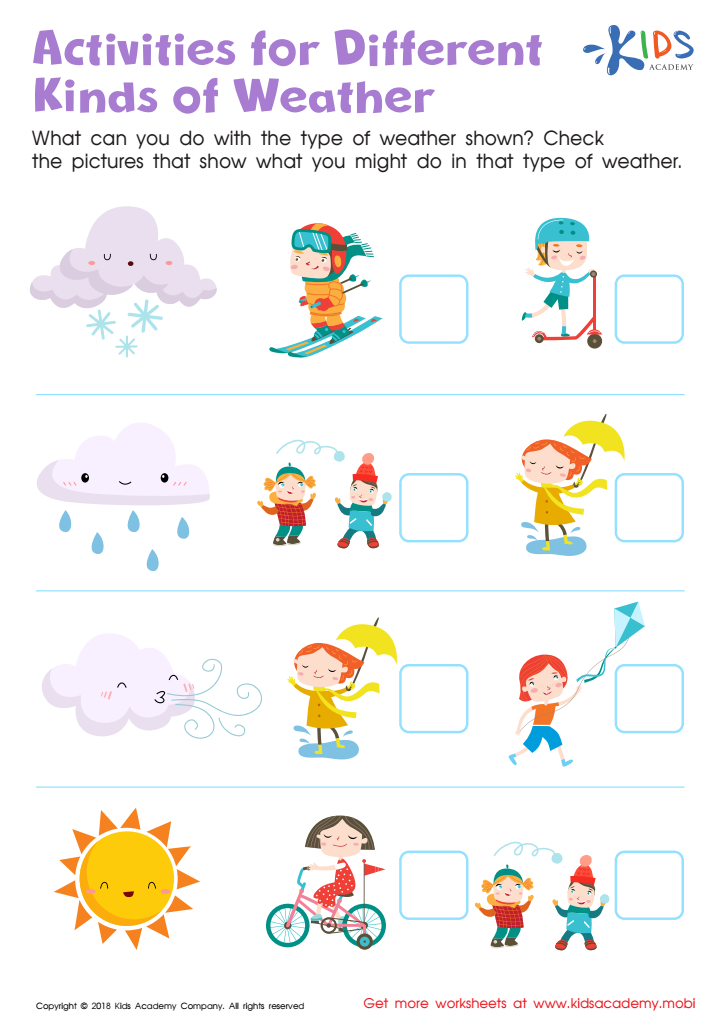
Activities for Different Kinds of Weather Worksheet
Help your child explore the changing seasons with this interactive worksheet. Ask them to name the different seasons and activities associated with each type of weather. Show the pictures and explain what they can do in that kind of weather. Have them check off the activities to help them learn and enjoy the changing seasons.
Activities for Different Kinds of Weather Worksheet
Worksheet
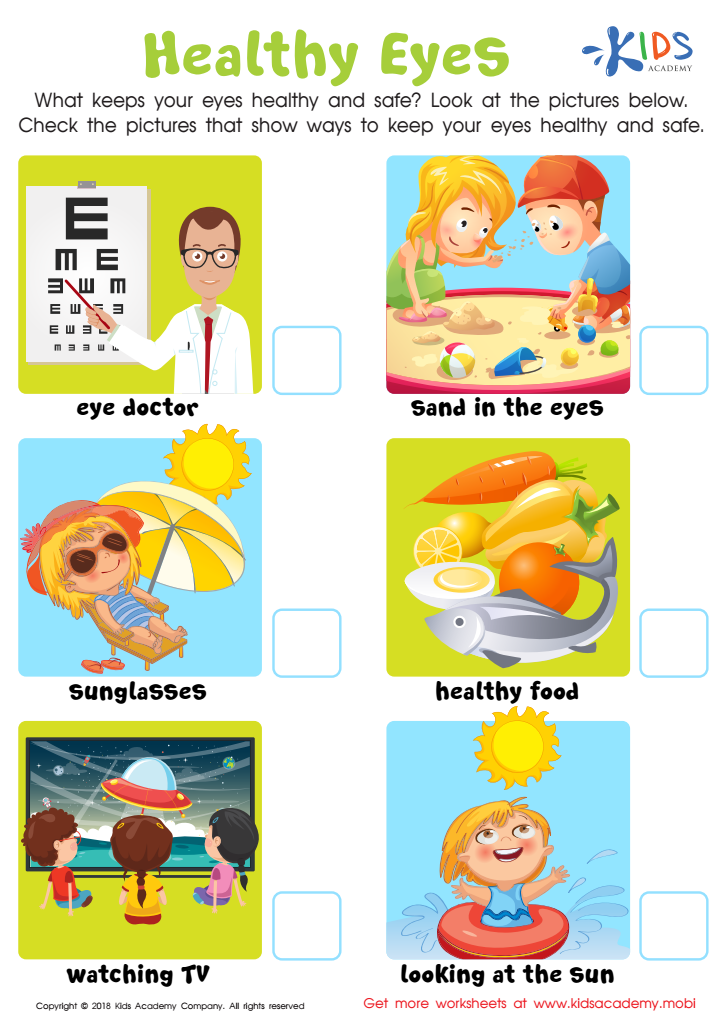
Healthy Eyes Worksheet
Does your child know how to care for their eyes? Help them understand with this worksheet. Look through the pictures together and discuss the different ways to keep the eyes healthy and safe. These include visits to the doctor, wearing sunglasses, and eating healthy food.
Healthy Eyes Worksheet
Worksheet
Join Kids Academy for Free
Who is primarily going to use this learning content?






Critical thinking skills are essential for young children because they lay the foundation for problem-solving and independent thinking. For children aged 4-6, developing these skills can significantly enhance their social studies learning experiences. At this early age, social studies introduce basic concepts about the world, community, and self-awareness. When parents and teachers emphasize critical thinking within this context, they empower children to ask questions, make connections, and draw conclusions based on evidence.
Encouraging critical thinking helps young learners to not just absorb facts but to understand the 'why' and 'how' behind social interactions, cultural norms, and historical events. For instance, when children explore why certain communities live the way they do or why we celebrate different holidays, they are practicing critical thinking.
Furthermore, these skills promote resilience and adaptability. In a constantly evolving world, children who can think critically are better equipped to navigate challenges and identify solutions. They learn to view issues from multiple perspectives, making them more empathetic and socially adept.
In summary, fostering critical thinking in early social studies makes learning more engaging and enriching, helping young minds develop into thoughtful, inquisitive, and compassionate individuals. This holistic approach to education can significantly impact their long-term academic success and social development.








