Understanding communities Normal Social Studies Worksheets for Ages 4-6
3 filtered results
-
From - To
Explore our "Understanding Communities" Social Studies worksheets, specially designed for ages 4-6! These engaging activities help young learners discover the concept of communities, fostering their social awareness and understanding of the world around them. Each worksheet features fun illustrations and age-appropriate prompts that encourage children to identify different community roles and explore their local environment. Through interactive exercises, kids will learn about essential landmarks, community helpers, and the diverse cultures that shape their neighborhoods. Ideal for parents and educators, these worksheets promote critical thinking and build foundational social studies skills, making learning enjoyable and effective! Perfect for early grade classrooms or home activities.
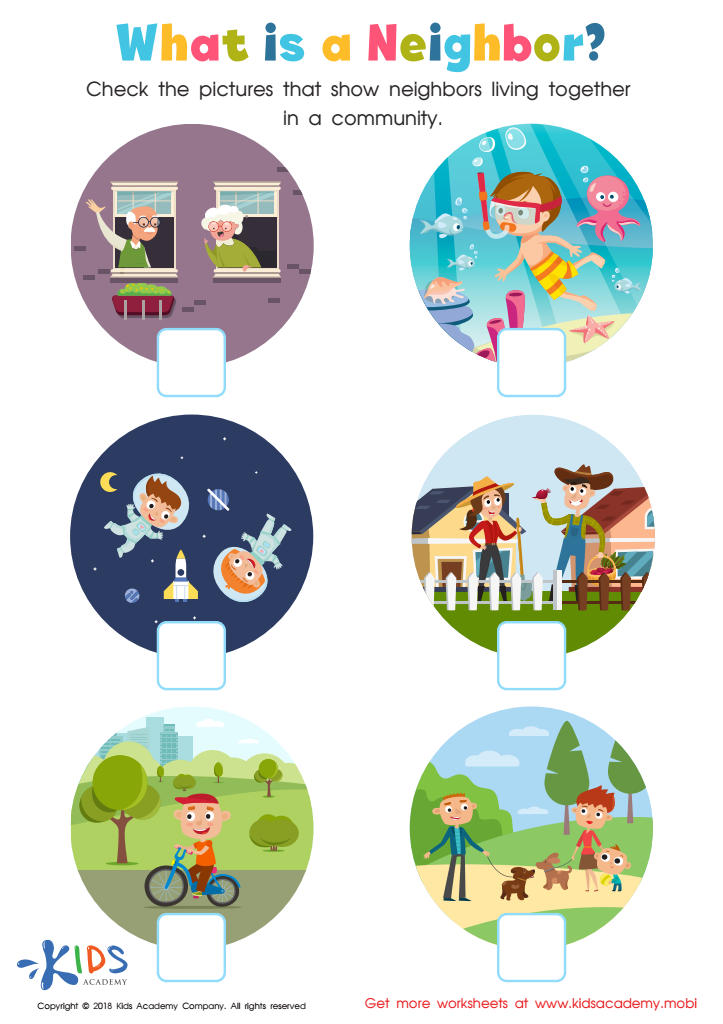
What is a neighbor Worksheet
 Assign to My Students
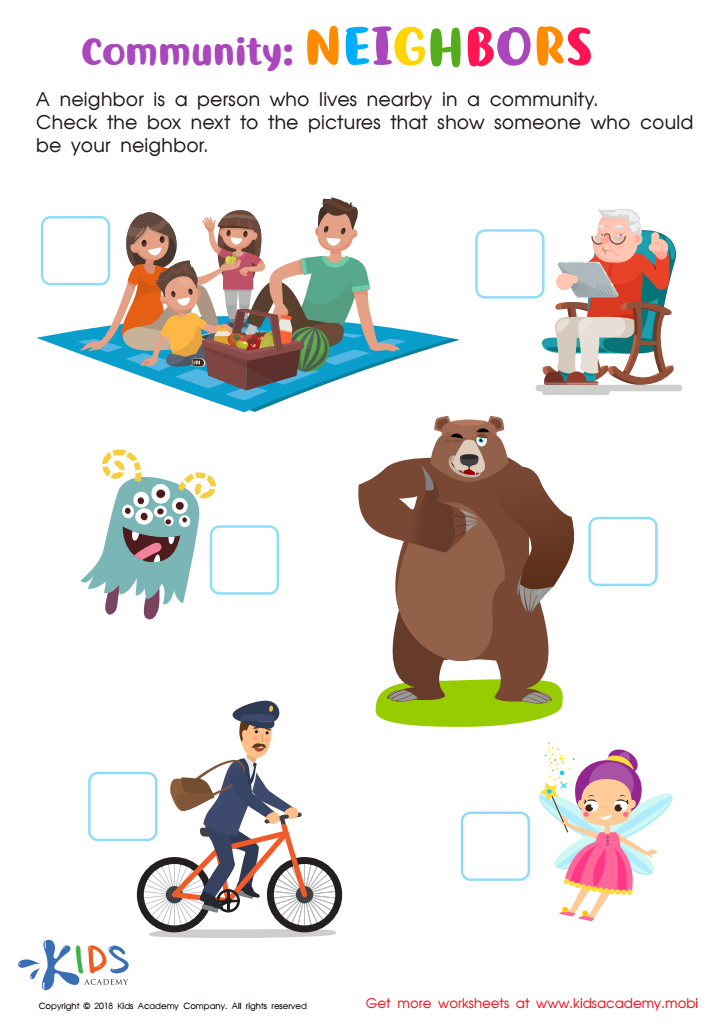
Community: Neighbors Worksheet
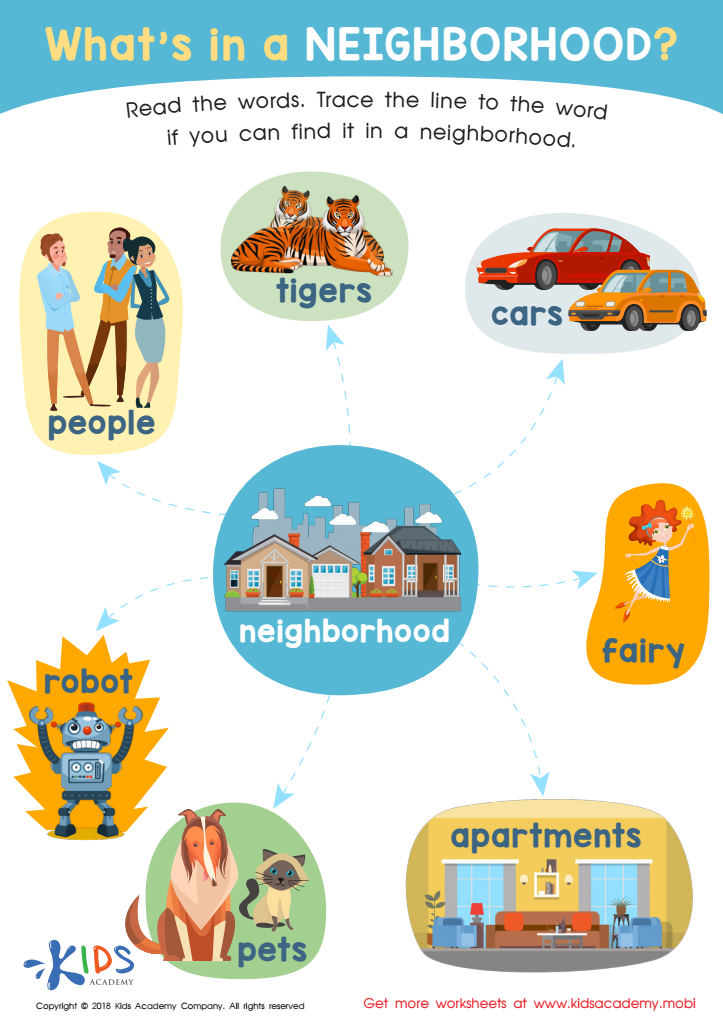
What's in a Neighborhood? Worksheet




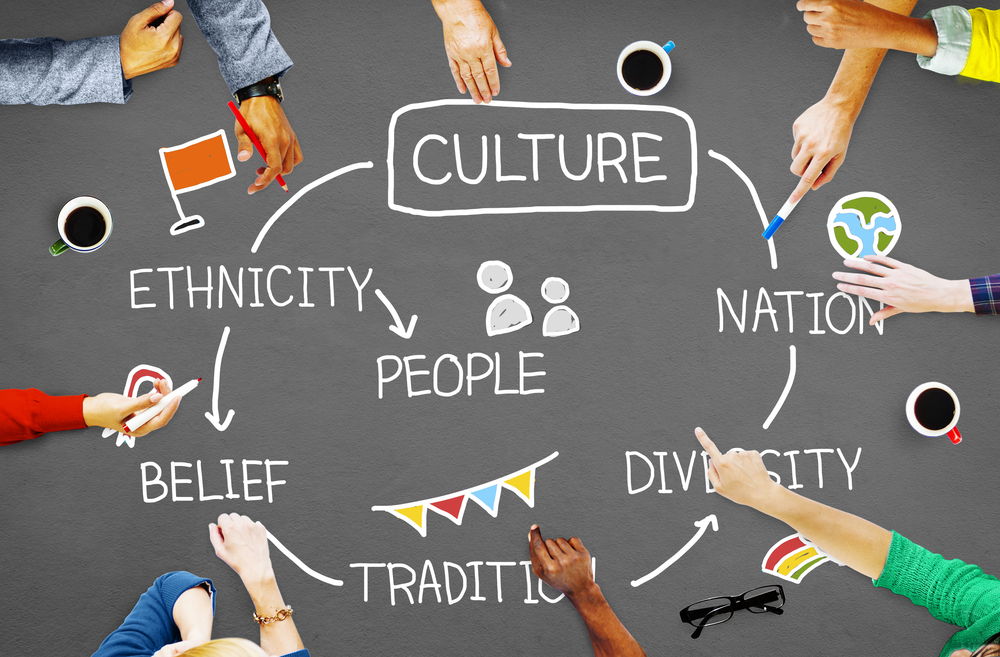



Understanding communities is an essential component of early education, particularly for children aged 4-6, as it lays the foundation for their social development and awareness of the world around them. Parents and teachers should prioritize this subject for several reasons.
Firstly, it helps young children develop a sense of identity and belonging. By learning about their own community and its diverse members, children can identify with their surroundings, fostering pride and respect for their heritage and that of others.
Secondly, understanding communities fosters social skills. Children learn how to interact, cooperate, and communicate with peers, establishing the groundwork for positive relationships. This is crucial for their emotional growth and success in future social settings.
Additionally, exploring community roles and responsibilities helps children grasp the importance of collaboration and civic engagement. Recognizing that everyone has a role to play fosters empathy and a sense of responsibility towards others, essential tokens of a caring society.
Moreover, it stimulates curiosity about different cultures and languages, enhancing their cognitive skills and broadening their worldviews.
Overall, understanding communities enriches young learners' experiences, guiding them toward becoming informed, compassionate, and engaged global citizens.