Cultural awareness Normal World Around Us Worksheets for Ages 4-6
3 filtered results
-
From - To
Foster your child's understanding of diverse cultures with our "Cultural Awareness: Normal World Around Us Worksheets" for ages 4-6. These engaging worksheets, crafted by educators, introduce young learners to global traditions, unique customs, and varied lifestyles. Each activity emphasizes empathy, inclusion, and respect, inspiring children to appreciate the beauty of multiculturalism. Fun and interactive, they include coloring, matching, and storytelling exercises that spark curiosity and broaden horizons. Ideal for early learners, these resources also support key developmental milestones in language, fine motor skills, and critical thinking. Perfect for classrooms or home, paving the way for a more inclusive world.
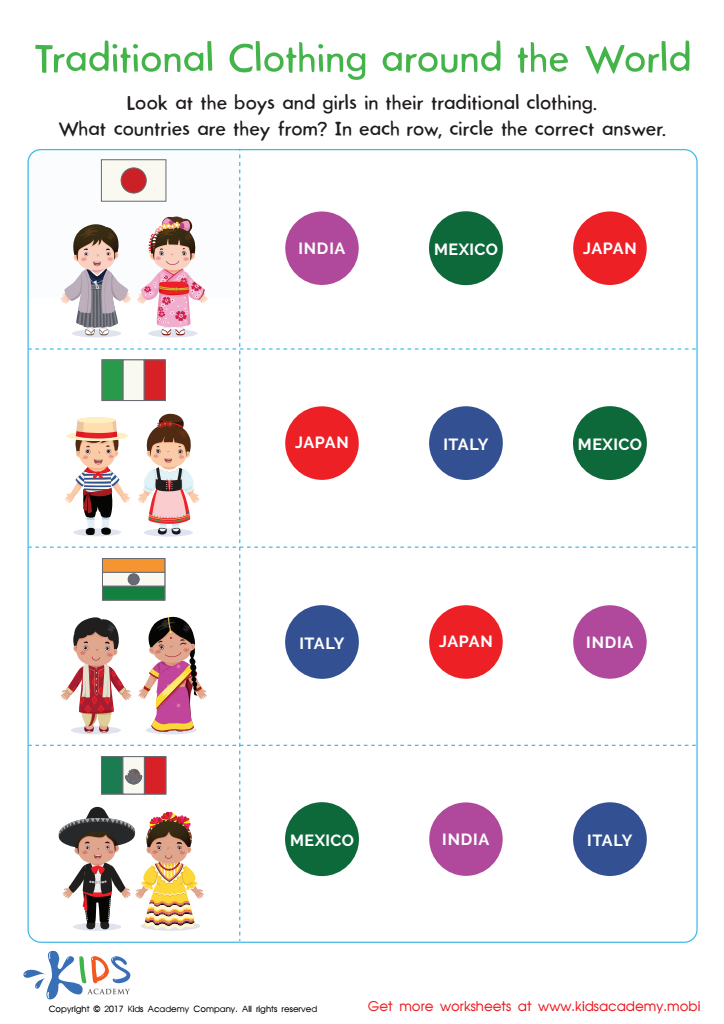
Traditional Clothing Worksheet
 Assign to My Students
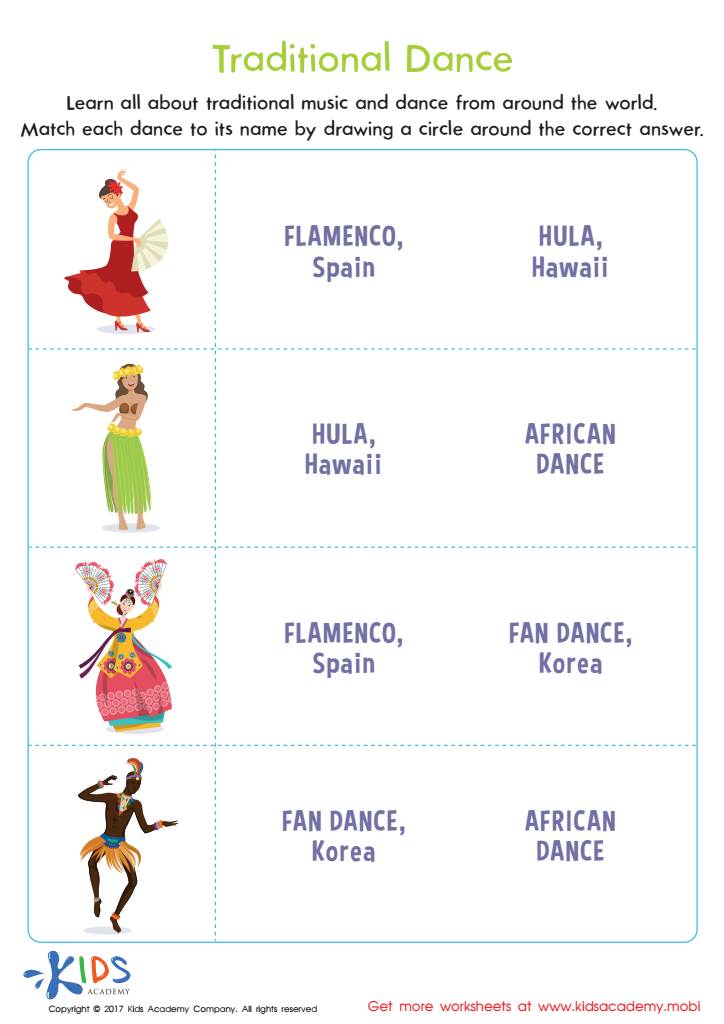
Traditional Dance Printable
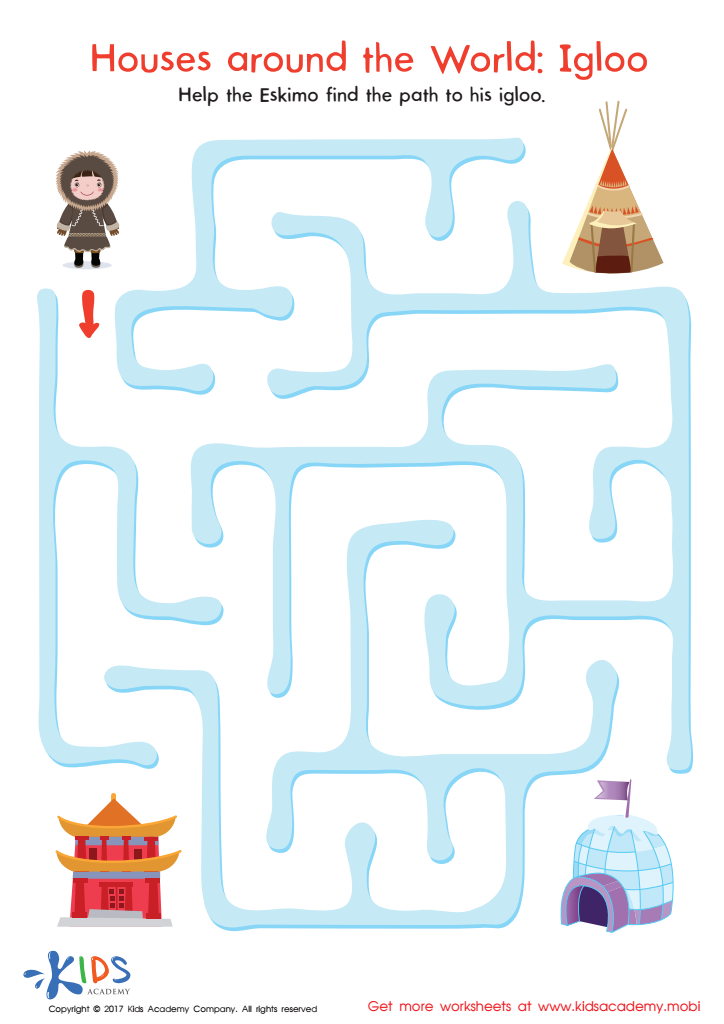
Houses Around the World: Igloo Printable




.jpg)

Cultural awareness is crucial for children ages 4 to 6 as it helps lay a foundation of inclusivity and empathy, fostering well-rounded, open-minded individuals. At this age, kids are highly impressionable, absorbing values and norms from their surroundings. Exposing them to diverse cultures encourages respect and appreciation for differences, helping to counteract biases or prejudices they might inadvertently learn.
When parents and teachers introduce elements from various cultures, whether through stories, foods, festivals, or languages, they broaden children's understanding of the world. This early awareness can reduce fear of the unknown and discourage stereotypes, promoting a peaceful, cohesive society in the long run.
Furthermore, cultural diversity enhances cognitive skills. Engaging with different traditions and worldviews fosters critical thinking and creativity. Classrooms and homes that embrace cultural awareness often see children more adept at problem-solving since they are open to multiple perspectives.
Lastly, in a globalized world, developing cultural competence from a young age equips children to thrive in diverse environments. Whether they are participating in multicultural events at school or making friends from varied backgrounds, these early experiences prepare them for future social and professional settings, cultivating more compassionate global citizens.