Verb identification Normal Grammar Worksheets for Ages 4-6
3 filtered results
-
From - To
Unlock your child's potential with our engaging Verb Identification Normal Grammar Worksheets designed specifically for ages 4-6. These printable worksheets help young learners recognize and understand verbs, the action words that are essential for effective communication. Through fun activities and captivating visuals, children will practice identifying verbs in sentences, enhancing their reading and writing skills. Our worksheets encourage creativity and critical thinking, making learning a joyful experience. Suitable for home or classroom use, these resources are perfect for preschool and kindergarten-aged children. Foster a solid foundation in language skills with our comprehensive and interactive verb identification worksheets today!
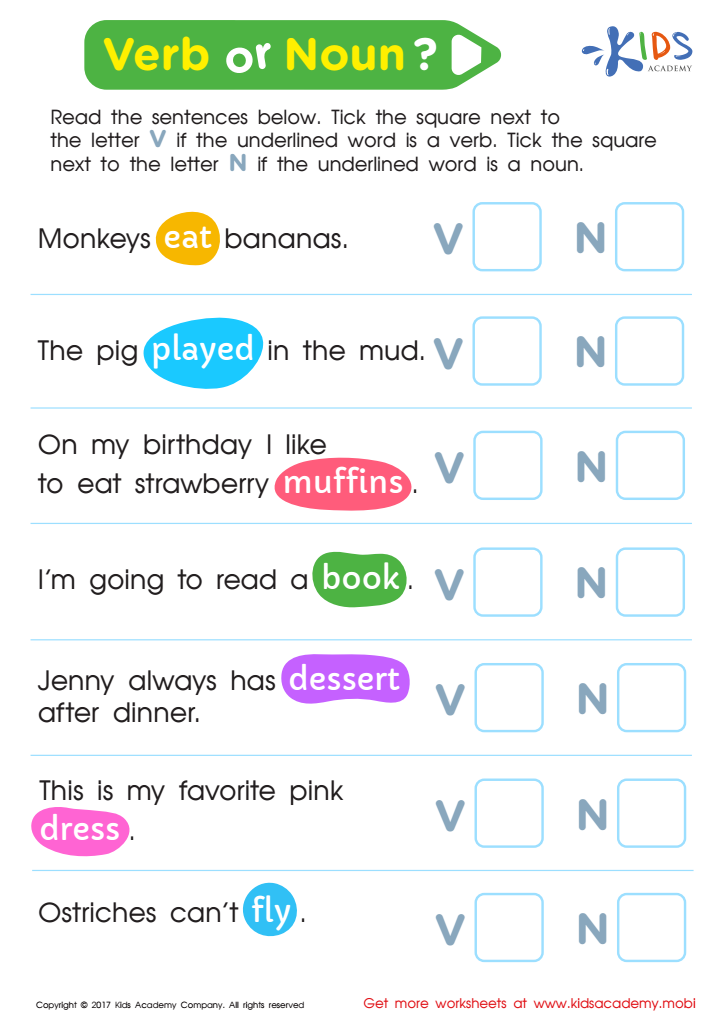
Verb or Noun Worksheet
 Assign to My Students
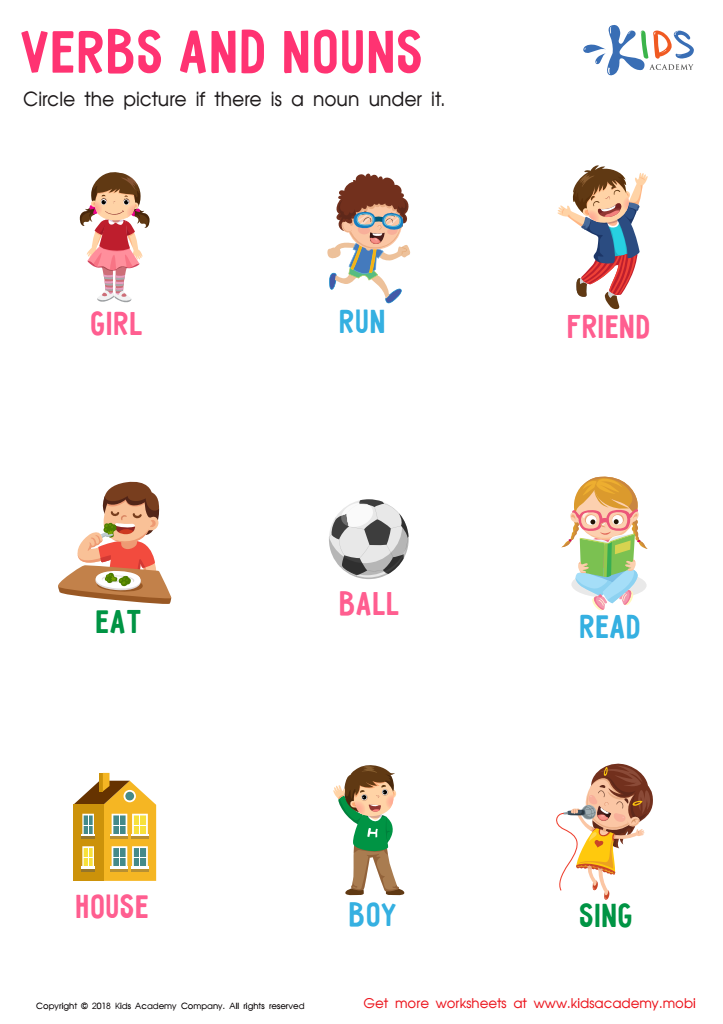
Verbs and Nouns Worksheet
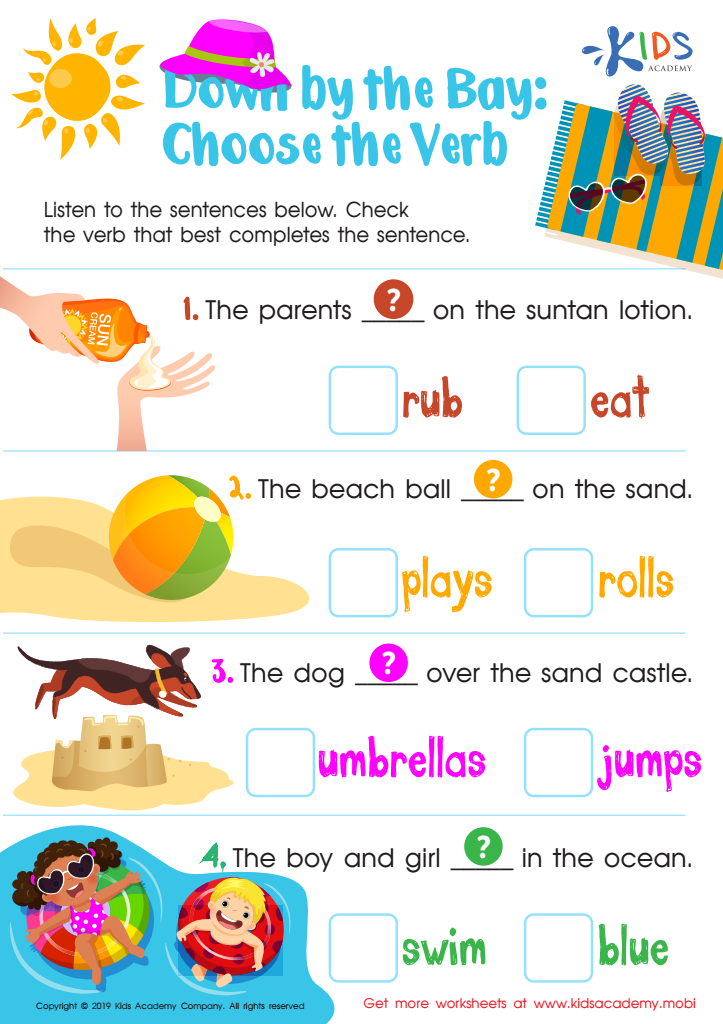
Down by the Bay: Choose the Verb Worksheet





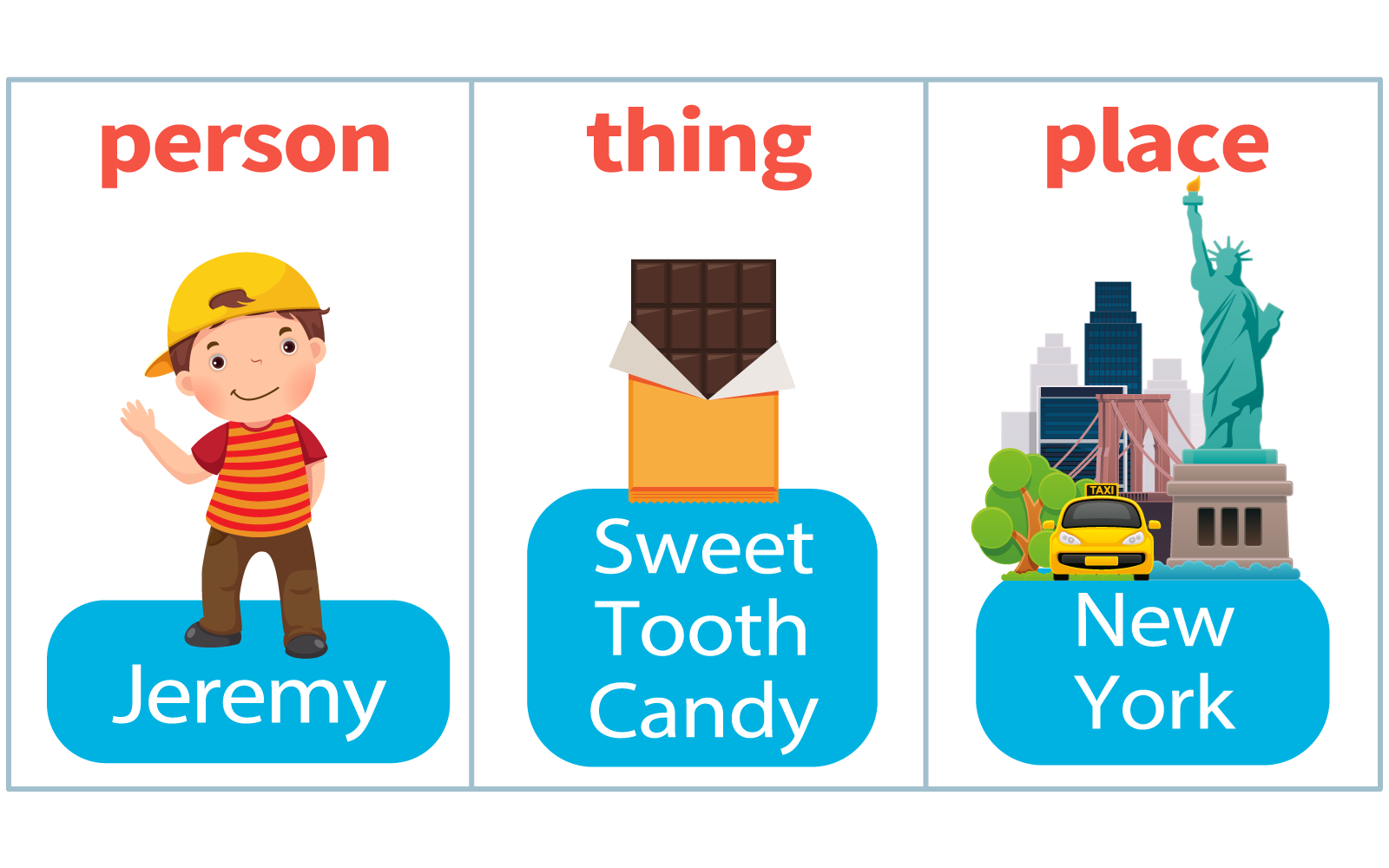


Verb identification is a fundamental skill for children aged 4-6, and both parents and teachers should prioritize it for several reasons. Firstly, verbs are action words that convey essential information about what the subject is doing. By helping children recognize verbs, we are laying the groundwork for their overall language development. This contributes to enhanced vocabulary and sentence structure, critical components in effective communication.
Secondly, identifying verbs aids in improving reading comprehension. When children can discern actions within a story, they connect more deeply with the narrative, fostering a love for reading. This ability also enhances storytelling, allowing them to articulate their thoughts more clearly.
Additionally, understanding verbs supports cognitive development. It encourages children to think about actions, causes, and effects, which are crucial in nurturing logical reasoning and critical thinking.
Finally, during early developmental years, children learn best through playful engagement. Activities that focus on verb identification, like action games or storytelling, can be enjoyable and enriching, facilitating social interaction and teamwork.
In summary, recognizing the importance of verb identification in early education empowers parents and teachers to cultivate essential language, cognitive skills, and social abilities, setting a solid foundation for future learning.