
Letter tracing skills Normal ABC Letters Worksheets for Ages 4-7
3 filtered results
Difficulty Level
Grade
Age
-
From - To
Subject
Activity
Standards
Discover essential letter tracing skills for young learners with our Printable ABC Worksheets, designed especially for children aged 4-7. These engaging worksheets foster fine motor skills and promote letter recognition through fun, interactive tracing activities. Each worksheet guides kids in forming both uppercase and lowercase letters, promoting confidence in their writing abilities. Ideal for preschoolers, kindergartners, and first graders, our resources provide an effective way to enhance alphabet knowledge while keeping children entertained. Perfect for homeschoolers and educators alike, these printable worksheets are a valuable tool for developing foundational language skills that set the stage for lifelong learning. Start tracing today!
Favorites
With answer key
Interactive
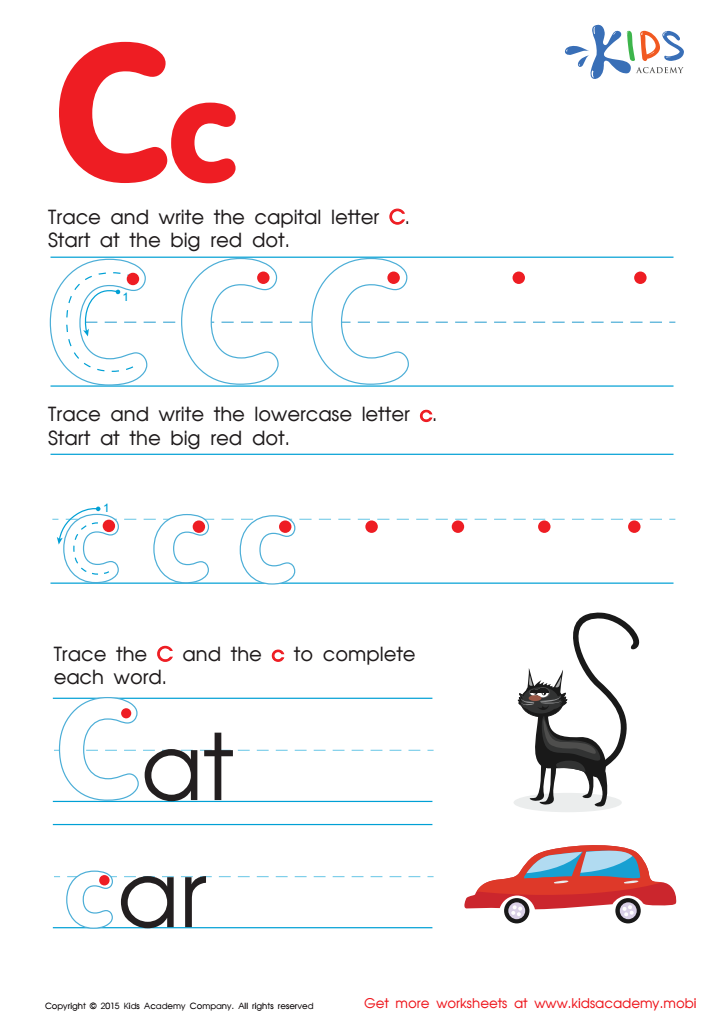
Letter C Tracing Page
Trace and write the letter 'C'! Put the pencil at the red dot then follow the lines – the capital letter first then the lowercase one. Cats love it and so will you! Get more free printables to practice tracing and writing.
Letter C Tracing Page
Worksheet





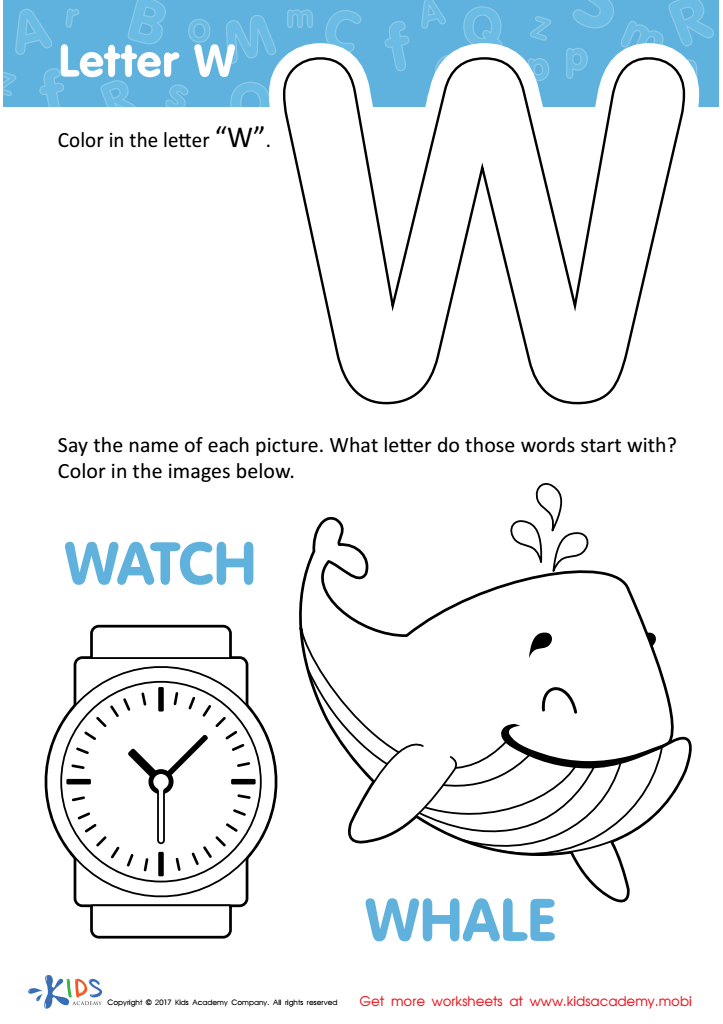
Letter W Coloring Sheet
Let your child have fun with this letter "W" coloring page! They can use their imagination to color the whale and discover the letter and its sound. Give them a helping hand to make it a whale of a time!
Download (PDF)
 Assign to My Students
Assign to My Students
Letter W Coloring Sheet
Worksheet
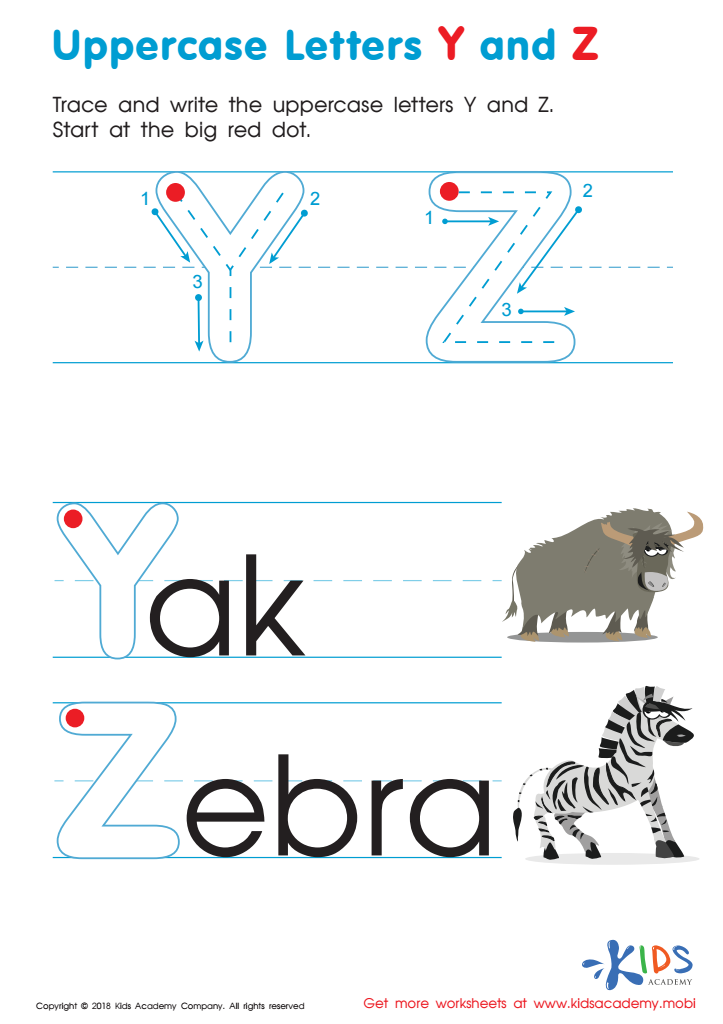
Uppercase Letters Y Z Worksheet
Help your child learn their ABCs with this fun tracing activity! They must trace and write Y and Z in uppercase form, starting from the red dot. Kids will love the fun images for extra engagement. Guiding their hand carefully will help them practice and perfect their writing skills.
Uppercase Letters Y Z Worksheet
Worksheet
Join Kids Academy for Free
Who is primarily going to use this learning content?







Letter tracing skills are crucial for children aged 4-7 as they serve as the foundation for effective writing and literacy development. During this crucial age, children are developing fine motor skills, and tracing letters helps them enhance hand-eye coordination and strengthen the small muscles in their hands. By practicing letter tracing, children learn the correct formation of letters, which lays the groundwork for writing fluency.
Moreover, letter tracing supports early literacy by helping children recognize and differentiate letters, fostering an understanding of the alphabet and its significance in language. This understanding is pivotal as they begin to read and write independently. As they trace letters, they also engage their visual and auditory senses, reinforcing letter sounds and phonemic awareness which are critical for decoding words.
In addition, the act of tracing can help channel a child's creativity and focus, making learning enjoyable and satisfying. For parents and teachers, supporting this skill is essential in promoting academic success, setting the stage for future learning experiences, and building confidence. Therefore, prioritizing letter tracing isn't just about writing—it's about nurturing essential skills that will empower children throughout their education and beyond.







