Reading comprehension Normal Consonant Blends Worksheets for Ages 4-7
3 filtered results
-
From - To
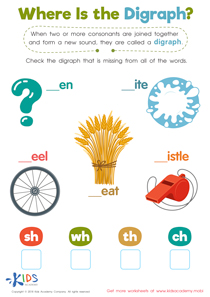
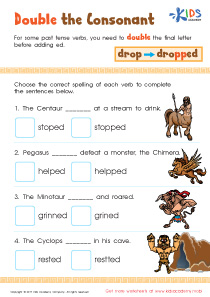
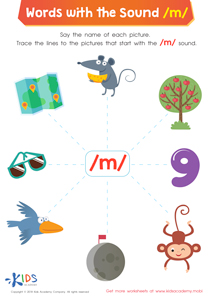
Unlock your child's reading potential with our engaging "Reading Comprehension Normal Consonant Blends Worksheets" designed for ages 4-7! These worksheets focus on helping young learners identify and understand consonant blends, enhancing their phonetic skills and comprehension abilities. Each worksheet features colorful illustrations and age-appropriate activities that make learning fun and interactive. Our carefully crafted exercises not only improve reading skills but also boost confidence in young readers as they tackle consonant blends. Perfect for classroom use or home practice, these resources are ideal for early literacy development, ensuring a strong foundation for lifelong reading enjoyment. Start your child's reading adventure today!
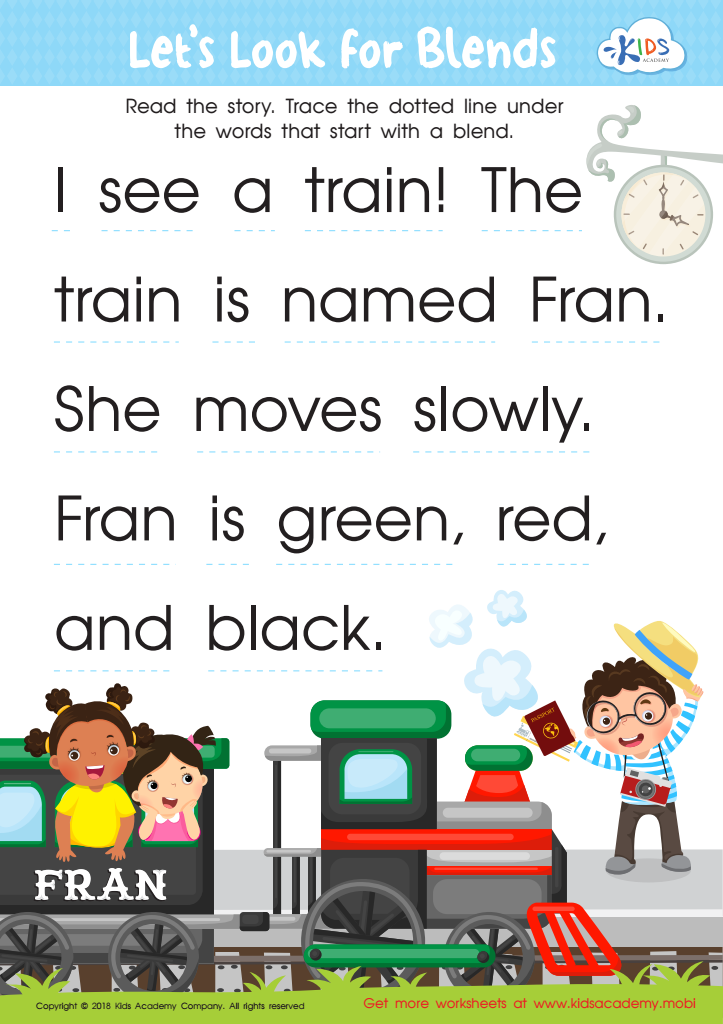
Let's Look for Blends Worksheet
 Assign to My Students
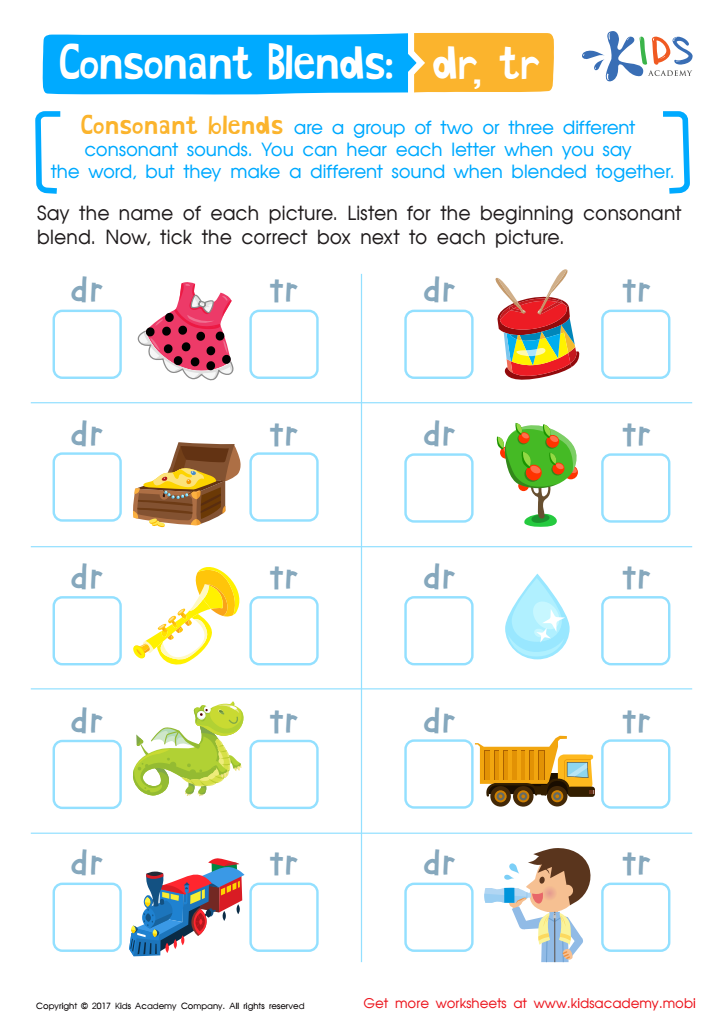
Consonant Blends: "Dr" and "Tr" Printable
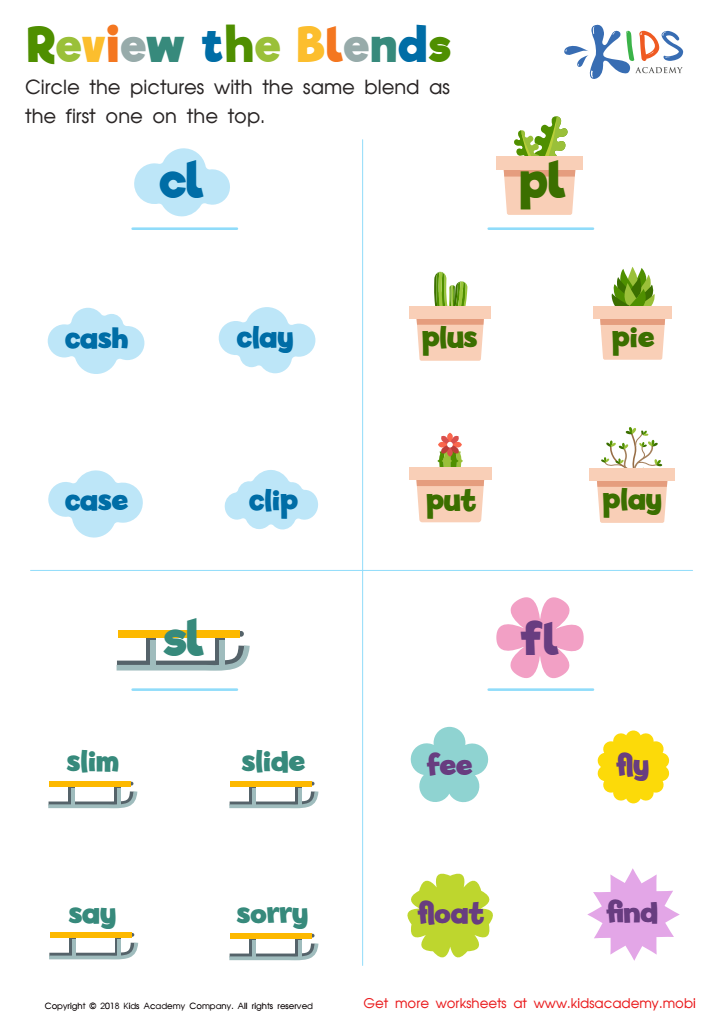
Review the Blends Worksheet





Reading comprehension is foundational for young children, particularly for those aged 4-7, as it shapes their overall literacy skills and academic success. Teaching normal consonant blends during this stage is crucial because they serve as building blocks for understanding words and sentences. Consonant blends are combinations of two or three consonants pronounced together, such as "bl," "st," and "sp." Mastering these blends enhances phonemic awareness, which is key to decoding words and improving reading fluency.
First, it boosts confidence in young readers. When children can easily sound out words containing these blends, they feel more accomplished and motivated to read. Second, it enriches vocabulary by exposing kids to a variety of words, allowing for better expressiveness and language skills. Additionally, good reading comprehension enables children to understand and engage with stories, which fosters critical thinking and imagination.
Moreover, literacy at an early age supports cognitive development and social-emotional skills. By focusing on reading comprehension and consonant blends, parents and teachers provide a supportive environment for lifelong learning. Positive reading experiences now encourage a passion for books that can last a lifetime, ultimately ensuring children are well-prepared for future academic challenges.