Counting skills Normal Alphabet Worksheets for Ages 4-7
3 filtered results
-
From - To
Enhance your child's early learning experience with our Counting Skills Normal Alphabet Worksheets, designed for ages 4-7! These engaging worksheets seamlessly integrate counting and alphabet recognition, fostering both numerical and literacy skills. Each activity is crafted to make learning fun, ensuring that young learners stay motivated while they practice counting objects alongside the corresponding letters. With colorful illustrations and interactive exercises, children will develop essential skills in a playful and enjoyable way. Perfect for homeschooling or classroom settings, our worksheets lay a solid foundation for future academic success. Unlock your child's potential and watch them thrive with our educational resources!
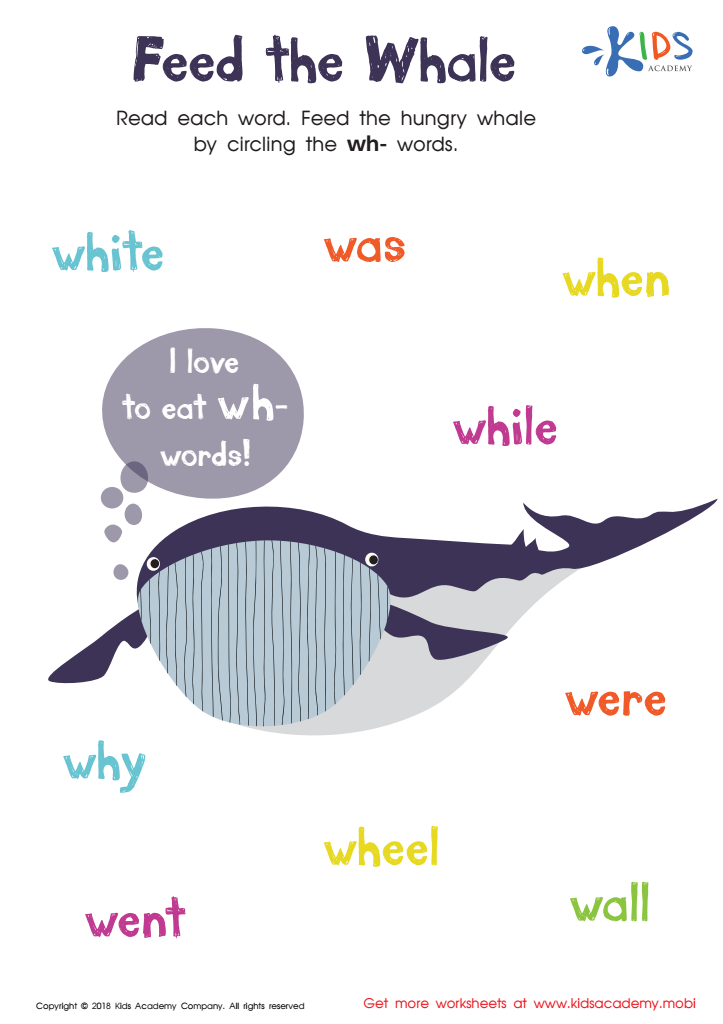
Feed the Whale Worksheet
 Assign to My Students
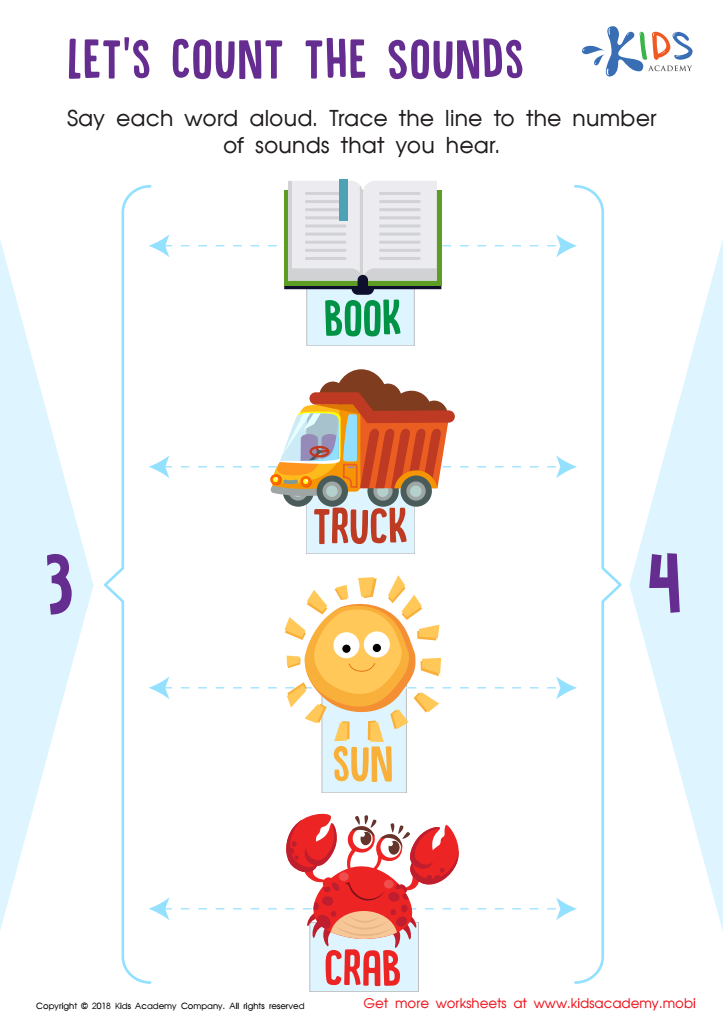
Let's Count the Sounds Worksheet
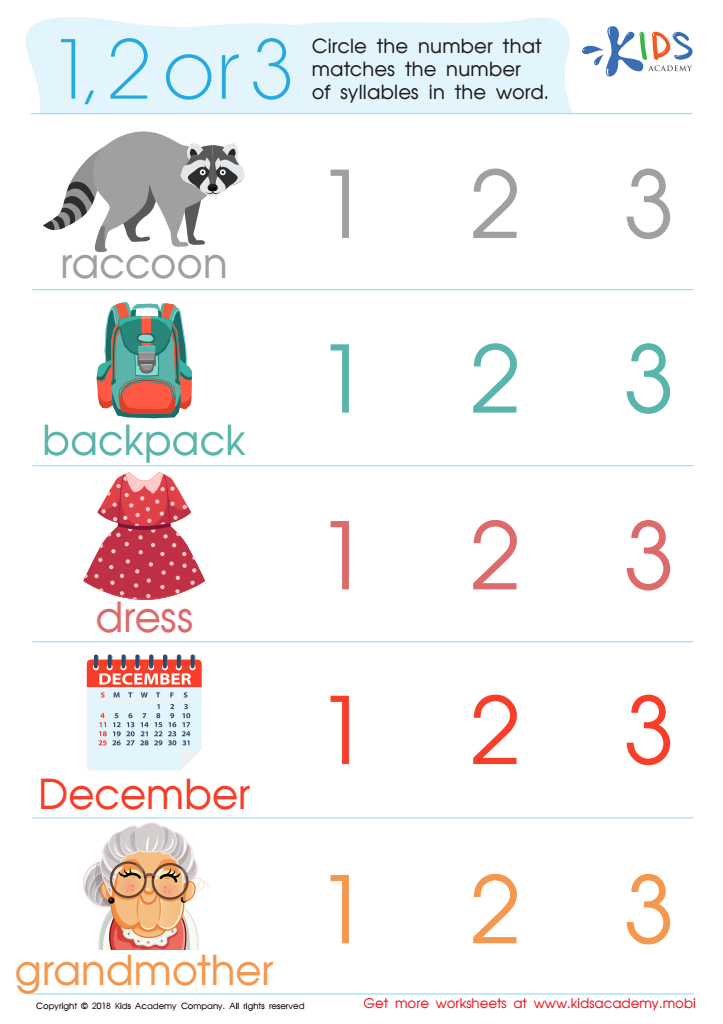
1, 2 or 3? Worksheet






Counting skills and a strong grasp of the alphabet are fundamental areas of early childhood development, crucial for children aged 4-7. Parents and teachers should prioritize these skills as they form the building blocks for a child's academic journey.
Firstly, counting skills enhance a child's mathematical foundation. Early exposure to numbers fosters problem-solving abilities, strengthens critical thinking, and boosts a child's confidence in handling quantitative tasks. Children who master counting early on are often better equipped for more complex math concepts they will encounter later.
Similarly, familiarity with the normal alphabet is vital for literacy development. Recognizing letters and understanding their sounds set the stage for reading and writing proficiency. This period is a critical time as children begin to make connections between letters and sounds, leading to improved language skills, vocabulary, and comprehension.
Moreover, developing these skills promotes social and emotional growth. Mastery of counting and the alphabet enhances a child's ability to participate in group activities, share ideas, and engage in collaborative learning experiences. By investing time in counting skills and alphabet recognition, parents and teachers lay a strong foundation for future academic success and equip children with essential lifelong learning tools.







