Enhancing early literacy skills is vital for young learners! Our "Letter-Sound Association Normal Alphabet Worksheets" are specifically designed for children aged 4-7, helping them connect letters with their corresponding sounds in an engaging and interactive way. These worksheets cover each letter of the alphabet, ensuring that children grasp essential phonics skills through fun activities. With vibrant visuals and easy-to-follow exercises, our worksheets make learning enjoyable and effective. Equip your child with the foundational skills they need for reading success! Explore our collection today and watch their confidence soar as they master letter-sound associations in no time!

Check out this FREE Trial Lesson on Alphabet for age 4-7!

L

Favorites
With answer key
Interactive
  • 4-7
  • Letter-sound association
  • Alphabet
  • Normal
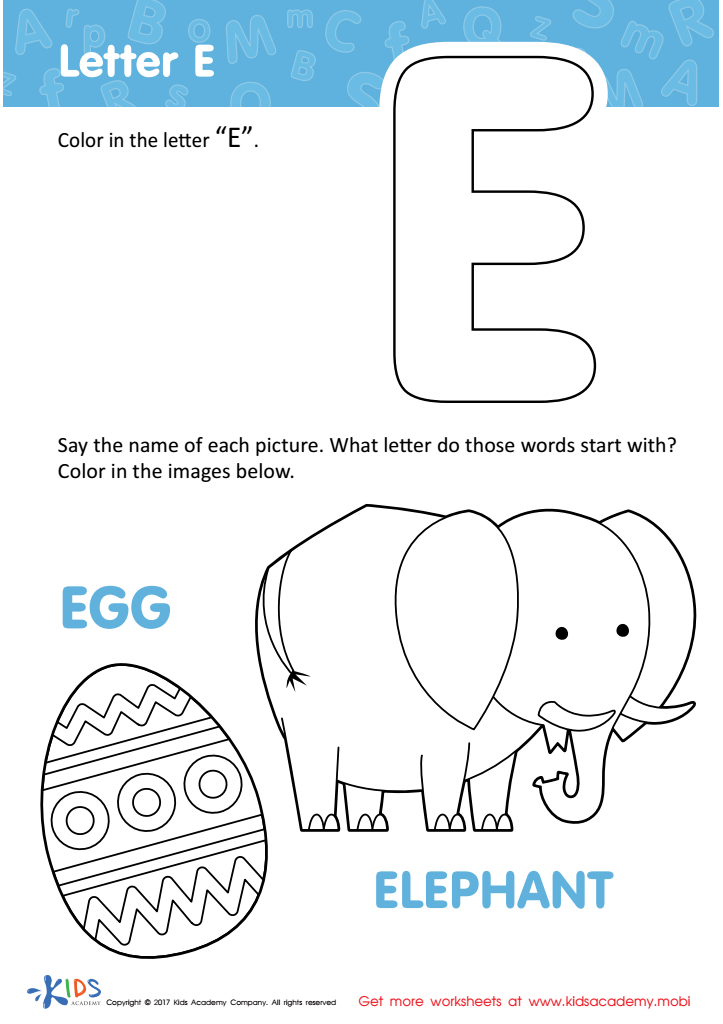
Letter E Coloring Page

Letter E Coloring Sheet

Coloring pages are great for teaching kids the alphabet and words! This "E" page features a cute elephant and Easter egg. Kids will love it and learn the letter "E" at the same time. 80 words
Download (PDF)
Assign to My Students
Letter E Coloring Sheet
Worksheet
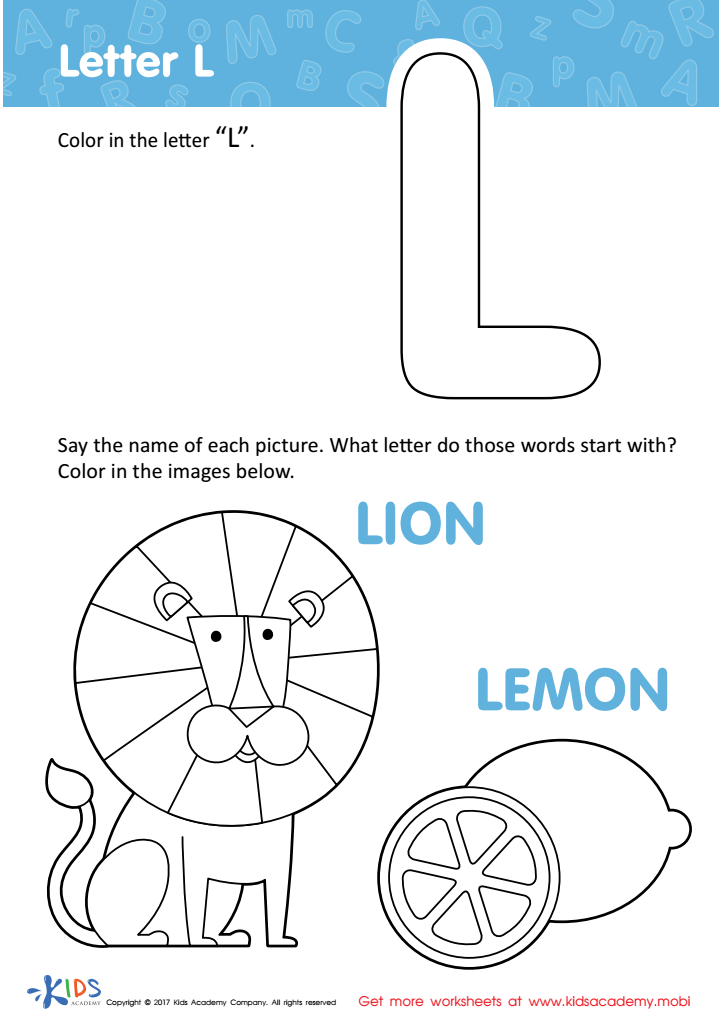
Letter L Coloring Page

Letter L Coloring Sheet

Kids often struggle to say "L" and love it because so many things they love start with it! This coloring page combines the letter and fun images like a lemon and lion to teach and entertain!
Download (PDF)
Assign to My Students
Letter L Coloring Sheet
Worksheet
Lowercase Letters m n o Worksheet

Lowercase Letters m n o Worksheet

Help your child learn the alphabet with letter tracing. Show them the difference between uppercase and lowercase letters by working through this free worksheet, tracing and writing lowercase m, n and o.
Lowercase Letters m n o Worksheet
Worksheet
Lowercase Letters d e f Worksheet

Lowercase Letters d e f Worksheet

Help your child learn the alphabet letters by tracing and writing the lowercase letters d, e, and f. Begin at the big red dot and follow the dots. This worksheet will help your little one gain a better understanding of the letters.
Lowercase Letters d e f Worksheet
Worksheet
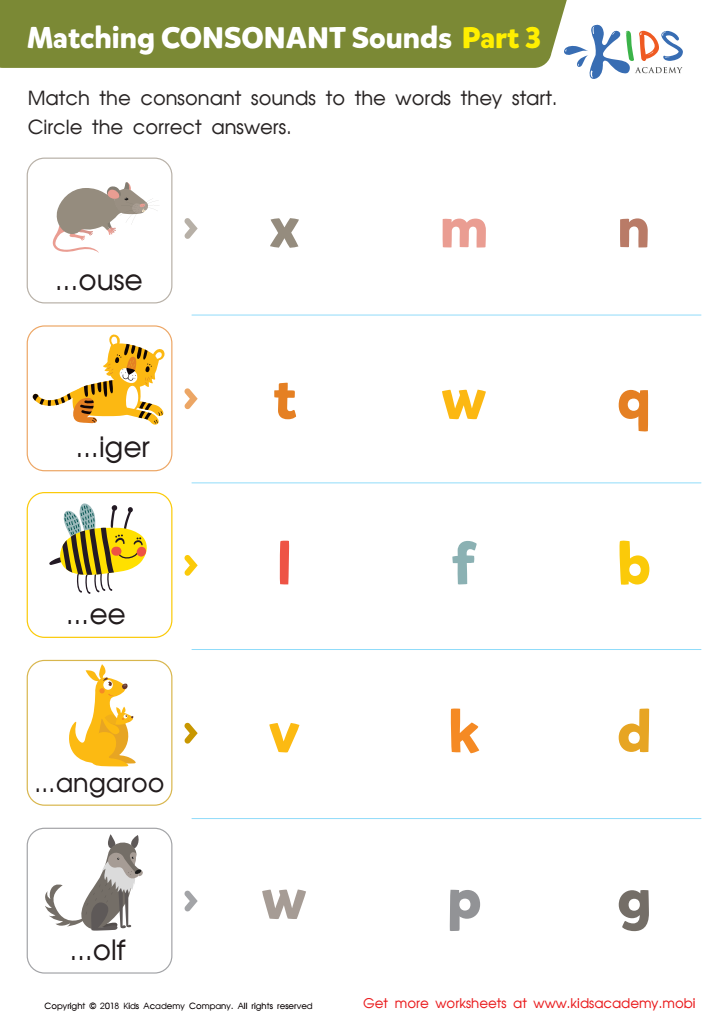
Matching Consonant Sounds - Part 3 Worksheet Preview

Matching Consonant Sounds: Part 3 Worksheet
Help your early learner match consonant sounds to words with this fun worksheet! Have them name the pictures and try out each letter in the corresponding column. When they hear the sound that matches, circle it. Have them write the letter in the box to complete the word. Work their way down the page until the critters' names all match with consonants!
Matching Consonant Sounds: Part 3 Worksheet
Worksheet
Pick the Letter Worksheet

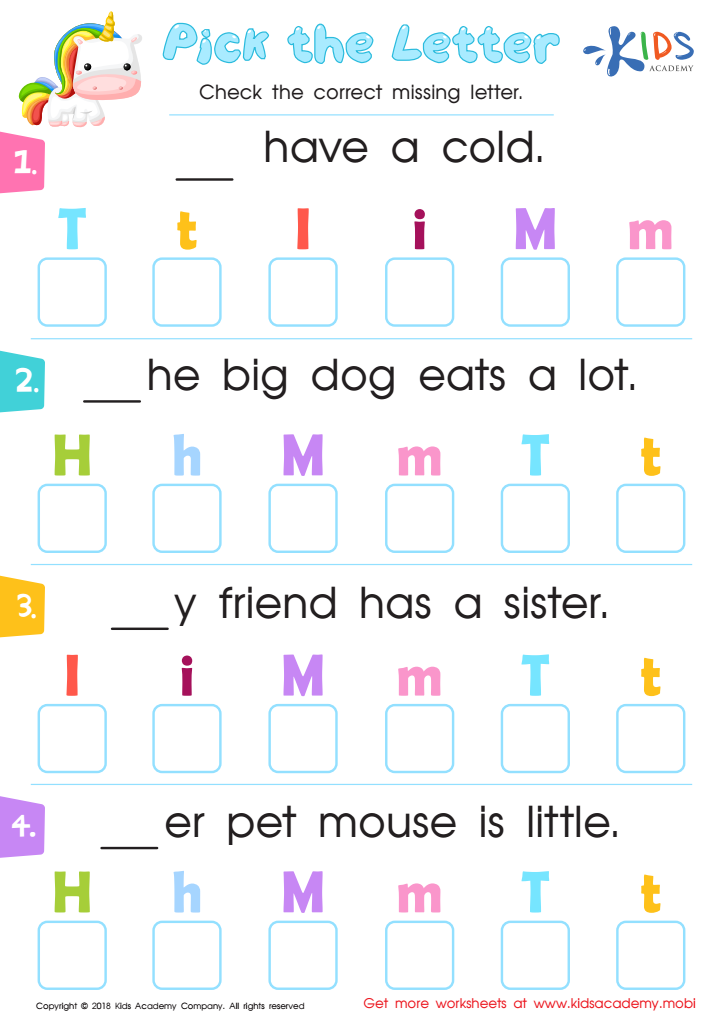
Pick the Letter Worksheet

Put your child's capitalization and reading skills to the test with this missing letter worksheet! Have them look at each sentence, note the blank and review the letters below. Find the uppercase letter that should start each sentence and check the boxes to complete. Fun and colorful, this worksheet is sure to keep your child engaged!
Pick the Letter Worksheet
Worksheet
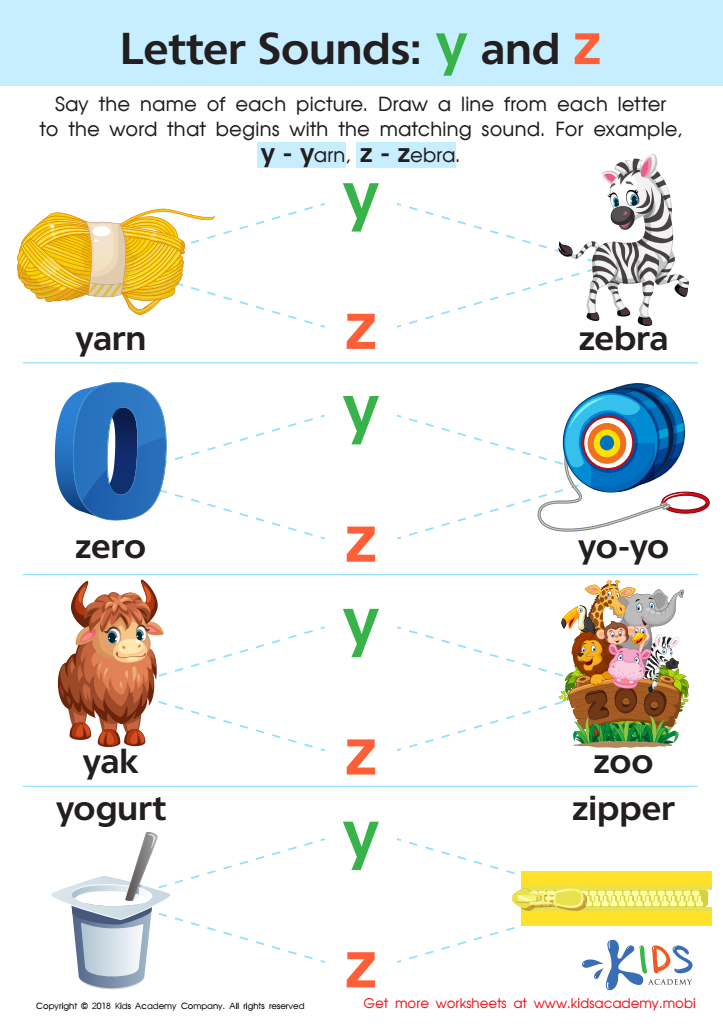
Letter Y and Z Sounds Worksheet


Letter Y and Z Sounds Worksheet

Y and Z can be tricky for kids to learn. Kids Academy has the answer with a great worksheet. "Yo-yo", "yak" and "zebra" help kids recognize, say and trace each letter. Plus, they can read the words and match them to images! Let your child try and help them master phonics at the end of the alphabet.
Letter Y and Z Sounds Worksheet

Worksheet


Letter-sound association is crucial for children aged 4-7 as it serves as the foundational skill for reading and literacy development. At this age, children are often beginning their journey into reading, and understanding how letters correspond to sounds enables them to decode words and develop phonemic awareness. This knowledge helps nurture their curiosity and fosters a love of reading, which is essential for lifelong learning.

Parents and teachers play a vital role in supporting this process. They can create a rich literacy environment by incorporating fun games, songs, and activities that engage children in letter-sound recognition. Early exposure to these concepts helps improve vocabulary development and enhances spelling skills as children begin to recognize familiar sounds and patterns in language.

Moreover, letter-sound association is linked to academic success. It helps prevent reading difficulties and supports overall communication skills. When children can confidently connect sounds with letters, they are better equipped to understand and produce spoken and written language, leading to greater self-esteem and motivation in school.

By prioritizing these foundational skills, parents and teachers empower students to become proficient readers, ensuring they are prepared for future academic challenges and personal growth.