Rhyming skills development Normal Alphabet Worksheets for Ages 4-7
4 filtered results
-
From - To
Boost your child's early literacy with our engaging "Rhyming Skills Development Normal Alphabet Worksheets" specially designed for ages 4-7. These fun and educational worksheets make learning to recognize and produce rhymes effortless, helping to enhance phonemic awareness and language skills. Children will delight in the colorful, interactive activities that introduce the alphabet through playful rhyme matching exercises, boosting their confidence in reading and writing. Ideal for both classroom and home use, our expertly crafted worksheets lay a solid foundation for future success in literacy. Visit us today and watch your young learners flourish!
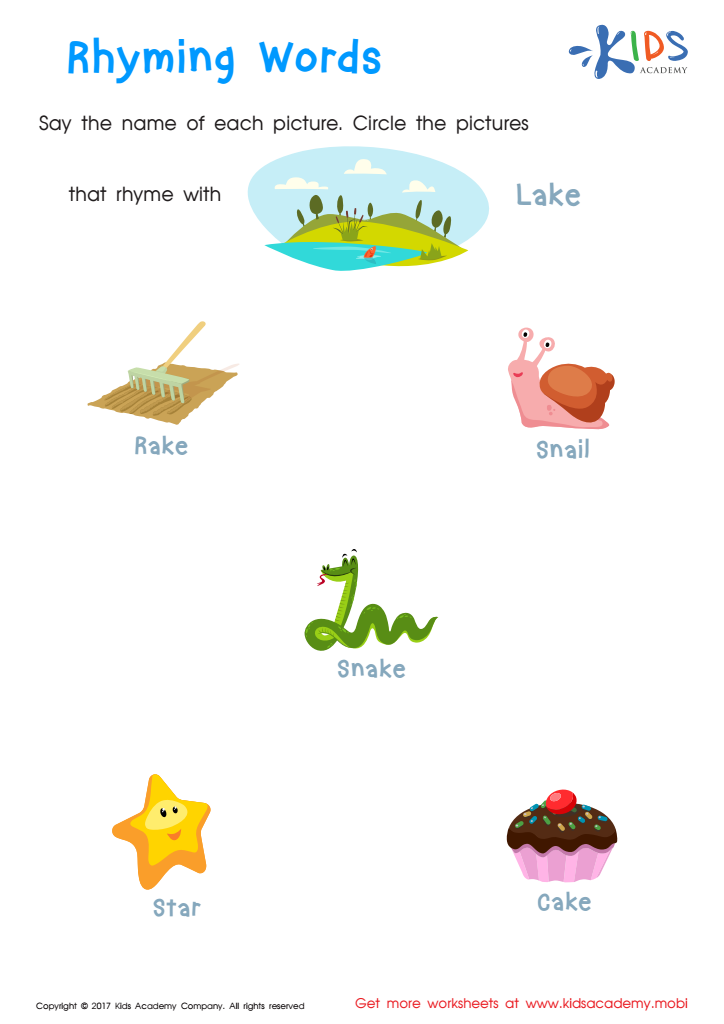
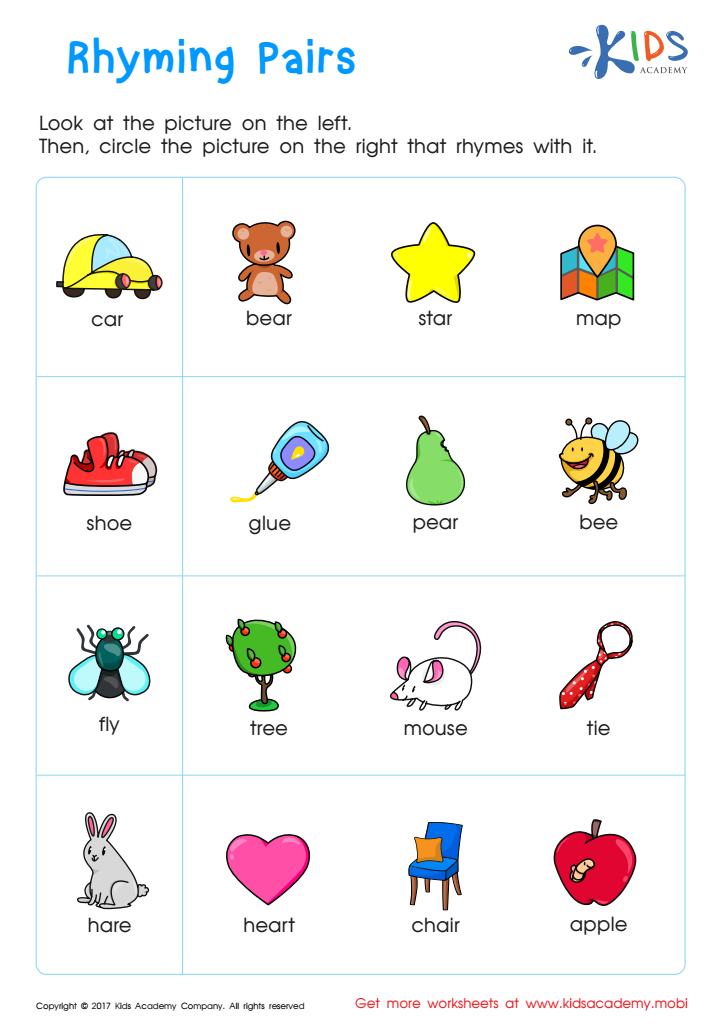
Rhyming Words Rhyming Worksheet
 Assign to My Students
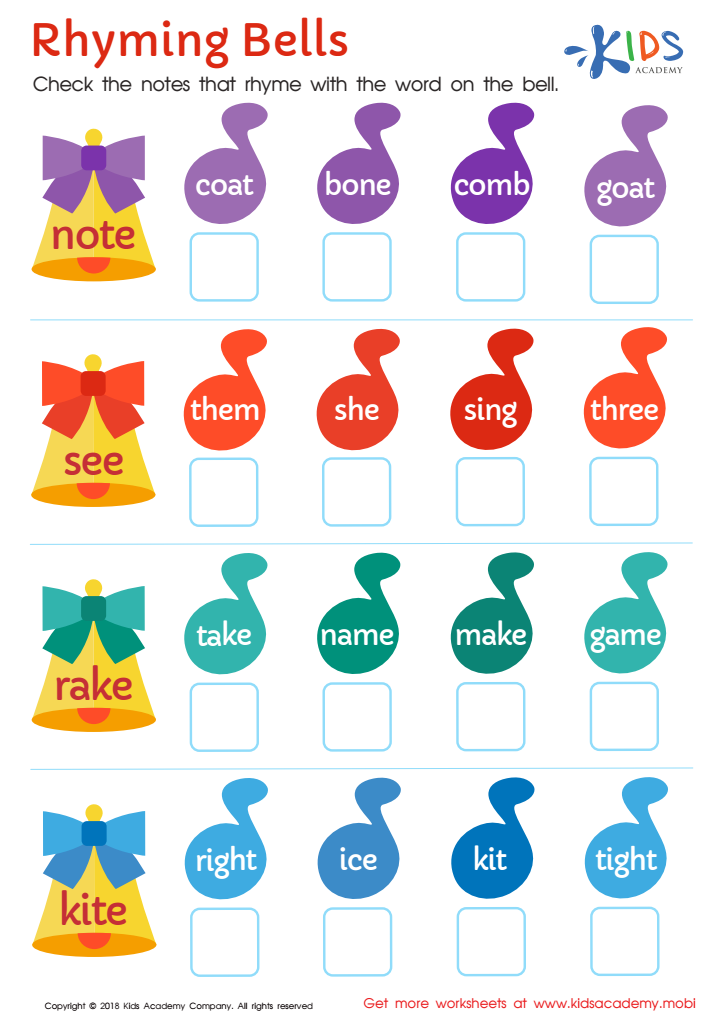
Rhyming Bells Worksheet
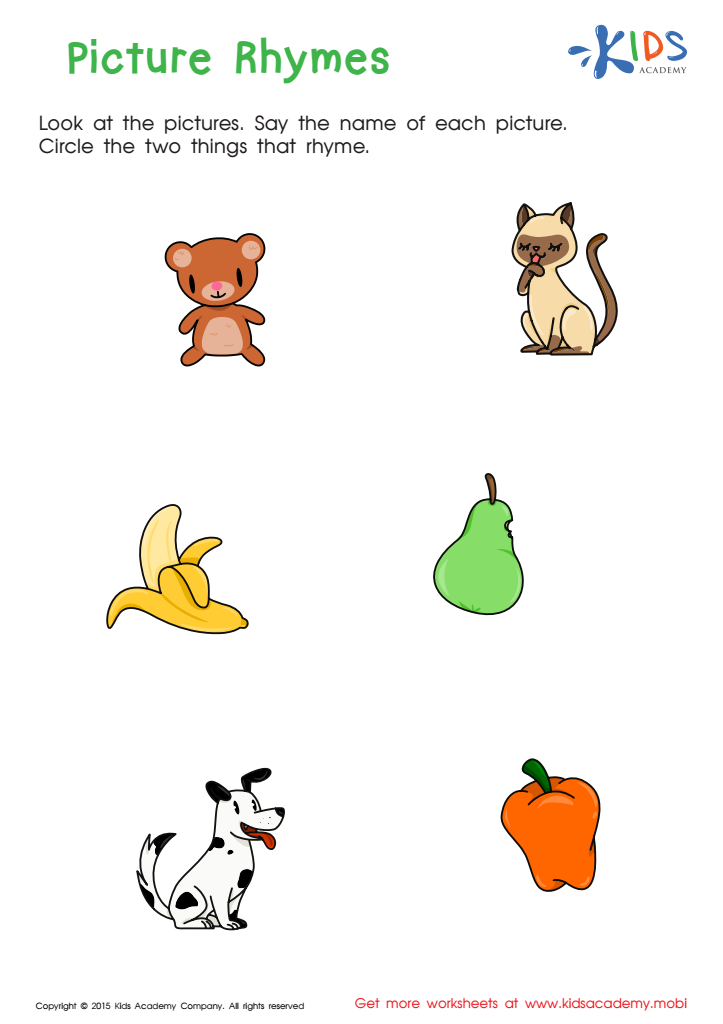
First Words: Picture Rhymes Worksheet







Rhyming skills are fundamental for early literacy development among children aged 4-7. Firstly, rhyming helps kids recognize patterns in words, making it easier for them to learn to read and write. When children understand rhymes, they start to notice the similarities and differences in sounds, aiding in phonemic awareness, which is critical for decoding words.
Moreover, engaging in rhyming activities can enhance a child’s auditory discrimination skills, essential for recognizing the subtle differences in word sounds that affect meaning. This auditory recognition contributes significantly to their ability to comprehend language, improve vocabulary, and foster creative thinking.
Rhyming also makes learning enjoyable. Activities such as singing rhyming songs or reciting nursery rhymes capture children's interest and make the process of learning interactive and fun, thereby enhancing retention.
Additionally, as children play with sounds and words, they develop stronger memory skills and a greater emotional connection to language learning. Parents and teachers who emphasize rhyming support holistic language development, which provides a strong foundation for future academic skills like reading comprehension and writing.
In summary, rhyming skills are an essential and enjoyable aspect of language development that parents and teachers should prioritize for children aged 4-7 to lay a robust literacy foundation.







