Visual discrimination skills Normal Alphabet Worksheets for Ages 4-7
5 filtered results
-
From - To
Enhance your child's visual discrimination skills with our engaging Normal Alphabet Worksheets, designed specifically for ages 4-7. These worksheets focus on helping young learners identify and differentiate letters through fun and interactive activities. By practicing visual discrimination, children will improve their reading and writing readiness, as they develop the ability to recognize similarities and differences in letter shapes and forms. Each worksheet is carefully crafted to provide a playful learning experience, ensuring that your child stays motivated and excited about mastering the alphabet. Download our Visual Discrimination Worksheets today and watch your child's literacy skills flourish!
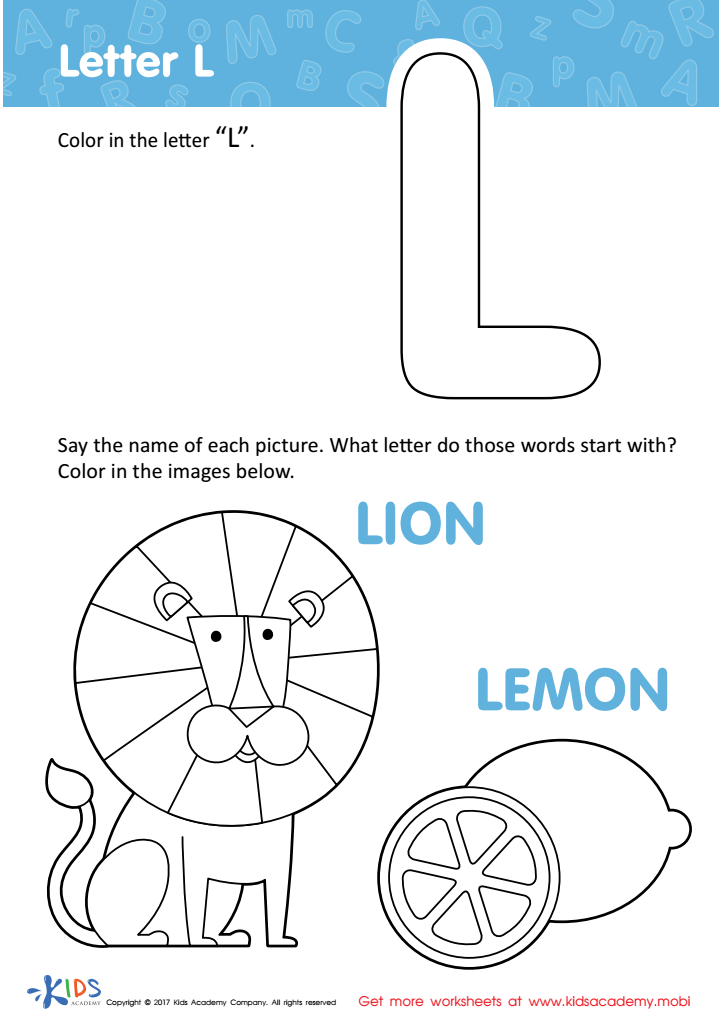
Letter L Coloring Sheet
 Assign to My Students
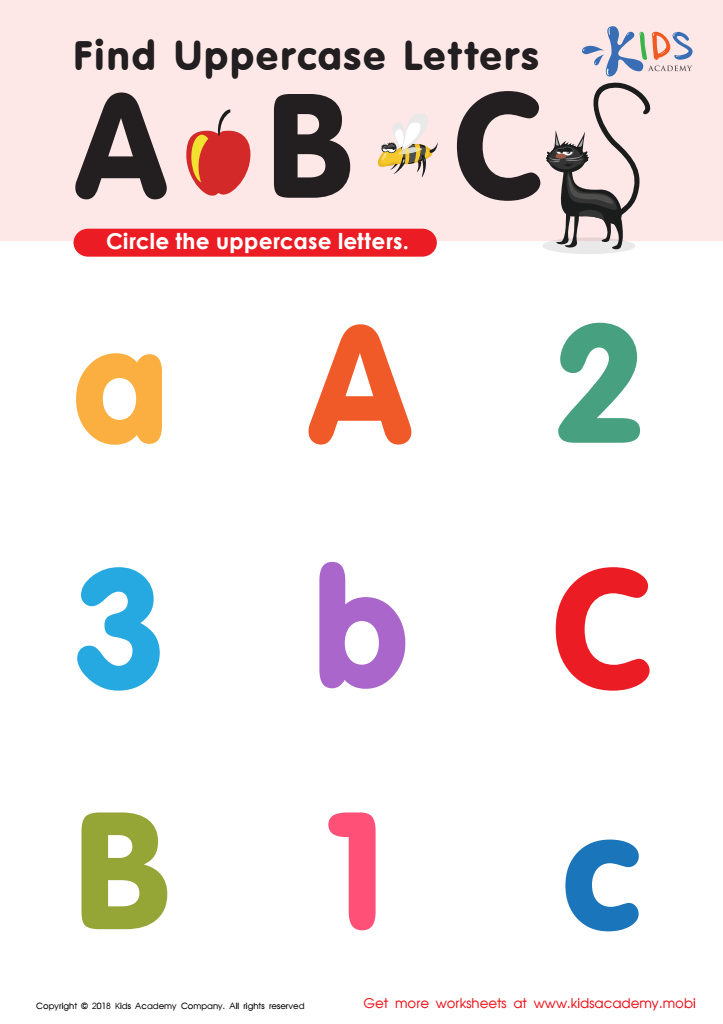
Find Uppercase Letters A, B, and C Worksheet
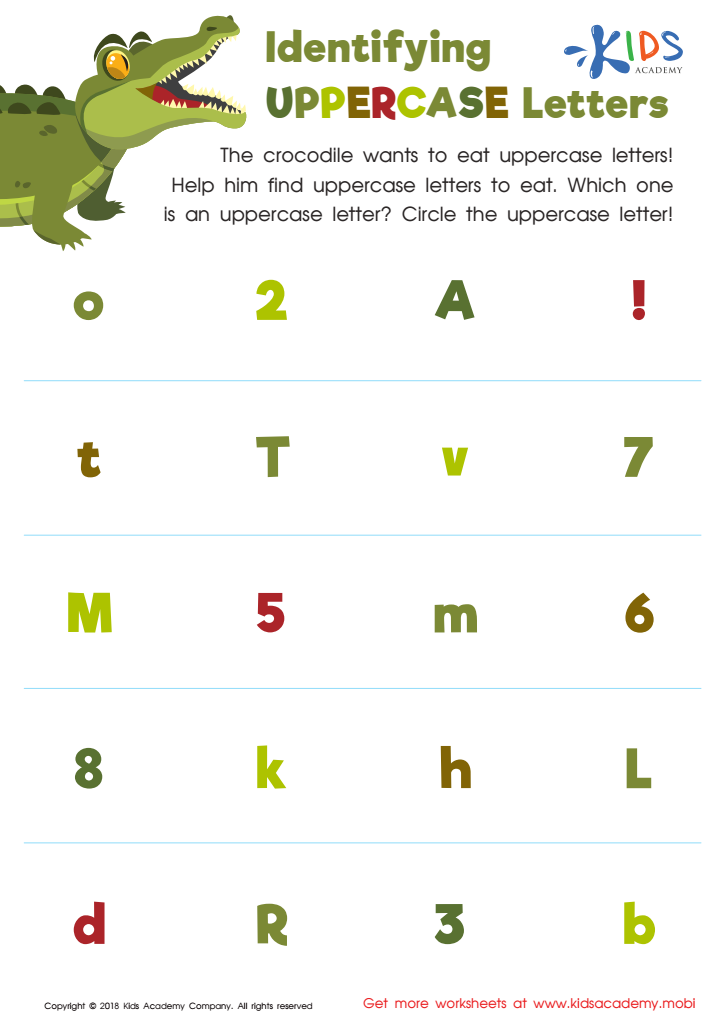
Identifying Uppercase Letters Worksheet

Find lowercase letters a b c Worksheet

Find Lowercase Letters v w x Worksheet








Visual discrimination skills are essential for children aged 4-7 as they form the foundation for many academic tasks, especially reading and writing. These skills enable children to identify and differentiate between various letters, numbers, shapes, and objects, which is crucial in recognizing letters that appear similar, like 'b' and 'd', or 'p' and 'q'.
For parents and teachers, fostering these skills can significantly boost a child's academic confidence and reduce frustration during early literacy development. Children who struggle with visual discrimination may find it challenging to follow written instructions, spell, or decode words, which can hinder their overall learning trajectory.
Furthermore, strong visual discrimination skills aid in developing fine motor skills necessary for writing, as children must be able to visually process and replicate shapes and letters accurately.
Parents and teachers can support this skill set through engaging activities such as puzzles, matching games, and engaging in vocabulary-rich discussions. Building these foundational skills will help ensure that children are more prepared for the complexities of learning as they transition into higher grades, ultimately fostering a love for learning and helping them achieve academic success.







