Vocabulary development Normal Letter Sounds Worksheets for Ages 4-7
6 filtered results
-
From - To
Boost your child's reading and speaking skills with our engaging "Vocabulary Development Normal Letter Sounds Worksheets" designed for ages 4-7. At Kids Academy, we focus on nurturing young minds through fun and interactive activities that teach letter recognition and phonemic awareness. Our carefully crafted worksheets simplify learning for kindergarten and early elementary students, helping them master the sounds of the alphabet, a foundational step in vocabulary building. Each worksheet blends colorful visuals with stimulating exercises, ensuring your child enjoys every step of their educational journey. Equip your child with essential language skills today at Kids Academy!
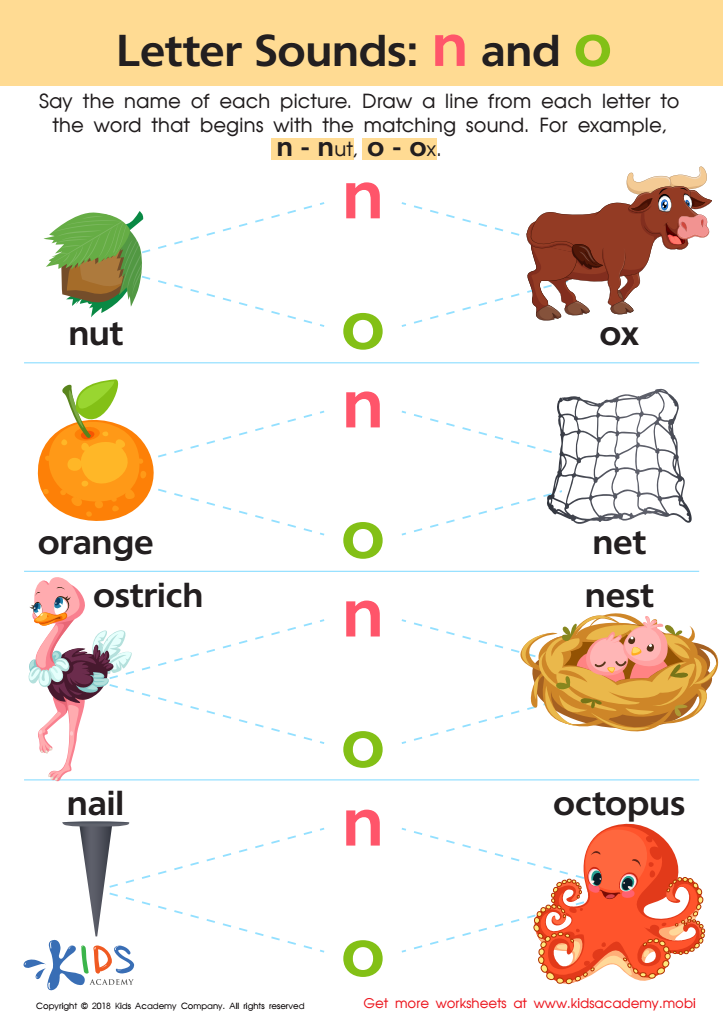
Letter N and O Sounds Worksheet
 Assign to My Students
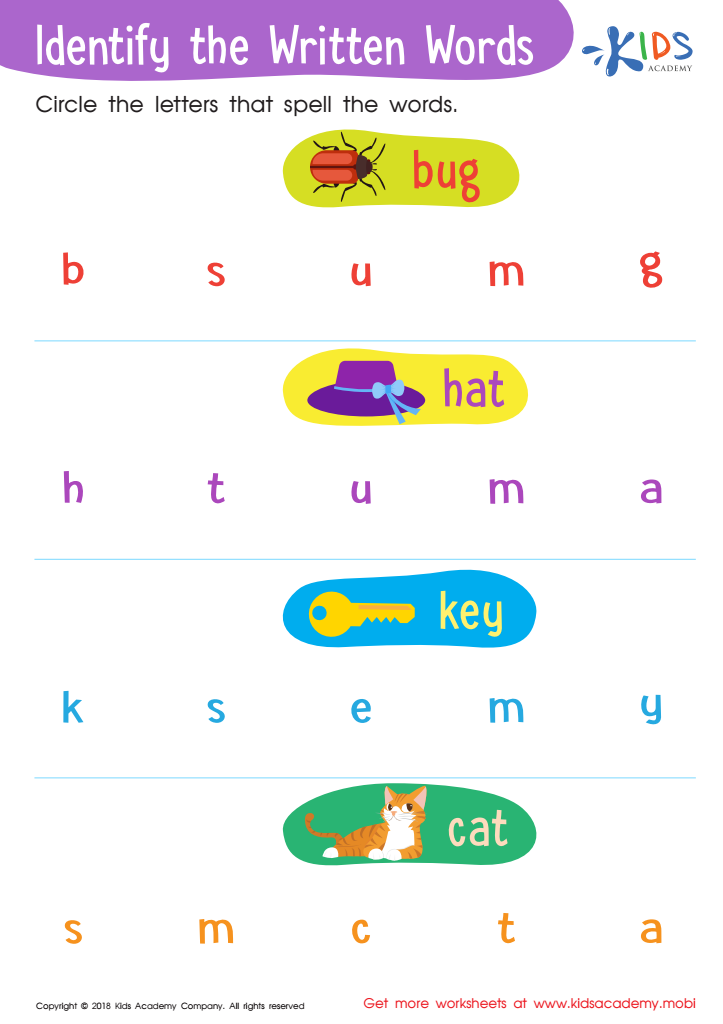
Identify the Written Words Worksheet
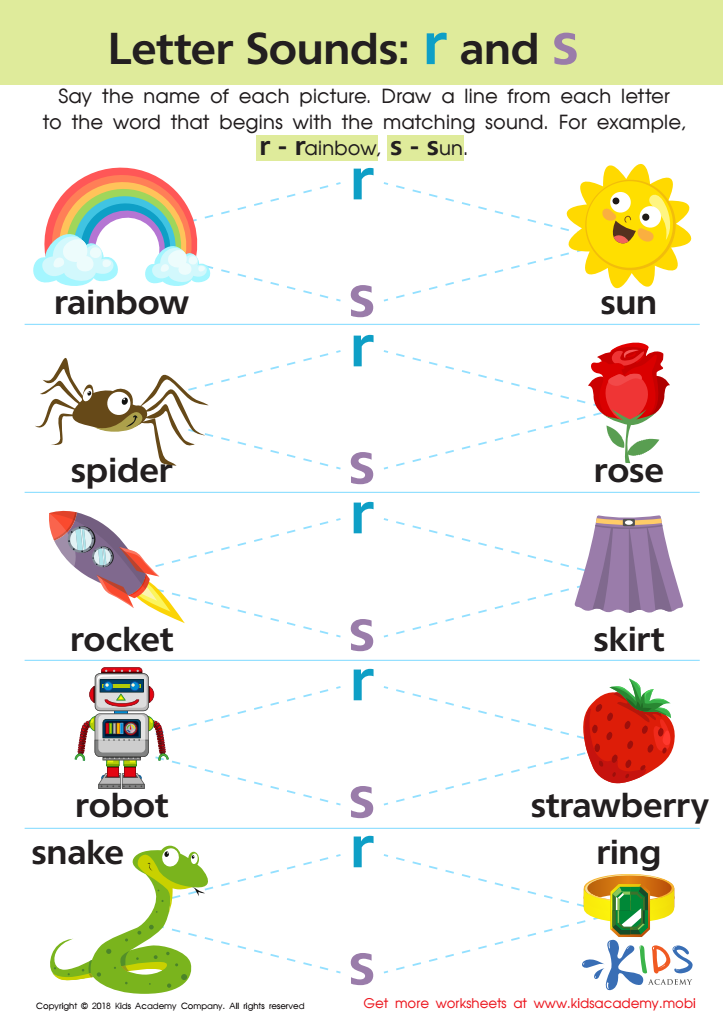
Letter R and S Sounds Worksheet
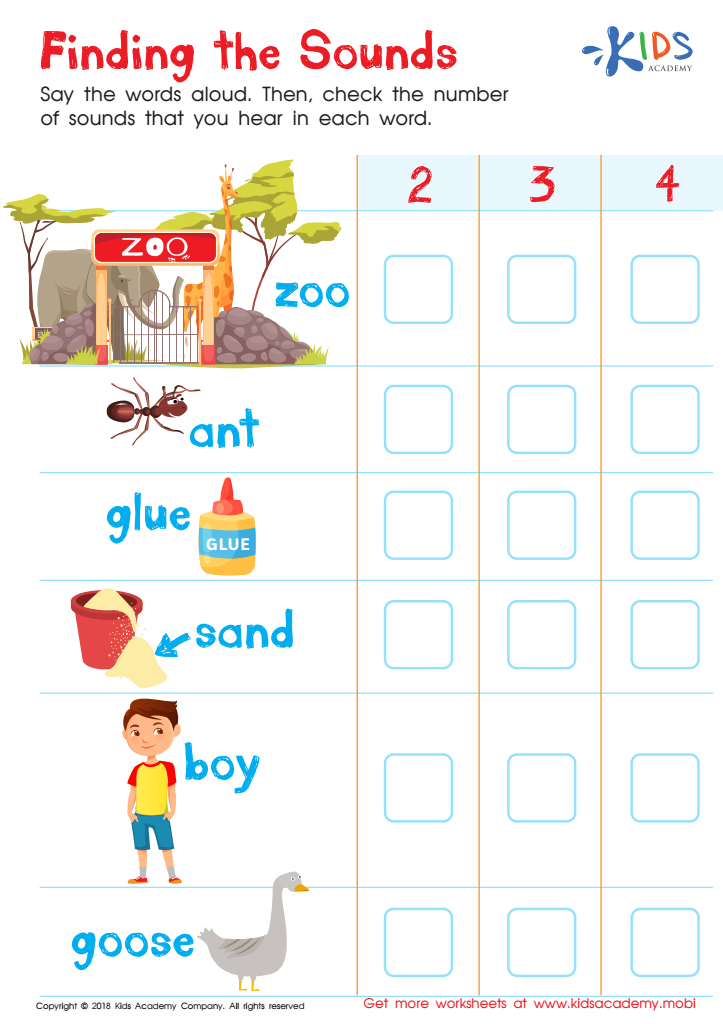
Finding the Sounds Worksheet
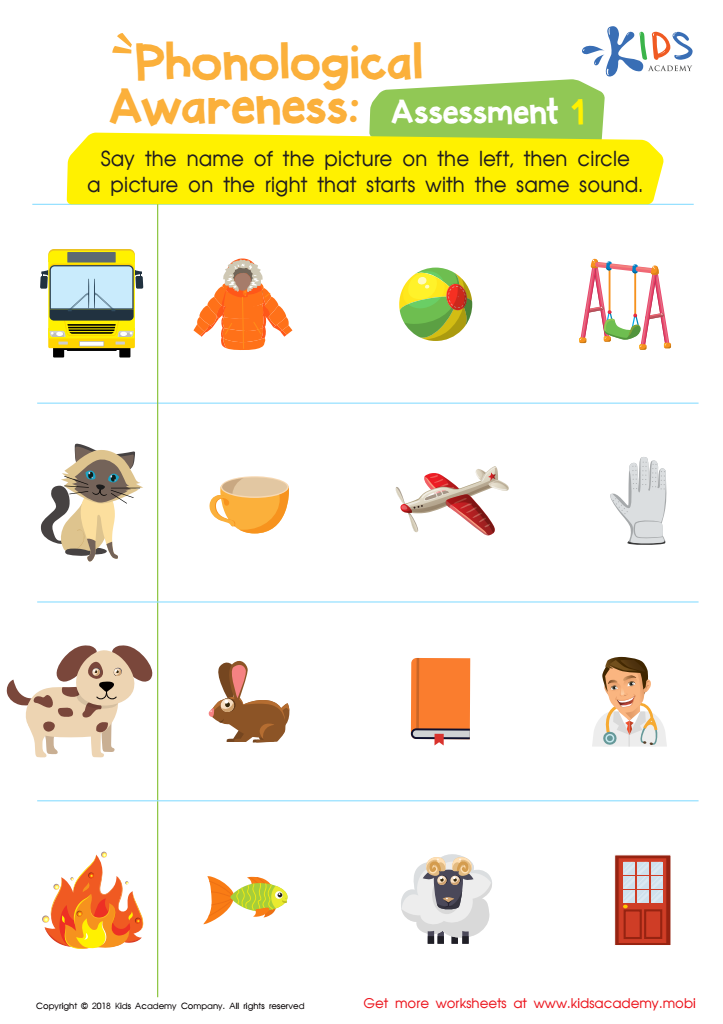
Phonological Awareness: Assessment 1 Worksheet
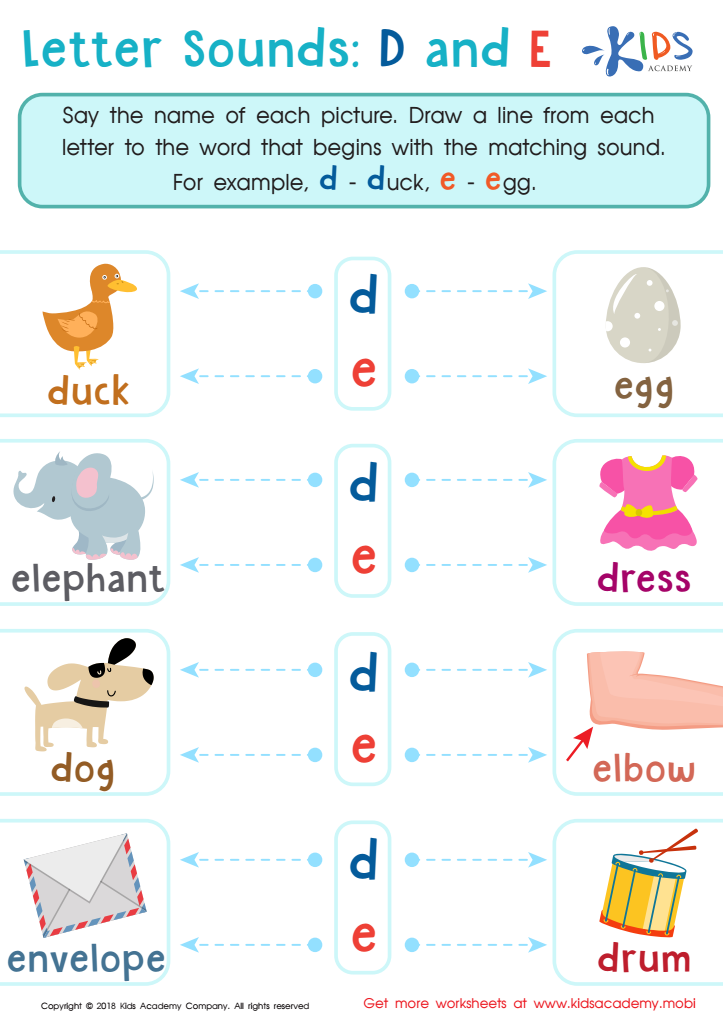
Letter D and E Sounds Worksheet








Vocabulary development and normal letter sounds are crucial for children aged 4-7 as they lay the foundation for literacy and lifelong learning. During this period, children's brains are highly receptive to language acquisition, and their vocabulary growth directly influences their ability to read, write, and communicate effectively. Starting with rich vocabulary helps children understand texts better, enhances their capacity to express thoughts clearly, and fosters a love for reading.
When children know letter sounds, they begin to decode words—a key skill for reading. Phonemic awareness, the ability to hear and manipulate individual sounds in words, is essential for linking speech to text. It also supports correct pronunciation and spelling. Delays in this area can lead to difficulties in reading fluency and comprehension, affecting overall academic performance.
Moreover, a robust vocabulary supports cognitive development and critical thinking, enabling children to grasp more complex concepts more easily. It also boosts confidence and participation in class discussions, ensuring a more engaging learning experience.
Teachers and parents should actively encourage vocabulary and phonics learning through interactive reading, conversation, and educational games. By prioritizing these skills, adults help children build a strong educational foundation, setting them up for future academic success and effective communication skills.






