Rhyming skills development Normal Phonics Worksheets for Ages 4-7
4 filtered results
-
From - To
Unlock the joy of learning with our Rhyming Skills Development Normal Phonics Worksheets, designed specifically for children aged 4-7. These engaging worksheets foster essential phonics skills through interactive exercises that focus on recognizing and creating rhymes, enhancing vocabulary and pronunciation. Our activities encourage children to explore language creatively while building confidence in their reading and speaking abilities. Ideal for homeschooling or classroom settings, these worksheets provide a fun and enriching experience that captivates young learners. Start cultivating a love for language and sound with our carefully crafted resources, tailored for budding readers eager to discover the magic of rhyme!
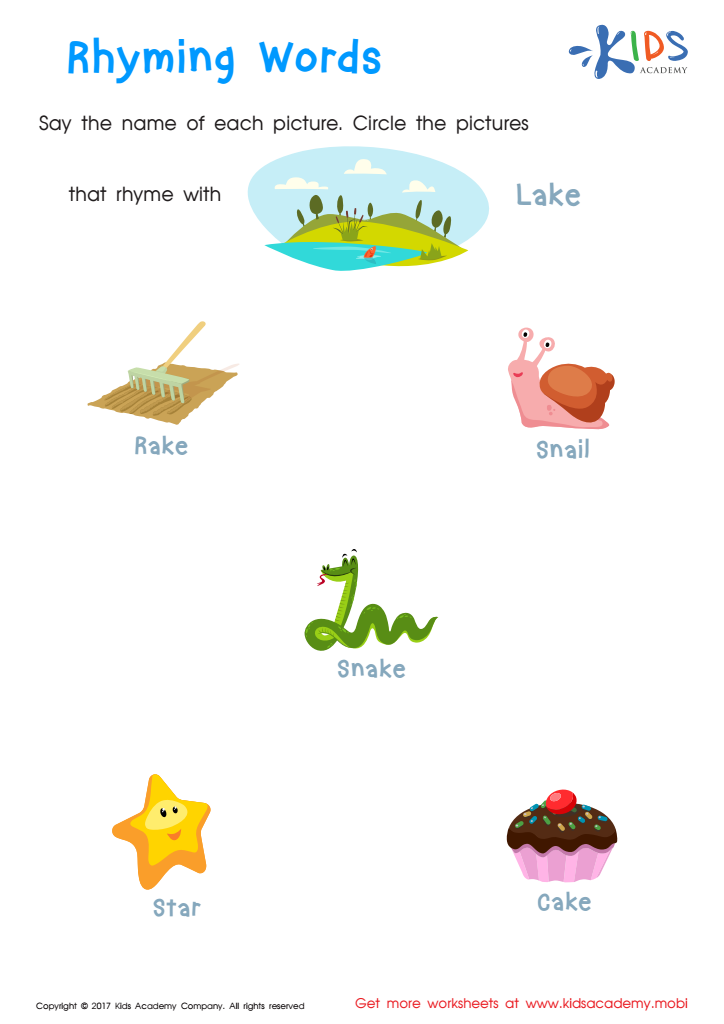
Rhyming Words Rhyming Worksheet
 Assign to My Students
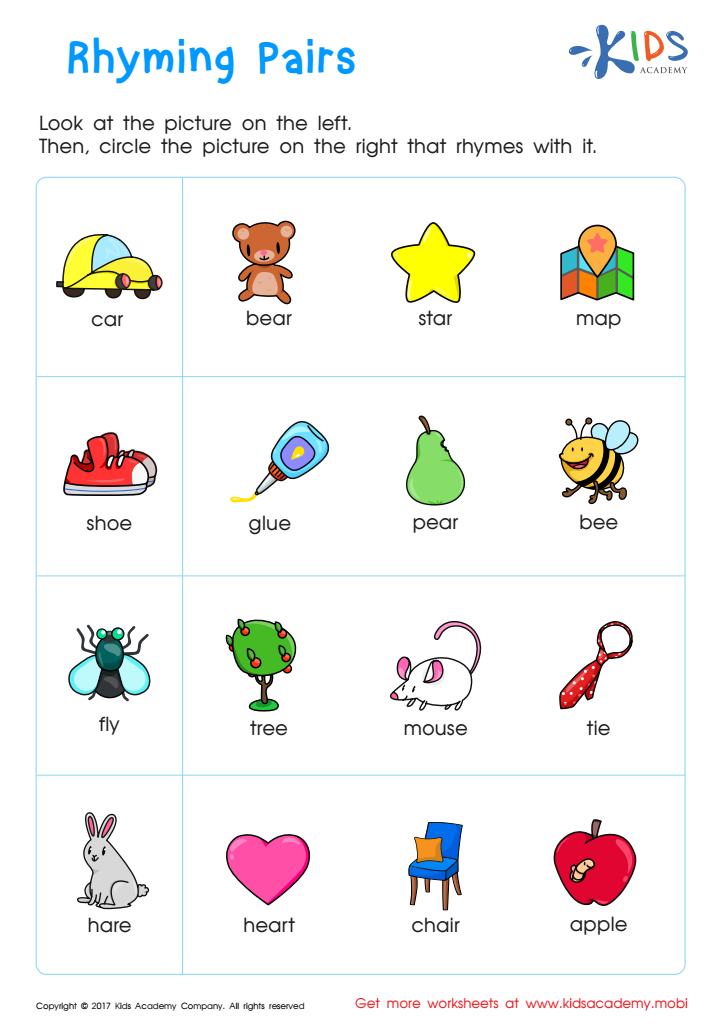
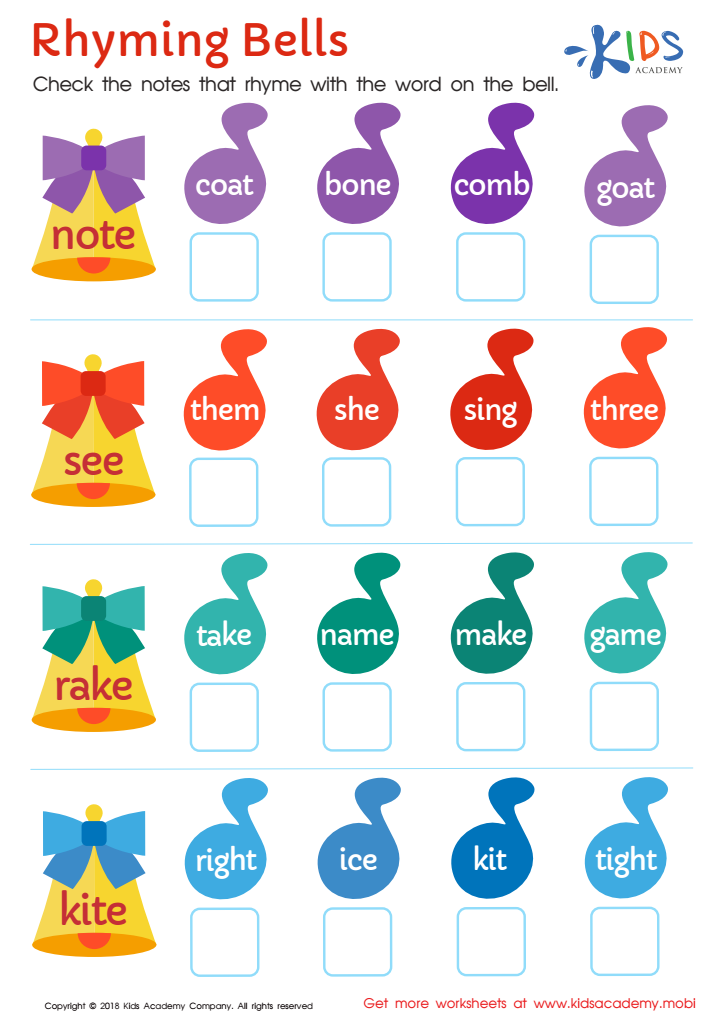
Rhyming Bells Worksheet
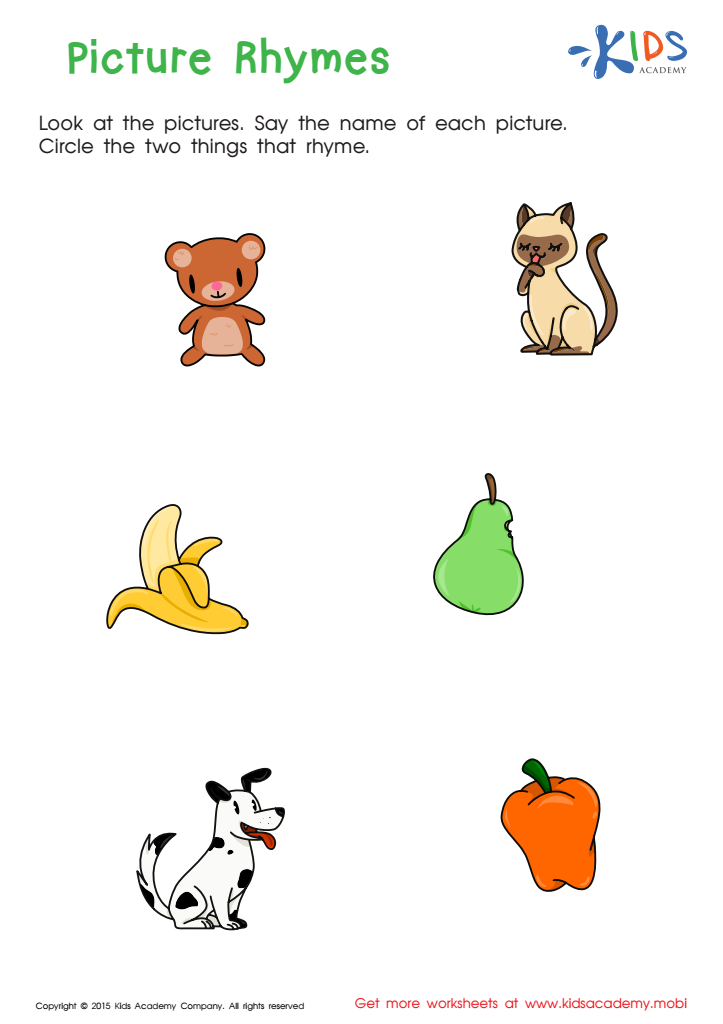
First Words: Picture Rhymes Worksheet








Rhyming skills are essential for early literacy development in children aged 4 to 7. Phonemic awareness, which includes the ability to recognize and produce rhymes, is a fundamental skill that lays the groundwork for reading. When children can identify and generate rhyming words, they are practicing the sounds of language, enhancing their auditory discrimination. This skill not only strengthens their phonics but also aids in vocabulary development and comprehension.
Parents and teachers should prioritize rhyming because it makes learning fun and engaging. Incorporating rhymes into stories, songs, and playful activities makes it easier for children to remember words and reinforces their understanding of sound patterns. Regular exposure to rhymes fosters a love of language and encourages creative expression.
Moreover, strong rhyming skills can boost self-confidence and motivation in young learners. As children become more proficient in recognizing and producing rhymes, they gain a sense of accomplishment, which can fuel their interest in reading and writing.
In summary, by focusing on rhyming skills within the framework of normal phonics instruction, parents and teachers can effectively support children's literacy journeys, ensuring they become confident, skilled readers and communicators. This foundation is vital not only for their immediate academic success but also for lifelong learning.







