Sound differentiation Normal Phonics Worksheets for Ages 4-7
3 filtered results
-
From - To
Boost your child’s language skills with our Sound Differentiation Normal Phonics Worksheets, designed specifically for ages 4-7. These engaging, printable worksheets help young learners differentiate between various sounds and letters, laying a strong foundation for reading proficiency. Each activity promotes phonemic awareness through fun exercises that capture kids' attention, making phonics enjoyable and effective. Ideal for at-home practice or classroom use, our worksheets are crafted to align with early literacy standards. Help your child master sounds, build confidence, and develop essential reading skills with these user-friendly resources that foster a love for learning. Explore our collection today!
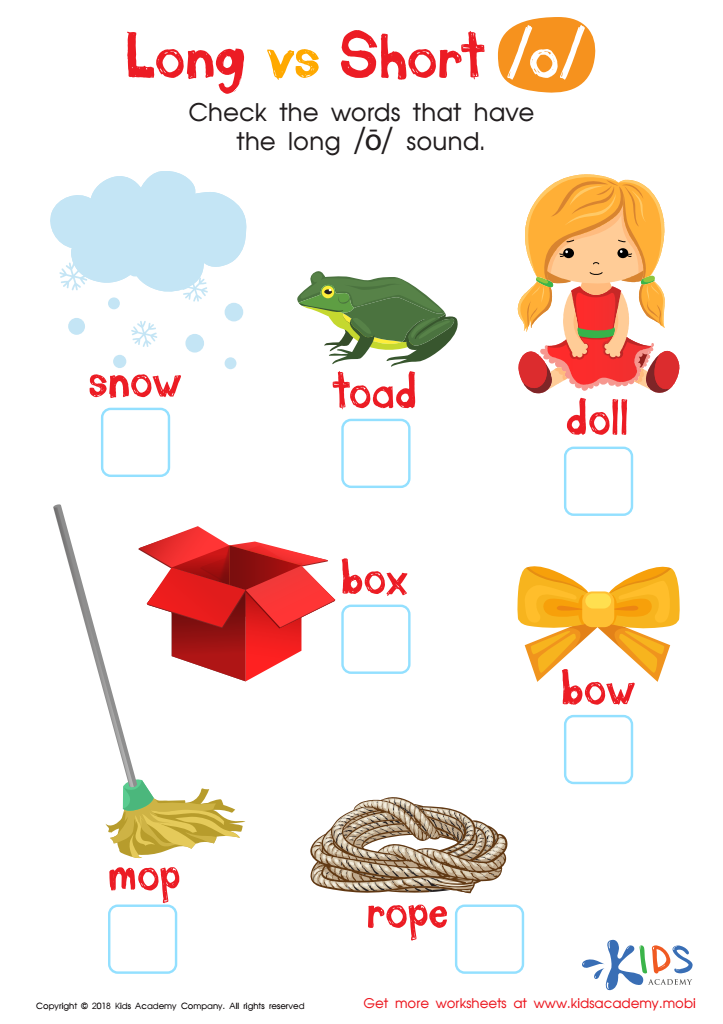
Long vs Short O Reading Worksheet
 Assign to My Students
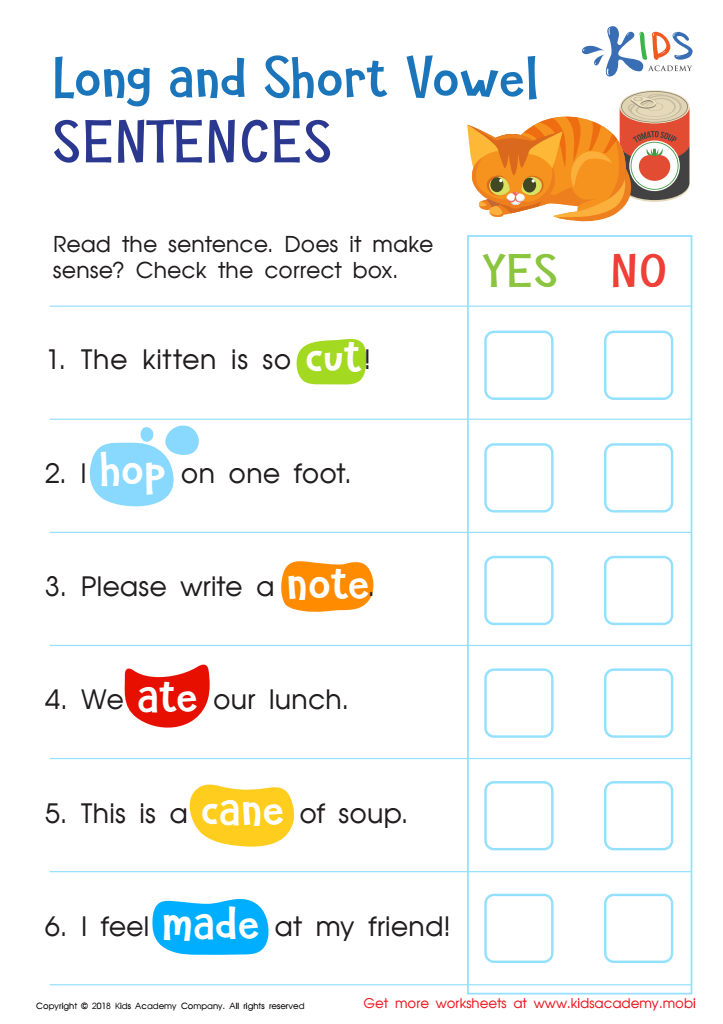
Long and Short Vowel Sentences: Assessment Worksheet
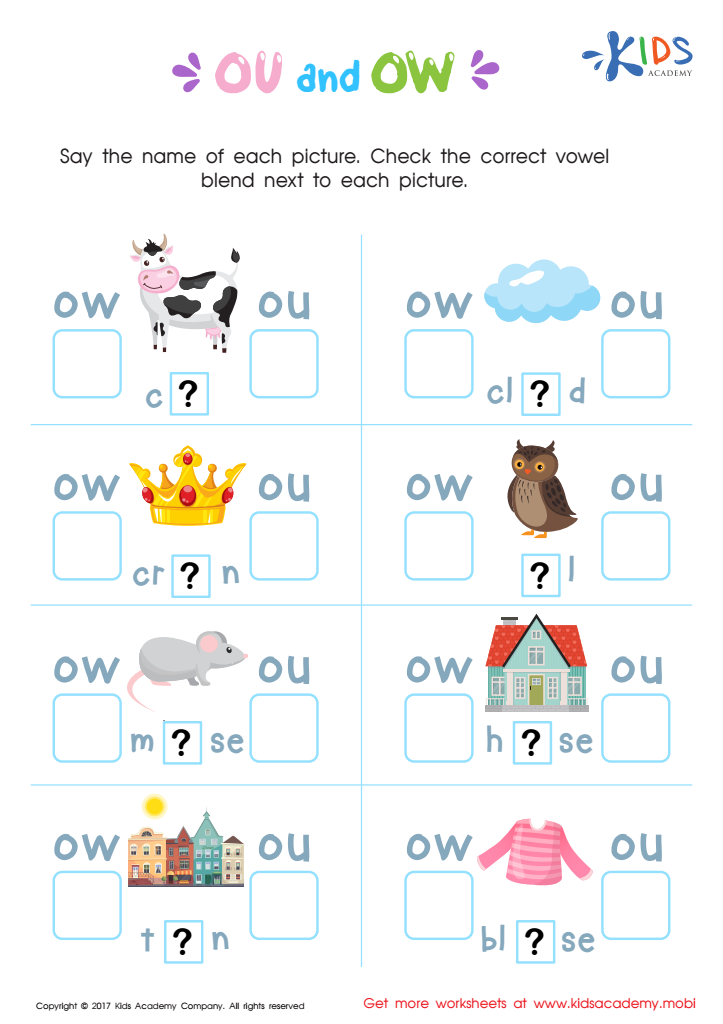
OU and OW Words Worksheet








Sound differentiation through Normal Phonics is crucial for children ages 4-7 as it lays the foundation for reading and writing skills. At this developmental stage, children are beginning to recognize letters and their corresponding sounds. Sound differentiation helps them distinguish between similar sounds, allowing them to effectively decode words. This skill is essential not just for reading fluency but also for comprehension, as understanding how sounds make up language enables children to grasp new vocabulary and concepts.
Moreover, strong phonics knowledge can promote confidence in young learners, making them more enthusiastic about learning. Teachers and parents who prioritize phonics can better support children's language development, nurturing their ability to express themselves both orally and in writing.
Additionally, phonics instruction encourages awareness of speech sounds, benefiting children's overall communication skills. As they master sound differentiation, children become more adept at spelling and can approach complex texts with greater ease in later grades. By fostering these foundational skills early on, educators and parents set children up for success, helping them to develop a love for reading that lasts a lifetime. Thus, investing in sound differentiation through Normal Phonics is vital for academic achievement and lifelong literacy.







