Vocabulary expansion Normal Two Vowels Together Worksheets for Ages 4-7
4 filtered results
-
From - To
Enhance your child's language skills with our engaging "Vocabulary Expansion Normal Two Vowels Together Worksheets," designed specifically for ages 4-7. These worksheets focus on two-vowel combinations, helping young learners recognize and understand the unique sounds created when vowels pair together. Fun and colorful activities make learning enjoyable, as kids practice reading, spelling, and developing their vocabulary in a playful way. Perfect for home or classroom use, these resources promote early literacy and boost reading confidence. Spark your child's passion for learning with our expertly crafted worksheets that cater to their developmental needs and budding curiosity! Explore and expand vocabulary today!
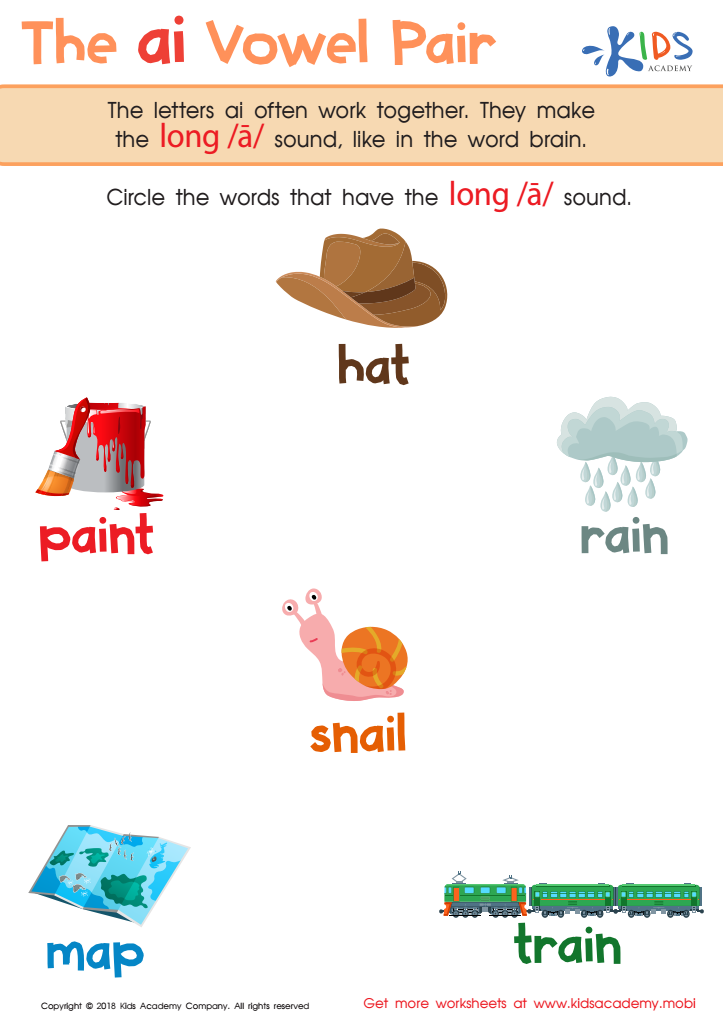
The AI Vowel Pair Worksheet
 Assign to My Students
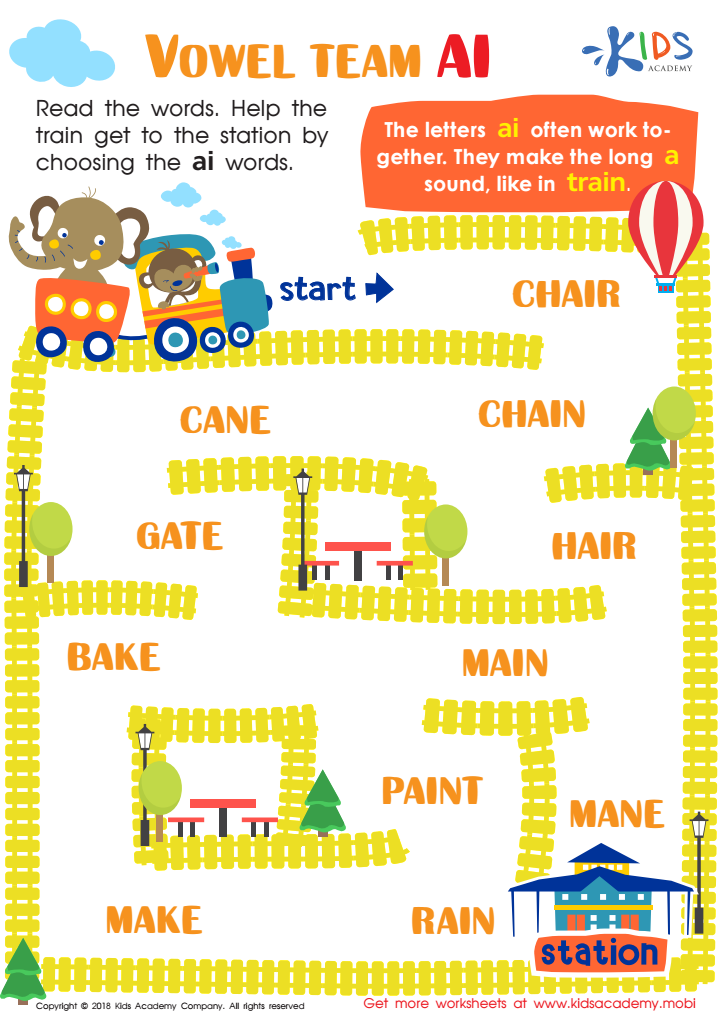
Vowel team ai Worksheet
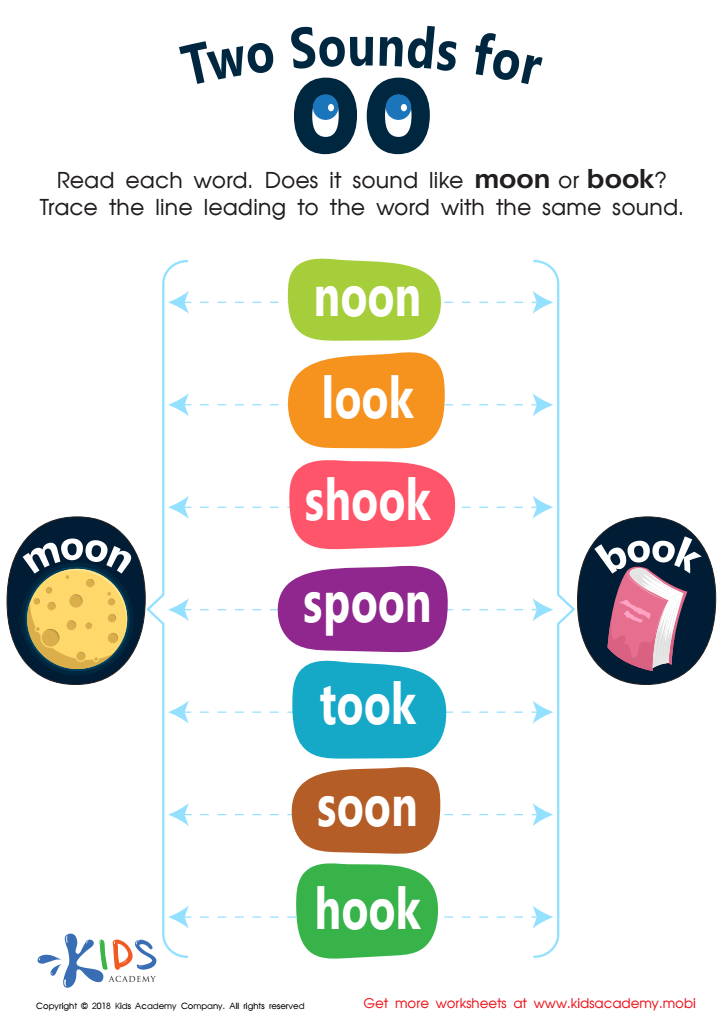
Two Sounds for OO Worksheet
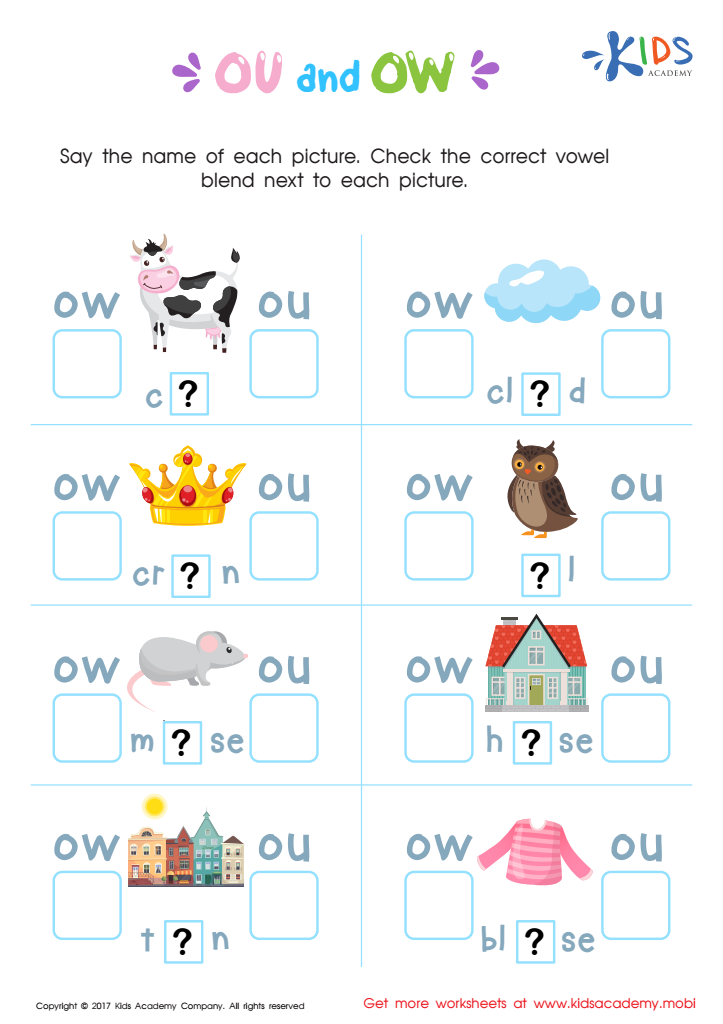
OU and OW Words Worksheet


Vocabulary expansion, particularly focusing on "Normal Two Vowels Together," is crucial for children aged 4-7 as it significantly influences their reading and language development. At this age, children are incredibly receptive to language concepts, and mastering vowel combinations aids phonetic understanding, enabling them to decode words more effectively. When kids learn that certain vowel pairs—like "ai" in “rain” or "ea" in “leaf”—have specific sounds, they become more confident readers.
Additionally, a robust vocabulary enhances comprehension skills, allowing children to engage meaningfully with texts. With a wide range of words in their toolkit, children can express their thoughts and feelings more clearly, fostering better communication skills. This layer of language supports not only academic success but also social interactions.
Moreover, understanding vowel patterns can help demystify the reading process, reducing frustration and encouraging a love for reading. When parents and teachers invest time in teaching these concepts, they equip children with essential tools for future learning. Early vocabulary expansion is key not only to literacy but also to overall cognitive development, laying the groundwork for critical thinking and problem-solving abilities later in life. Thus, it is imperative for caregivers to prioritize this linguistic foundation during formative years.