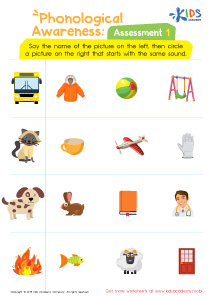
Vowel Recognition Normal Vowels and Consonants Worksheets for Ages 4-7
6 filtered results
-
From - To
Strengthen your child's foundation in reading with our Vowel Recognition Normal Vowels and Consonants Worksheets tailored for ages 4-7. Designed to enhance early literacy skills, these engaging activities help young learners differentiate between vowels and consonants. Through fun exercises and vibrant worksheets, children will practice recognizing vowel sounds, essential for early reading development. Our resources support preschool and early elementary students in building crucial language skills, ensuring they grasp the basics of phonics and alphabet recognition. Perfect for home or classroom use, these worksheets provide an effective and enjoyable way to boost your child's early literacy.
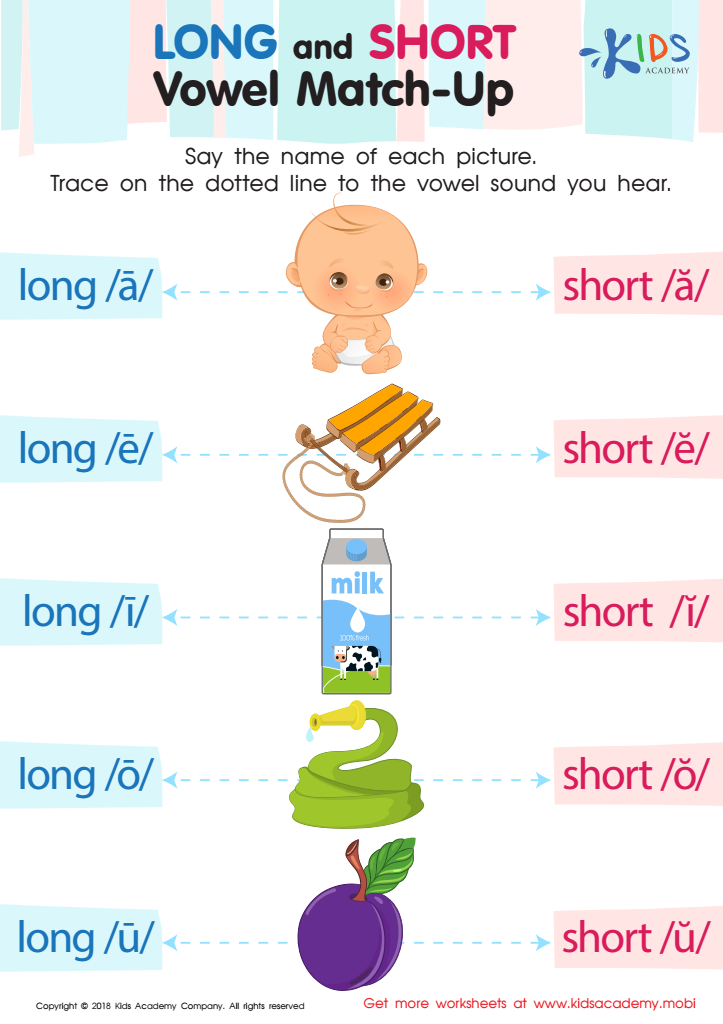
Long and Short Vowel Match up Reading Worksheet
 Assign to My Students
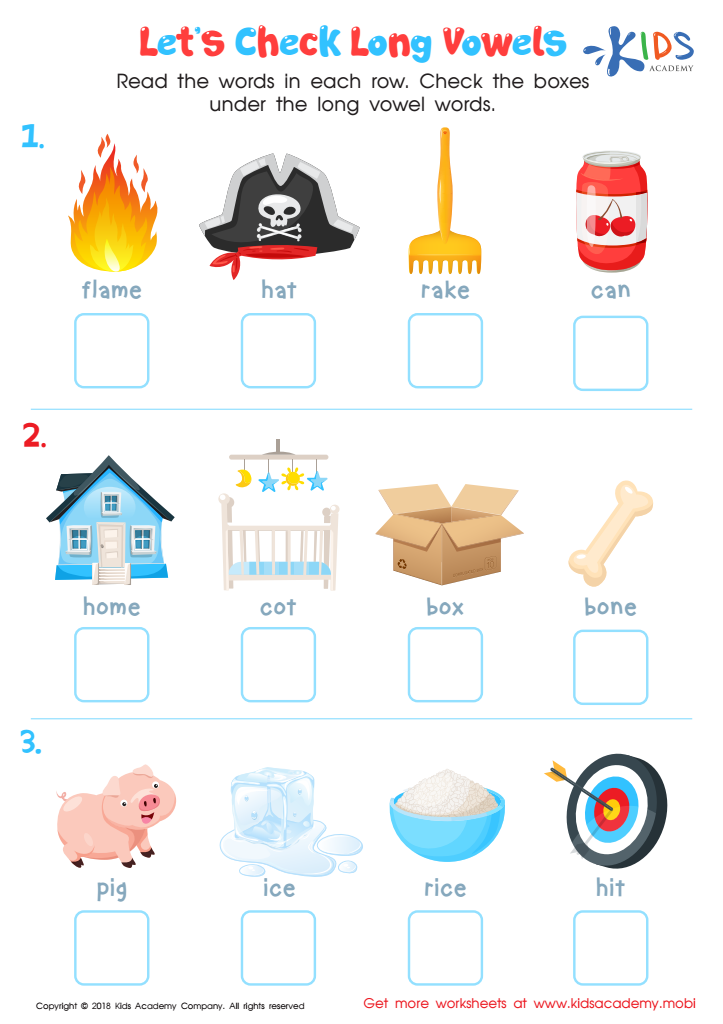
Let's Check Long Vowels: Assessment Worksheet
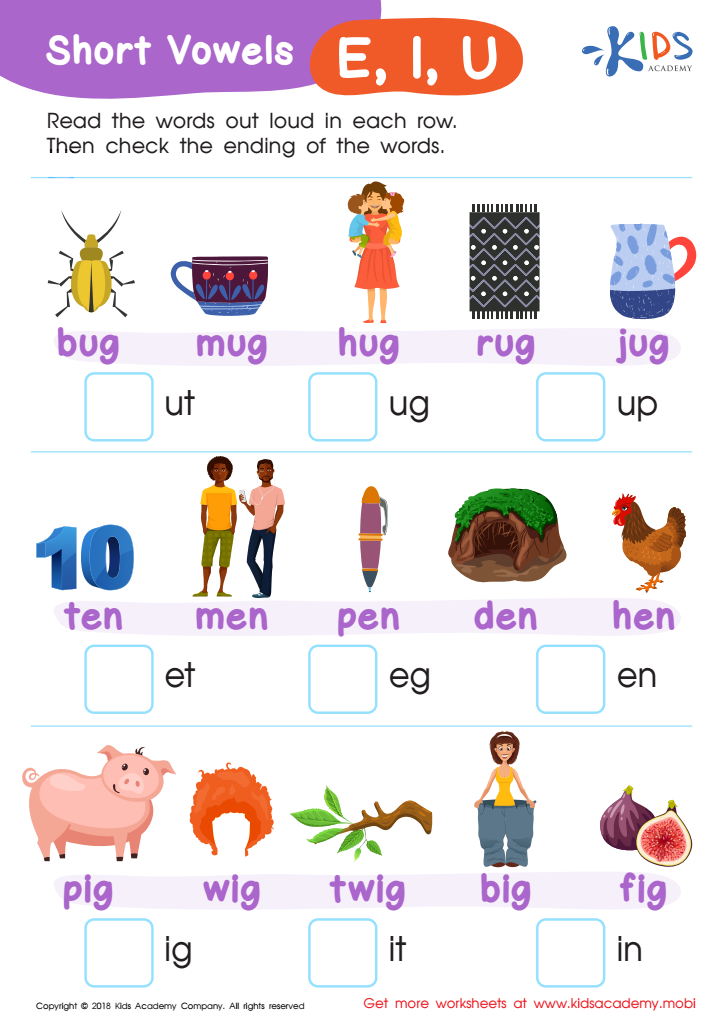
Short Vowels /e/, /i/, and /u/ Worksheet
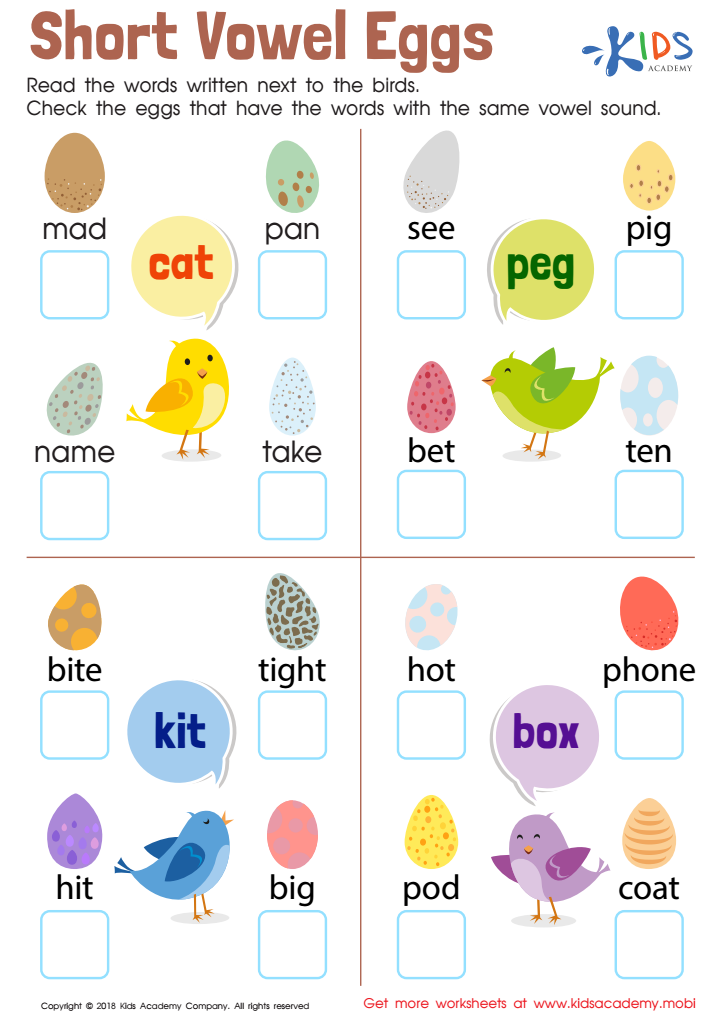
Short Vowel Eggs Worksheet
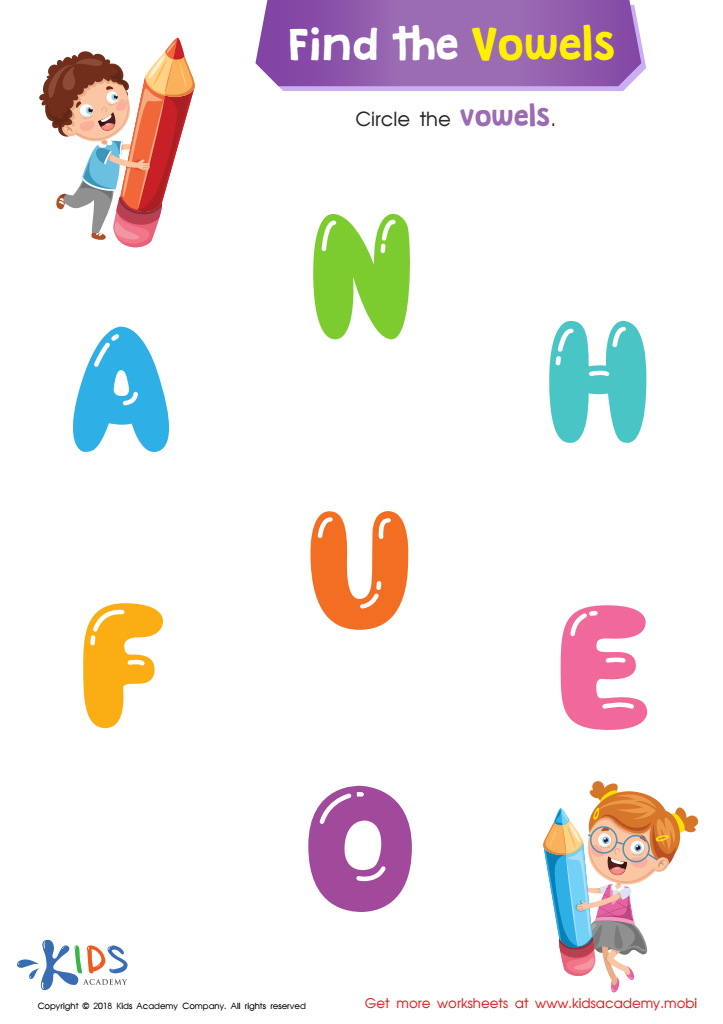
Find the Vowels Reading Worksheet
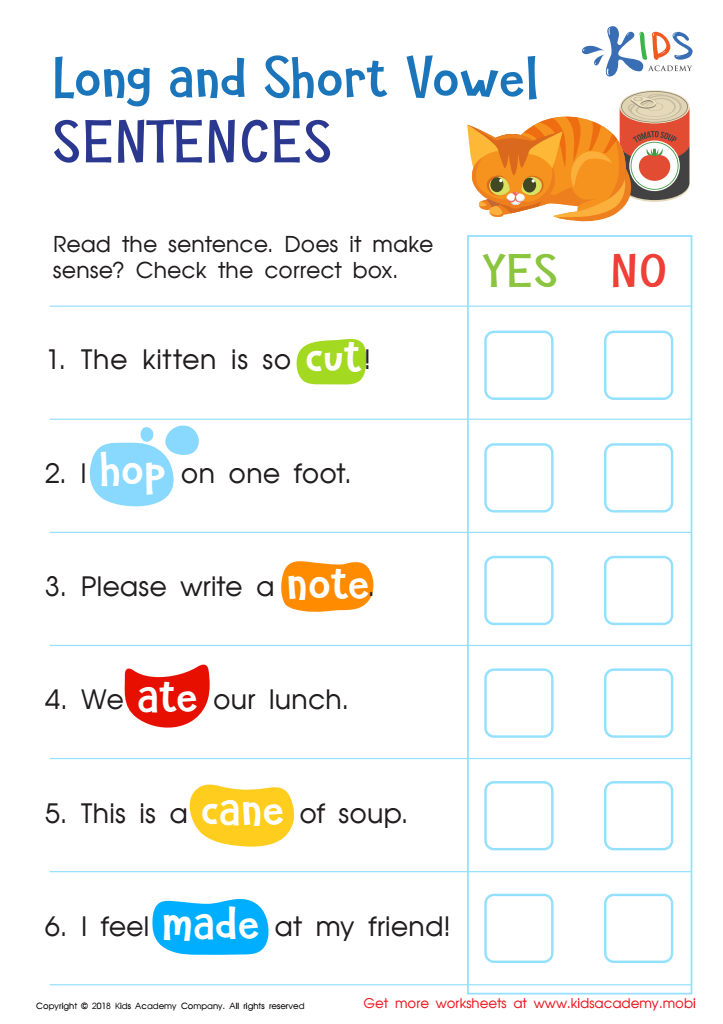
Long and Short Vowel Sentences: Assessment Worksheet



Parents and teachers should place significant emphasis on vowel recognition and understanding of normal vowels and consonants for children aged 4-7 because these skills are foundational for reading and writing proficiency. At this developmental stage, children are beginning to explore the world of language, and knowing the sounds that vowels and consonants make is crucial for phonemic awareness, an essential pre-reading skill.
Recognizing vowels enables children to decode words more effectively. For instance, knowing that the letter "a" can sound like "apple" or "ape" helps them grasp simple words and enhances their pronunciation. Consonants, too, play an integral role as they combine with vowels to form syllables, the basic building blocks of words.
Practicing vowel and consonant sounds aids in the development of oral language skills, strengthening the child's ability to form clear and comprehensible speech. This clarity in spoken language translates to better reading comprehension and writing abilities. When children can distinguish between vowel and consonant sounds, they become more adept at spelling, which boosts their confidence in their academic abilities.
In summary, vowel and consonant recognition is critical for early literacy. It provides the foundation upon which reading fluency, comprehension, and effective communication are built. Early mastery of these basic elements ensures a smoother educational journey and a lifelong love for learning.