Sound differentiation Normal Vowels Worksheets for Ages 4-7
3 filtered results
-
From - To
Discover our engaging Sound Differentiation Normal Vowels Worksheets designed for children aged 4 to 7. These worksheets focus on helping young learners identify and differentiate between various vowel sounds through fun, interactive activities. Perfect for early literacy development, they're tailored to enhance phonemic awareness, improve listening skills, and build vocabulary. Kids will enjoy practical exercises that include coloring, tracing, and matching games, making learning both enjoyable and effective. Our printable resources support parents and teachers in creating a dynamic learning environment. Equip your child with the foundational skills needed for reading success while fostering a love for learning about vowels!
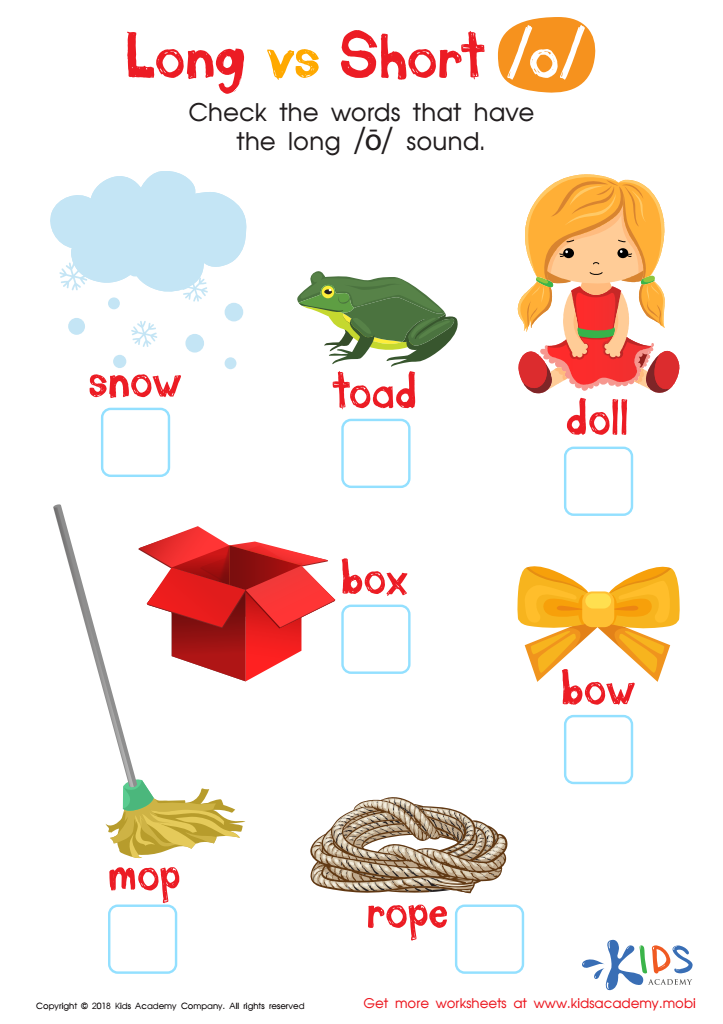
Long vs Short O Reading Worksheet
 Assign to My Students
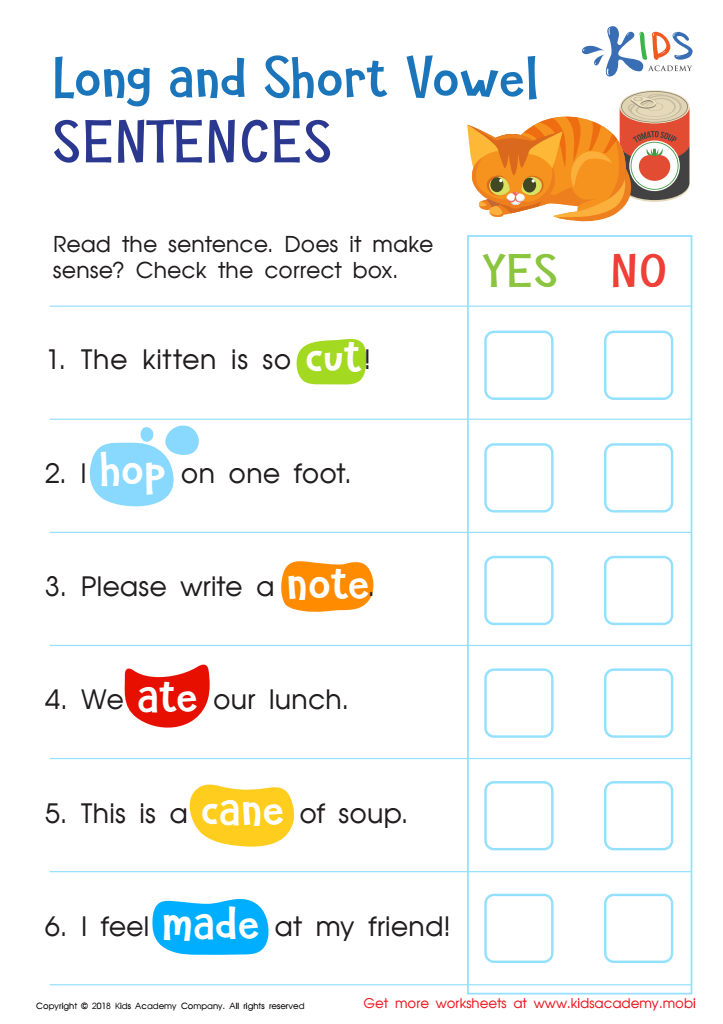
Long and Short Vowel Sentences: Assessment Worksheet
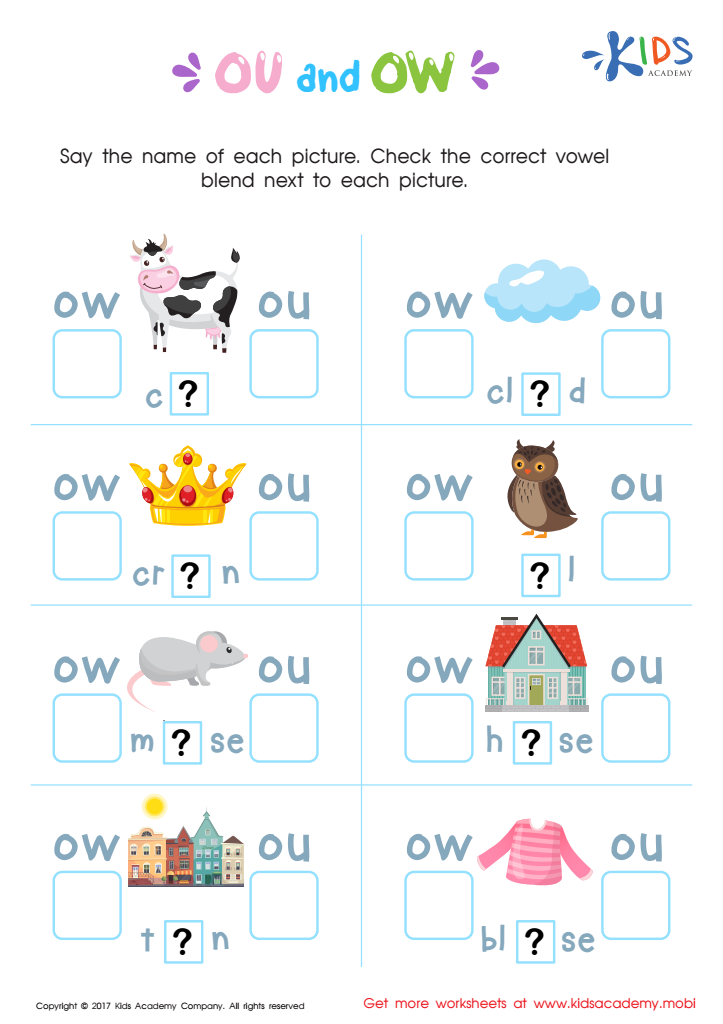
OU and OW Words Worksheet





Sound differentiation of normal vowels is crucial for children aged 4 to 7 as it forms the cornerstone of early literacy skills. Understanding the distinct sounds associated with different vowels enables young learners to decode words effectively, a skill vital for reading proficiency. When children can differentiate vowel sounds, they are better equipped to blend sounds in phonetic awareness activities, aiding in building a strong foundation for reading.
Additionally, this skill helps with spelling, as knowing the subtle differences between sounds allows children to apply their knowledge when writing. Furthermore, proficient vowel sound differentiation supports language acquisition and enhances vocabulary development. It paves the way for fluent speech patterns, which are critical for effective communication.
For educators and parents, fostering such skills in children promotes confidence and encourages a love for learning, traits that will benefit them throughout their educational journey. Moreover, focusing on vowel sounds addresses potential phonological processing issues early, helping mitigate challenges later in schooling. Engaging in playful and dynamic activities centered on vowel sound differentiation can transform learning into an enjoyable experience, ensuring that children develop the necessary phonemic skills to thrive in reading and writing as they grow.






