Sound recognition Normal Vowels Worksheets for Ages 4-7
5 filtered results
Difficulty Level
Grade
Age
-
From - To
Subject
Activity
Standards
Enhance your child’s phonetic skills with our "Sound Recognition Normal Vowels Worksheets" tailored for ages 4-7. These engaging worksheets focus on identifying and practicing the sounds of normal vowels, fostering early literacy development. Through fun and interactive activities, kids will improve their sound recognition abilities while enjoying colorful illustrations and relatable examples. Designed by educators, these printable resources support phonics learning, making it easier for young learners to grasp essential vowel sounds and apply them in various contexts. Perfect for use at home or in the classroom, these worksheets provide a strong foundation for reading success. Start your child’s journey today!
Favorites
With answer key
Interactive
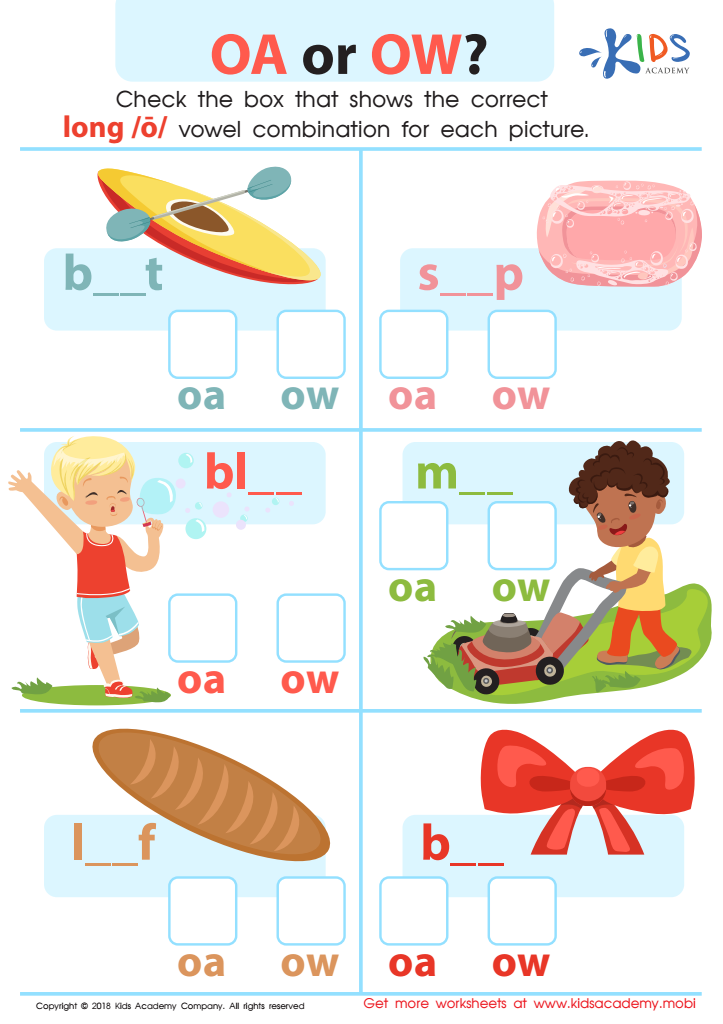
Reading: OA or OW Worksheet
This printable worksheet helps young and emergent readers with decoding words and understanding digraphs (two letters with one sound). It requires students to complete the spelling for each word based on the picture, focusing on /oa/ and /ow/ spellings. It's ideal for a reading classroom and for spelling practice.
Reading: OA or OW Worksheet
Worksheet
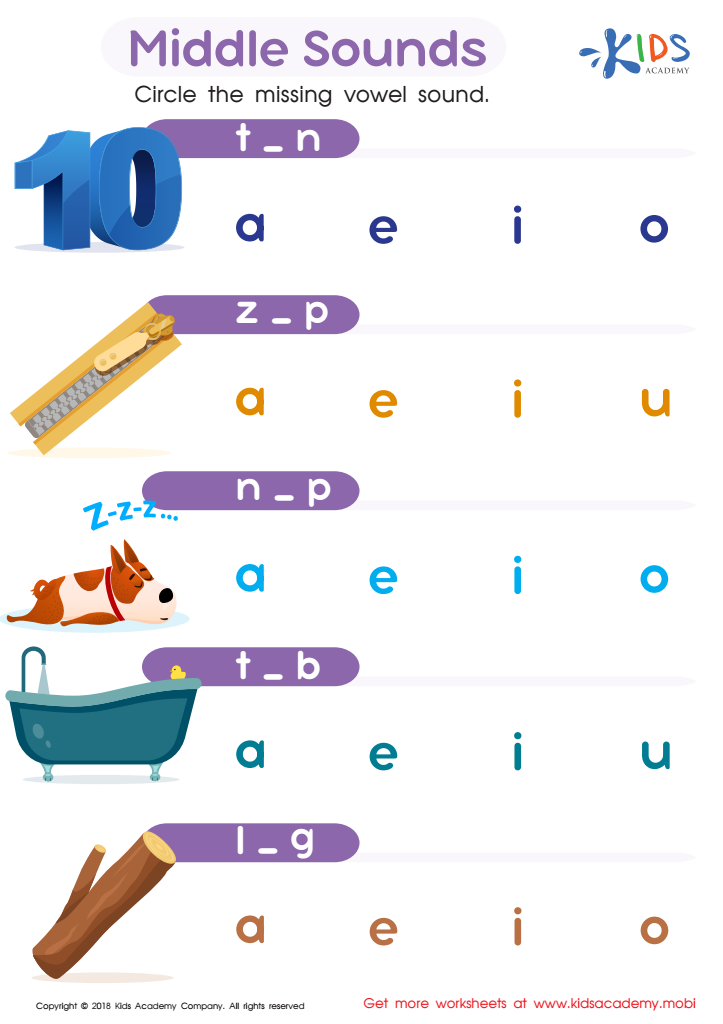
Middle Sounds Worksheet
Download this free worksheet and help your reader identify middle sounds in words. Pictures provide clues to the word, while tracing circles around the middle vowel sound strengthens fine motor and visual discrimination skills. It's a great way to teach sound discrimination between similar-sounding short vowels - a key component for proficient reading.
Middle Sounds Worksheet
Worksheet

Long and Short U Worksheet
Revised: Spice up your lesson on long and short vowels with this fun printout! Kids read the words "tube" and "tub," then reinforce the sound by coloring in the words and pictures. It's a great way to make phonics class enjoyable!
Download (PDF)
 Assign to My Students
Assign to My Students
Long and Short U Worksheet
Worksheet
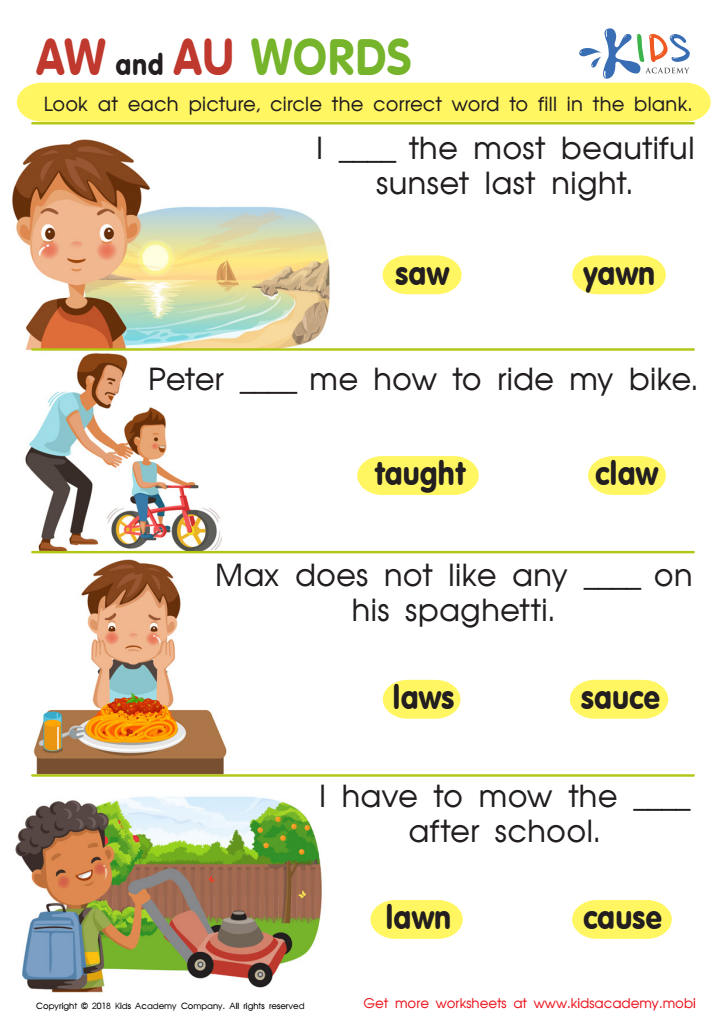
Reading: AW and AU Words Worksheet
This worksheet helps kids recognize that /au/ and /aw/ can make the same sound. Students read sentences and pick the correct word with one of the digraphs. Understanding digraphs improves decoding and reading fluency. Perfect for reading and phonics classes.
Reading: AW and AU Words Worksheet
Worksheet
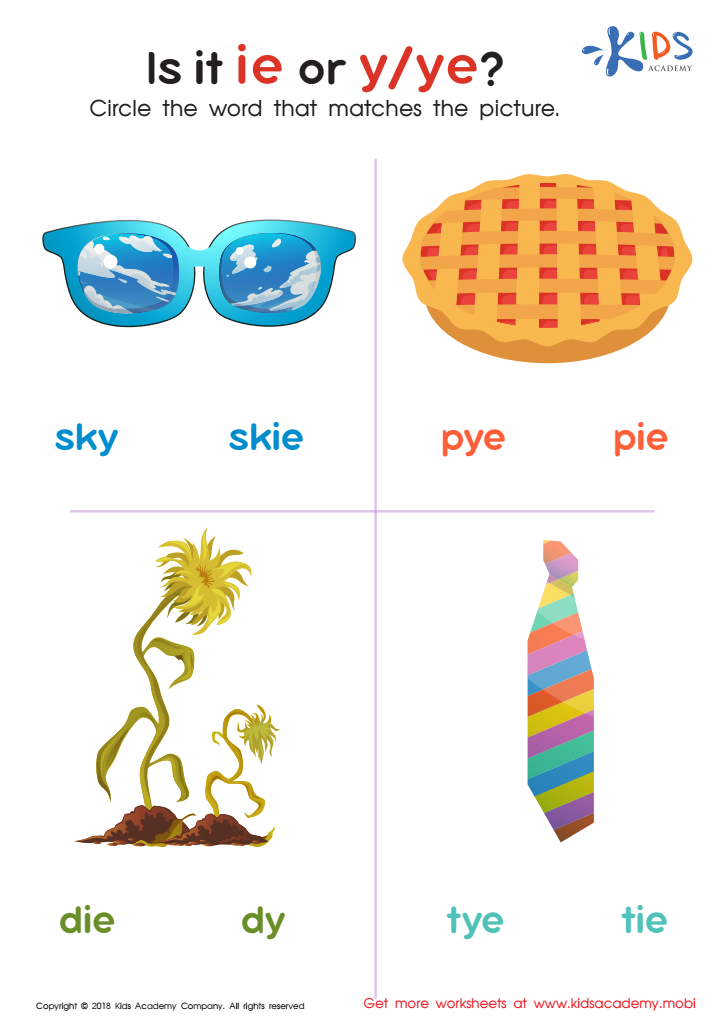
Is It IE or Y/Ye? Worksheet
Test your child's picture identification skills by pointing at common items in your house and asking them to name them. Then, look at the objects in this worksheet with your little one. Point at each one, ask for the name, then ask which spelling is correct. Help them circle the correct word.
Is It IE or Y/Ye? Worksheet
Worksheet
Join Kids Academy for Free
Who is primarily going to use this learning content?





Sound recognition of normal vowels is a critical aspect of early literacy development for children aged 4 to 7. This foundational skill enables young learners to decode words, which is essential for reading fluency and comprehension. When parents and teachers focus on vowel recognition, they are helping children distinguish between different vowel sounds, which can significantly influence their spelling and pronunciation abilities.
Moreover, vowels play a crucial role in word formation; they are often the core of syllables. By recognizing and practicing normal vowels, children increase their phonemic awareness, leading to improved reading capabilities and better communication skills. Engaging in activities that promote vowel recognition can foster a positive learning experience, making literacy enjoyable and interactive.
Additionally, early mastery of vowel sounds can boost a child's confidence as they begin to read independently. Parents and teachers can support this learning through games, songs, and rhymes that highlight vowel sounds, making the process both fun and effective. Ultimately, prioritizing vowel sound recognition lays the groundwork for lifelong reading and writing skills, benefiting children's academic journeys and personal growth. Thus, it is essential that adults remain attentive to this critical stage of literacy development in young learners.