Astronomy basics Normal Worksheets for Ages 4-7
3 filtered results
-
From - To
Explore the wonders of space with our "Astronomy Basics Normal Worksheets" designed for children ages 4-7! These engaging worksheets introduce young learners to fundamental concepts of astronomy, including planets, stars, and the moon. With vibrant illustrations and simple, age-appropriate activities, children will develop essential skills like counting, matching, and identifying celestial objects. Each worksheet is tailored to spark curiosity and foster a love for science in early learners. Perfect for home or classroom use, these printable resources help make learning about the universe fun and accessible. Ignite your child's imagination today and watch them reach for the stars!
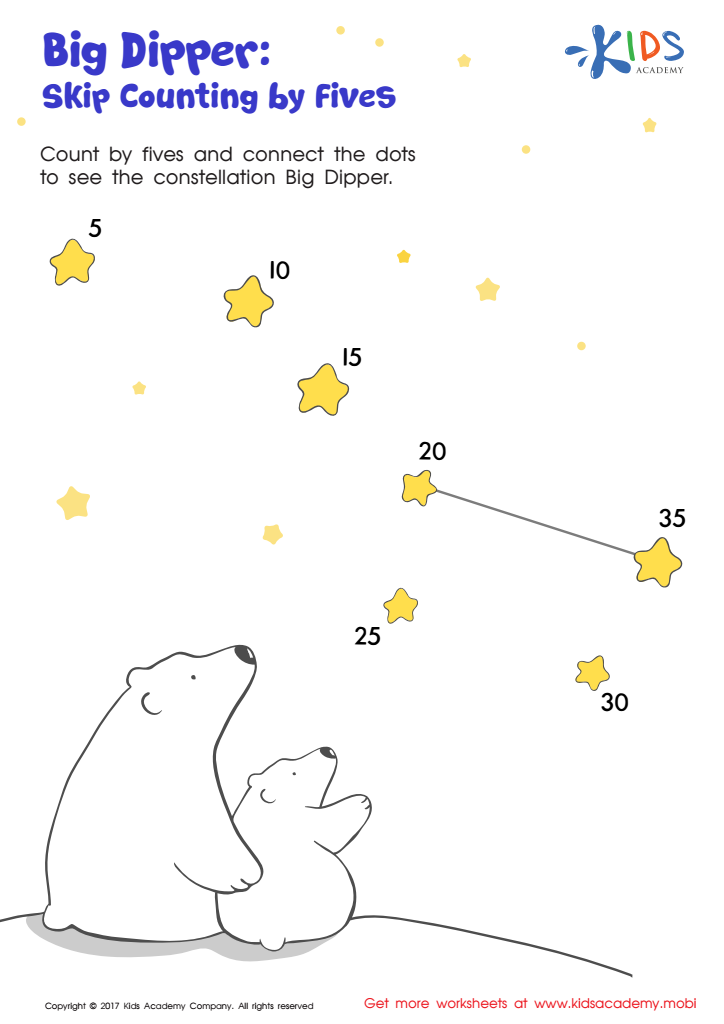
 Assign to My Students
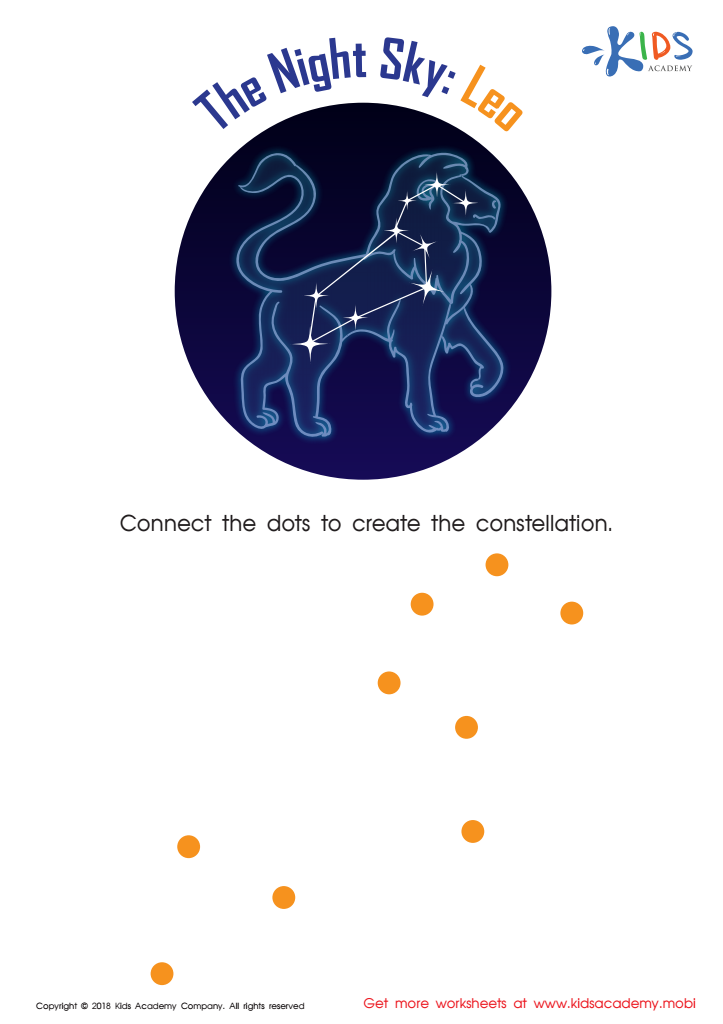
The Night Sky: Leo Worksheet
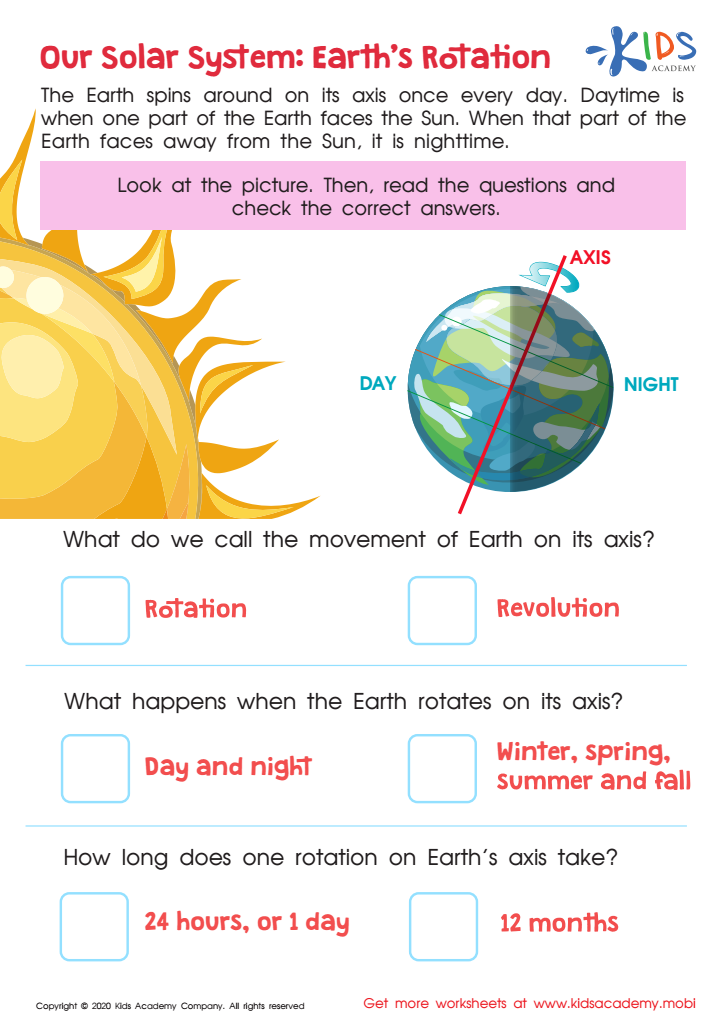
Our Solar System: Earth's Rotation Printable








Understanding astronomy basics is vital for children aged 4-7 for several reasons. Firstly, it ignites curiosity and wonder about the universe, fostering a sense of exploration and discovery. Young minds are naturally inquisitive, and introducing them to concepts like stars, planets, and the moon can inspire a lifelong interest in science.
Secondly, astronomy helps children develop critical thinking and observational skills. Learning to identify constellations or observing the phases of the moon encourages them to ask questions and seek answers, which is fundamental to their cognitive development.
Moreover, astronomy connects to a multitude of subjects. Engaging with celestial themes incorporates math through counting stars or measuring distances, literacy through storytelling about constellations, and art through creating space-themed crafts. It also provides a rich backdrop for discussing broader topics, including weather patterns and environmental awareness related to space exploration.
Lastly, fostering an appreciation for the universe can instill values of curiosity, respect for nature, and a sense of belonging within the larger world. By introducing astronomy fundamentals, parents and teachers contribute to shaping well-rounded, inquisitive thinkers ready to embark on a journey of lifelong learning.








