Basic measurement concepts Normal Worksheets for Ages 4-7
3 filtered results
-
From - To
Explore our engaging Basic Measurement Concepts worksheets designed for children aged 4-7! These colorful and interactive resources help young learners grasp essential measurement skills, such as length, weight, and volume, through fun activities. Our worksheets include hands-on exercises that foster practical understanding, enabling children to compare sizes, count objects, and follow simple measurement principles. Perfect for early education settings or at-home learning, these materials encourage critical thinking and make learning measurement enjoyable. Give your child the tools they need to develop foundational math skills while having fun! Start measuring with excitement today with our delightful, kid-friendly worksheets!
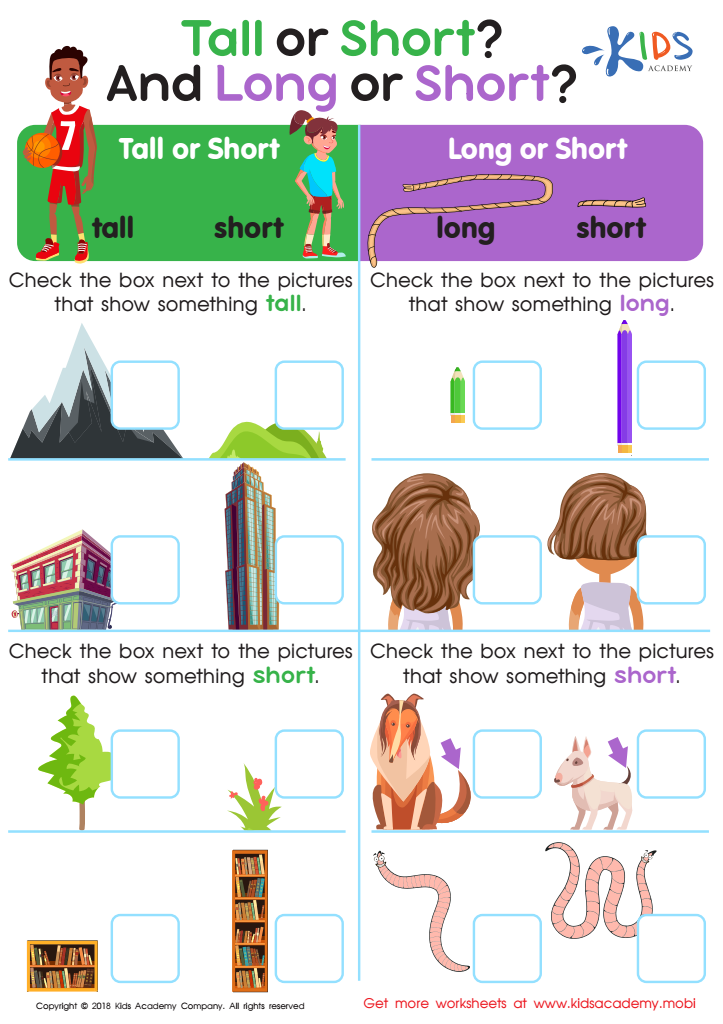
Tall or Short and Long or Short? Worksheet
 Assign to My Students
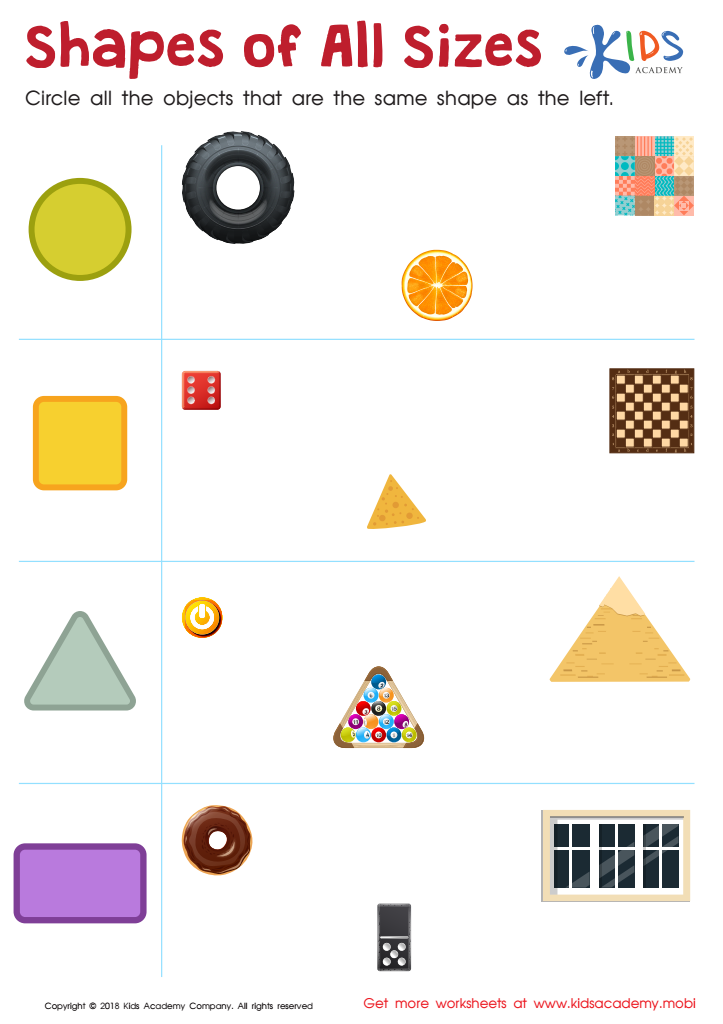
Shapes of All Sizes Worksheet
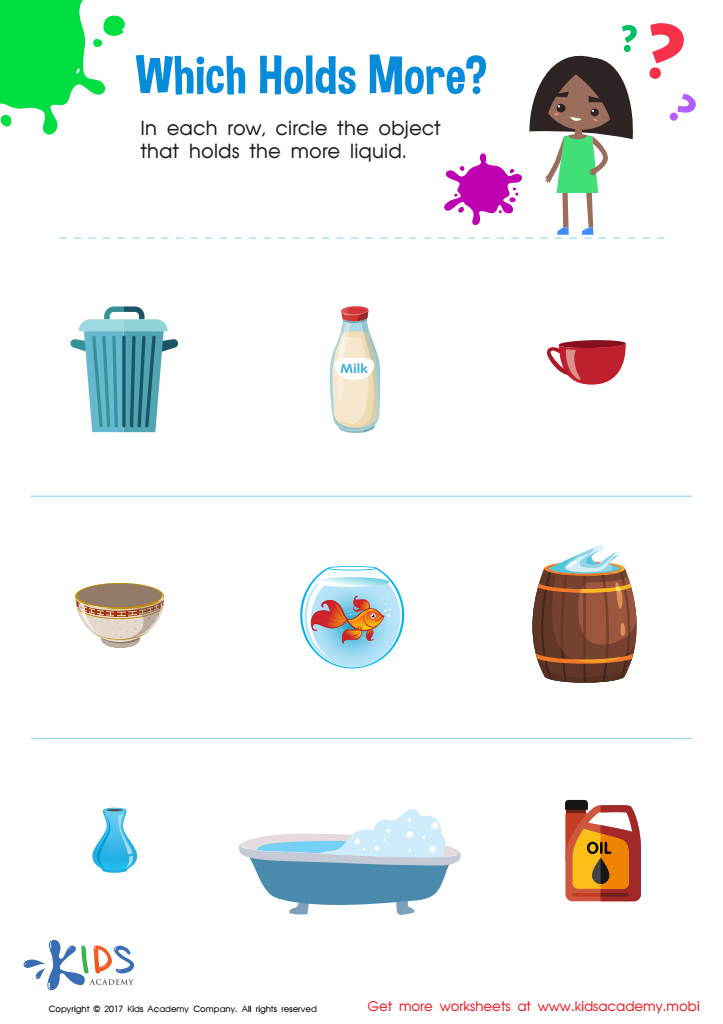
Which Holds More: Capacity Worksheet


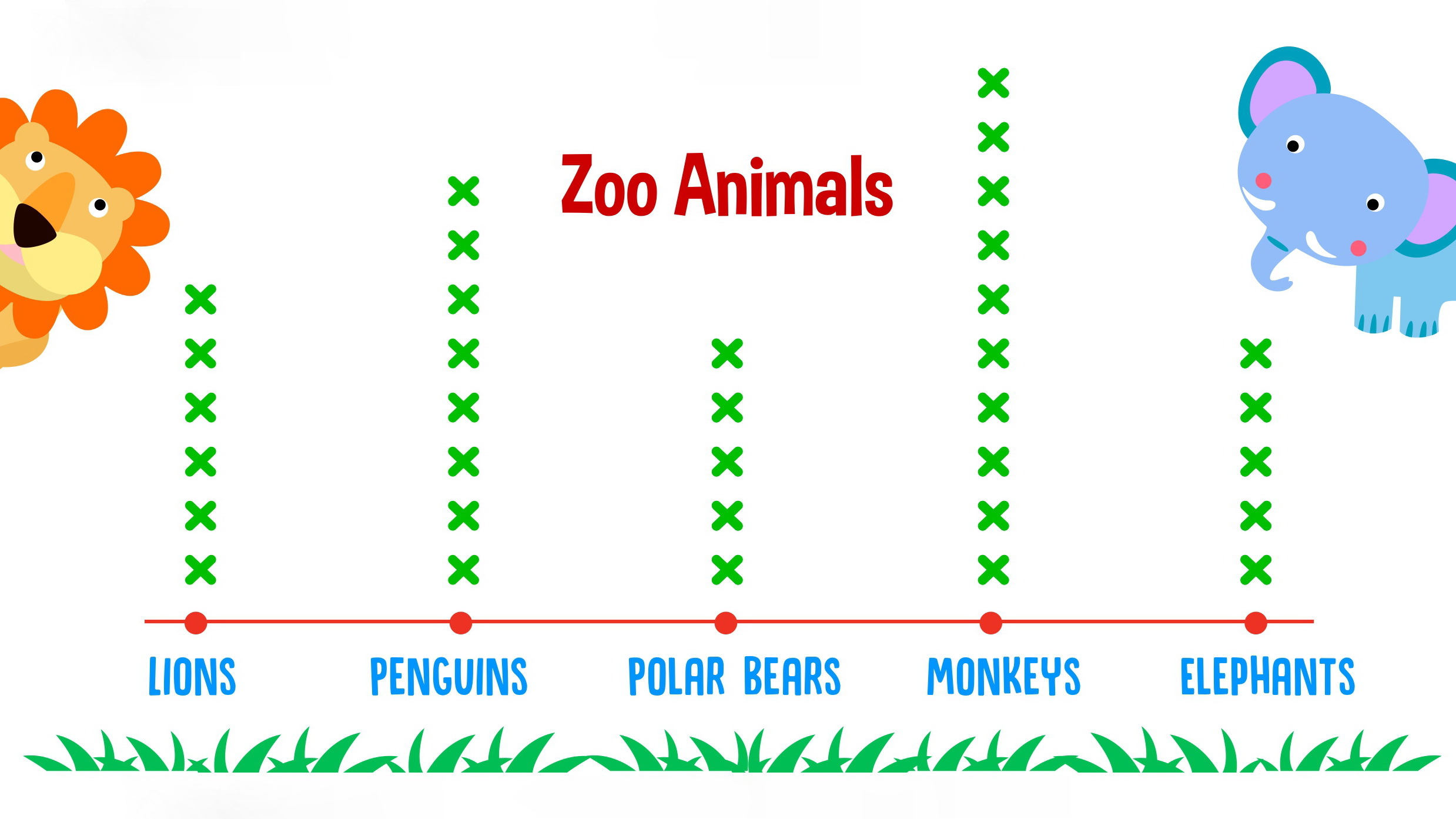



Parents and teachers should care about basic measurement concepts for children ages 4-7 because these foundational skills play a crucial role in early development and understanding of the world. Measurement concepts, such as length, weight, and volume, help children make sense of their environment and develop critical thinking and problem-solving skills.
At this age, children are naturally curious and eager to explore. Introducing them to basic measurement through fun, hands-on activities, like measuring ingredients for a recipe or comparing the heights of their toys, allows them to engage with practical mathematics in a meaningful way. This not only reinforces their understanding of numbers and proportions but also encourages them to observe and describe their surroundings in detail.
Furthermore, early exposure to measurement across different contexts builds confidence and lays the groundwork for more complex mathematical concepts in later grades. It fosters a sense of accomplishment and competence in young children, motivating them to engage with math-related activities in the future. In sum, a strong grasp of basic measurement enhances a child's cognitive development and prepares them for systematic problem-solving in various subjects, ultimately ensuring they thrive in their educational journey.








