
Develop critical thinking Normal Worksheets for Ages 4-7
3 filtered results
Difficulty Level
Grade
Age
-
From - To
Subject
Activity
Standards
Unlock your child’s potential with our "Develop Critical Thinking Normal Worksheets" designed for ages 4-7. Crafted to nurture young minds, these engaging worksheets enhance cognitive skills by challenging kids with age-appropriate puzzles, logic games, and problem-solving activities. Each worksheet is tailored to foster analytical thinking, decision-making, and reasoning, providing a solid foundation for future learning. Brighten your child's educational journey and watch them thrive as they develop essential critical thinking skills in a fun, interactive way. Perfect for home or classroom use, set your little thinker on the path to success today!
Favorites
With answer key
Interactive
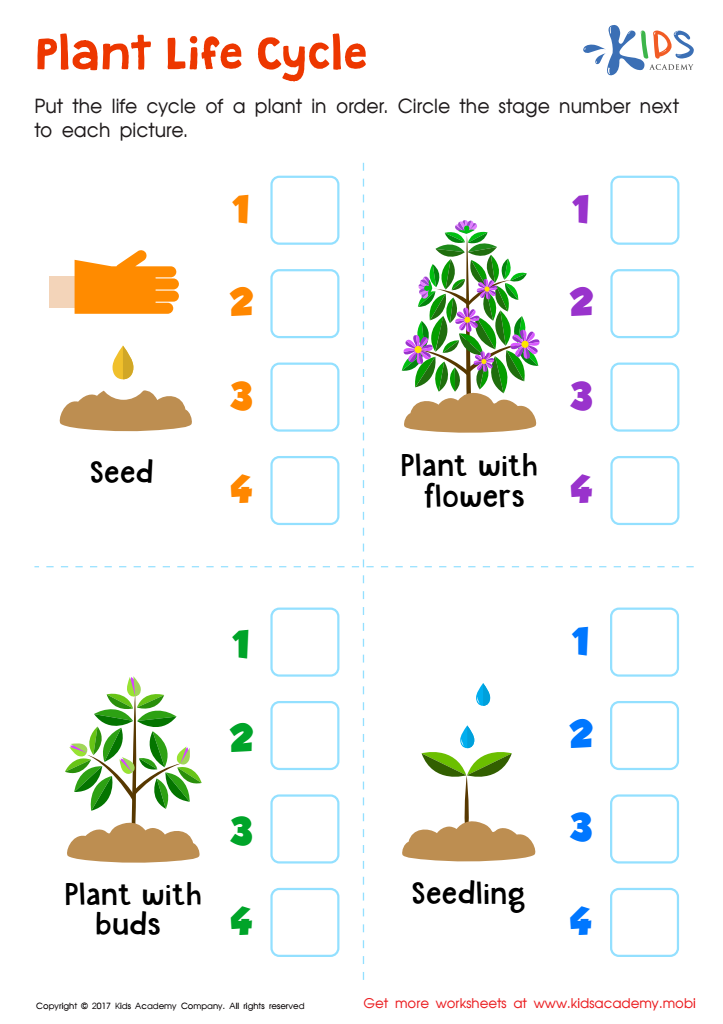
Plant Life Cycle Printable
Let kids explore plants' growth stages with this fun plant life cycle worksheet! They'll strengthen their sequencing skills by ordering the cycle from seed to flower. Make the learning experience even more memorable by growing a flower afterward.
 Assign to My Students
Plant Life Cycle Printable
Worksheet
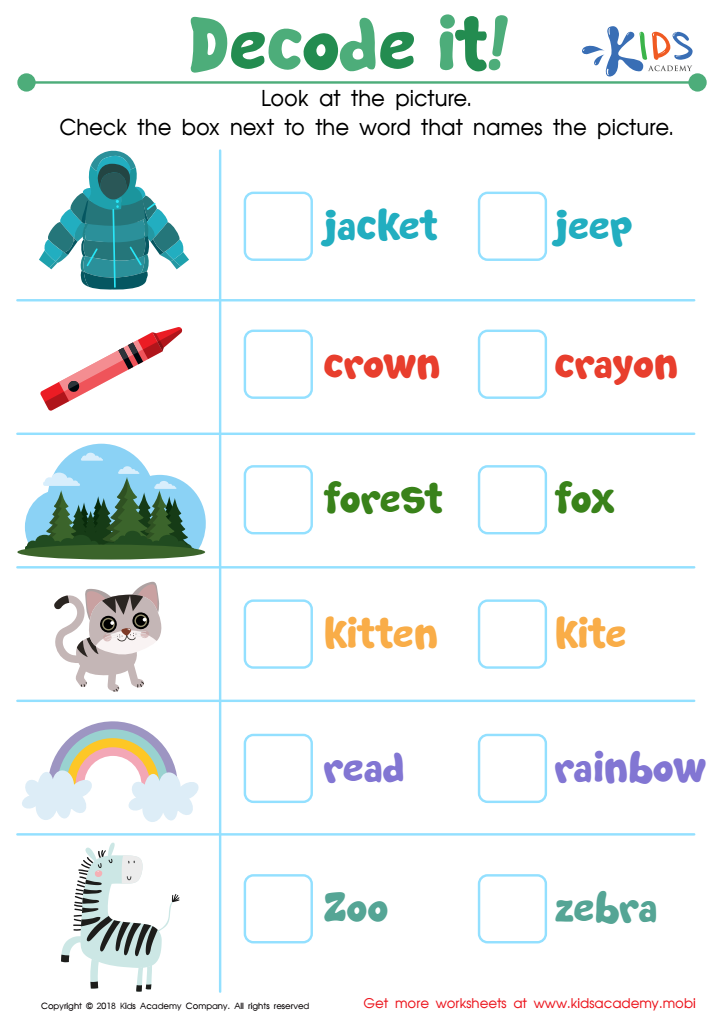
Reading: Decode It Worksheet
Look at the picture and circle the word that names it. This exercise helps kids practice picture cues and decoding words, with the same beginning sound. It builds their fluency and comprehension, giving them the skills to read unfamiliar words.
Reading: Decode It Worksheet
Worksheet

Find the Title Worksheet
Help your kids to identify the colors of the books on this worksheet. Ask them to spot the differences between the six books, such as which ones have titles printed on their covers. Ask them to put a check next to the books with titles. This activity will promote your kids' thinking skills.
Find the Title Worksheet
Worksheet
Join Kids Academy for Free
Who is primarily going to use this learning content?








Cultivating critical thinking in young children aged 4-7 is essential for their overall development and future success. At this early stage, children are naturally curious, constantly asking questions about the world around them. Encouraging critical thinking helps them develop problem-solving skills, enabling them to analyze situations, make connections, and consider multiple perspectives. This foundational skill set not only benefits their academic journey but also fosters lifelong learning.
For parents and teachers, nurturing critical thinking means actively engaging with children's questions and guiding them to explore ideas deeply rather than providing quick answers. Activities like puzzles, open-ended questions, and storytelling are excellent ways to stimulate these skills. Additionally, critical thinking lays the groundwork for making informed decisions and developing self-confidence in their capabilities.
Moreover, in a rapidly changing world where information is abundant, the ability to critically evaluate sources and distinguish between facts and opinions becomes increasingly crucial. By instilling these habits early, children are better prepared to navigate complex information landscapes as they grow. Overall, focusing on critical thinking during these formative years equips children with essential tools for academic achievement, social interactions, and personal growth. Therefore, parents and teachers should prioritize these practices to support holistic development.








