Improving categorization skills Normal Worksheets for Ages 4-7
3 filtered results
-
From - To
Boost your child's critical thinking with our "Improving Categorization Skills" worksheets, designed for ages 4-7. These engaging activities from Kids Academy help children master the ability to sort and classify objects, fostering essential cognitive development. Each worksheet is crafted to make learning fun and effective, focusing on key skills such as recognizing similarities and differences, grouping items, and understanding relations between concepts. Ideal for early learners, these printable resources provide a solid foundation for academic success and everyday problem-solving. Support your child’s journey to becoming a keen thinker with our expertly designed categorization worksheets.
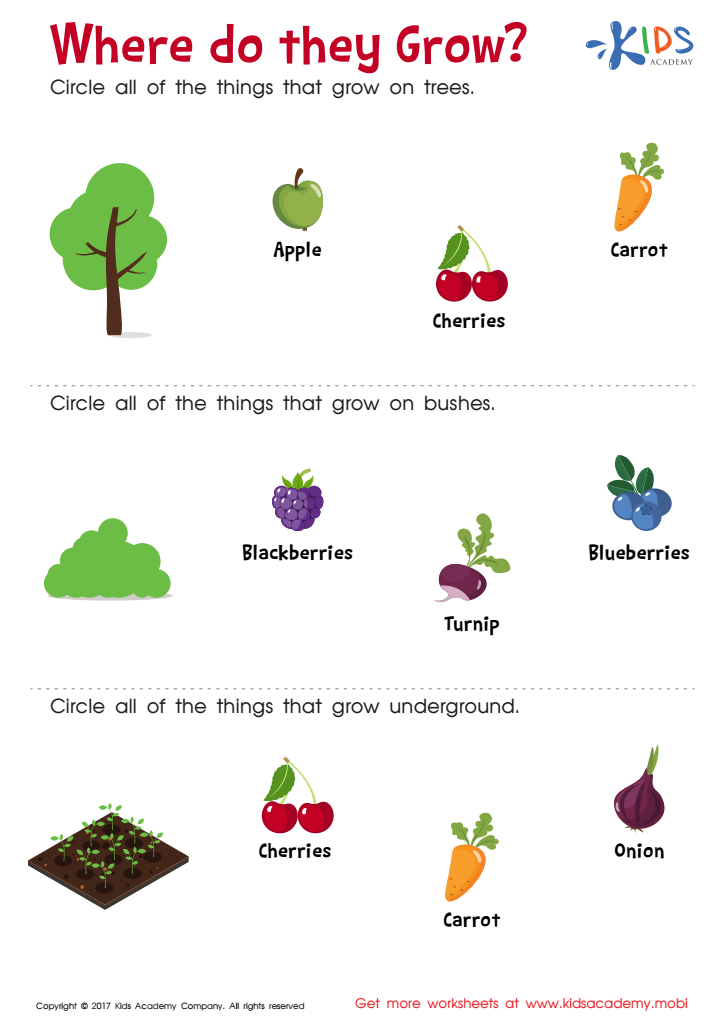
Where Do They Grow Worksheet
 Assign to My Students
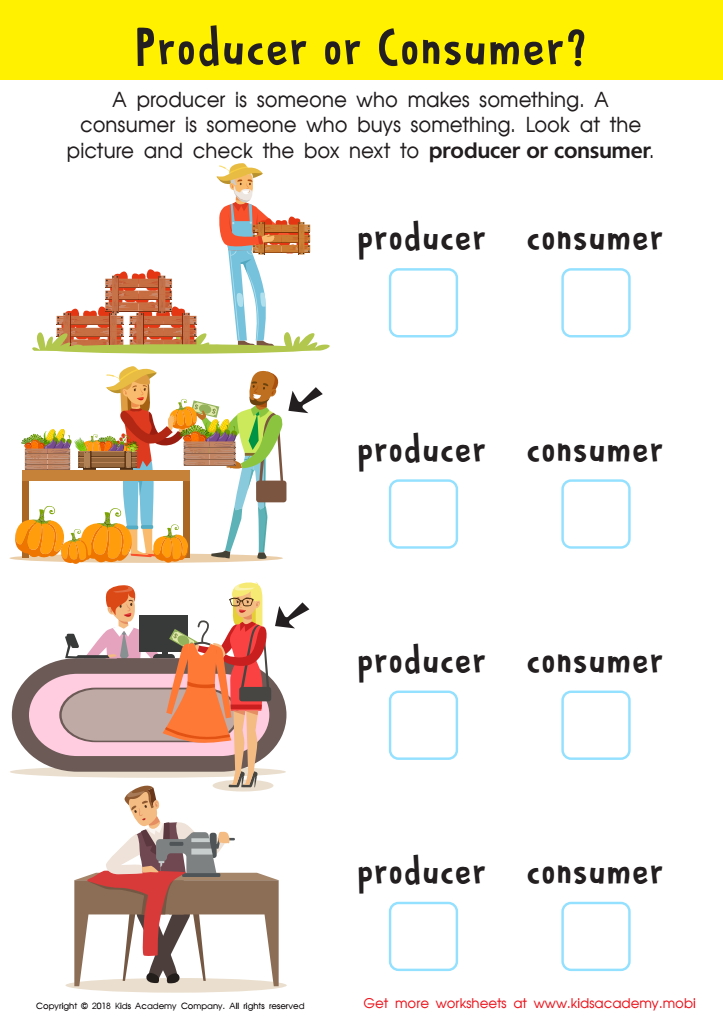
Producer or Consumer? Worksheet
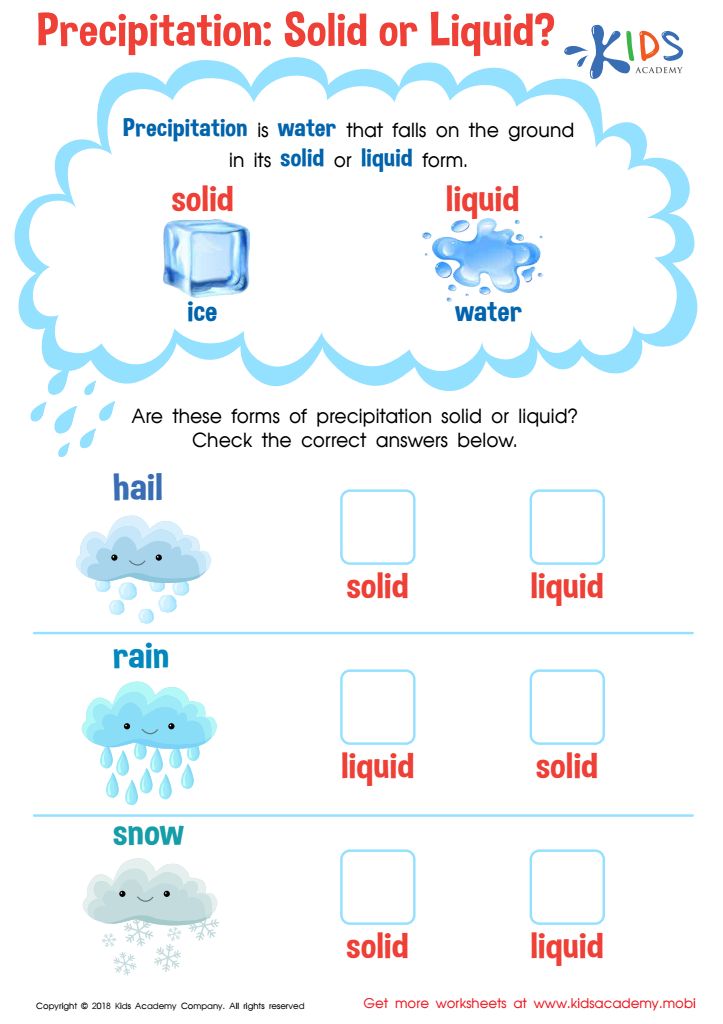
Precipitation: Solid or Liquid? Worksheet








Improving categorization skills in children ages 4-7 is essential for developing critical cognitive abilities. At this age, kids are in a critical phase of brain development, and honing their categorization abilities lays a fundamental groundwork for future learning. Categorization helps children organize the world around them, making it easier to understand and retain information. For example, when young children learn to classify objects by size, shape, or color, they not only enhance their vocabulary but also develop problem-solving skills and logical thinking.
Moreover, strong categorization skills are crucial for academic success. By being able to group similar objects or ideas, children can more easily grasp basic math concepts, improve their reading comprehension, and make connections between new and known information. This mental organization fosters efficient learning processes and aids in absorbing complex information.
From a broader perspective, categorization skills also support emotional and social development. Being able to sort through social cues helps children interact more effectively with peers, follow instructions, and adjust to structured environments like classrooms. Both parents and teachers benefit when children possess strong categorization skills, as it leads to a more organized, well-adjusted, and academically proficient child. Thus, dedicating time and effort to improve these skills is a worthwhile investment in a child's overall development.








