Moral understanding Normal Worksheets for Ages 4-7
4 filtered results
-
From - To
Explore our engaging Moral Understanding Worksheets, specially designed for children aged 4-7. These printable resources help young learners grasp essential values such as empathy, kindness, honesty, and sharing. Age-appropriate activities provide interactive scenarios that encourage kids to think critically about their choices and the impact of their actions on others. With colorful illustrations and relatable situations, these worksheets make learning about morals fun and accessible. Perfect for parents and teachers, our moral understanding activities foster emotional intelligence and constructive behavior in early learners, preparing them for positive social interactions. Empower your child to grow into a compassionate individual with our dynamic worksheets!
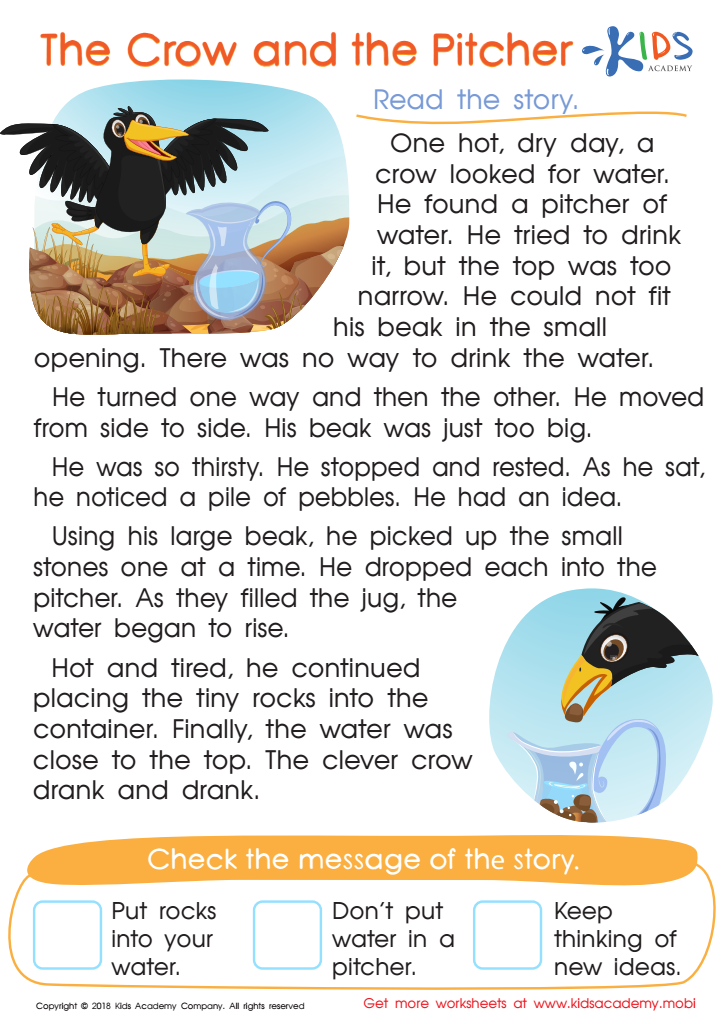
The Crow and the Pitcher Worksheet
 Assign to My Students
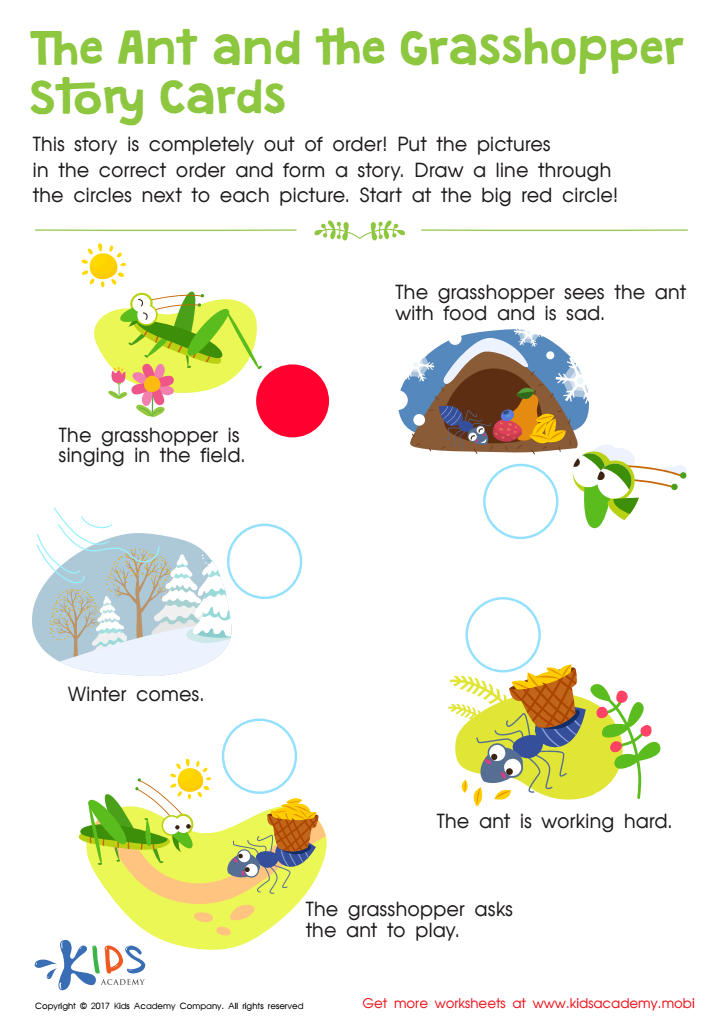
The Ant and The Grasshopper Worksheet
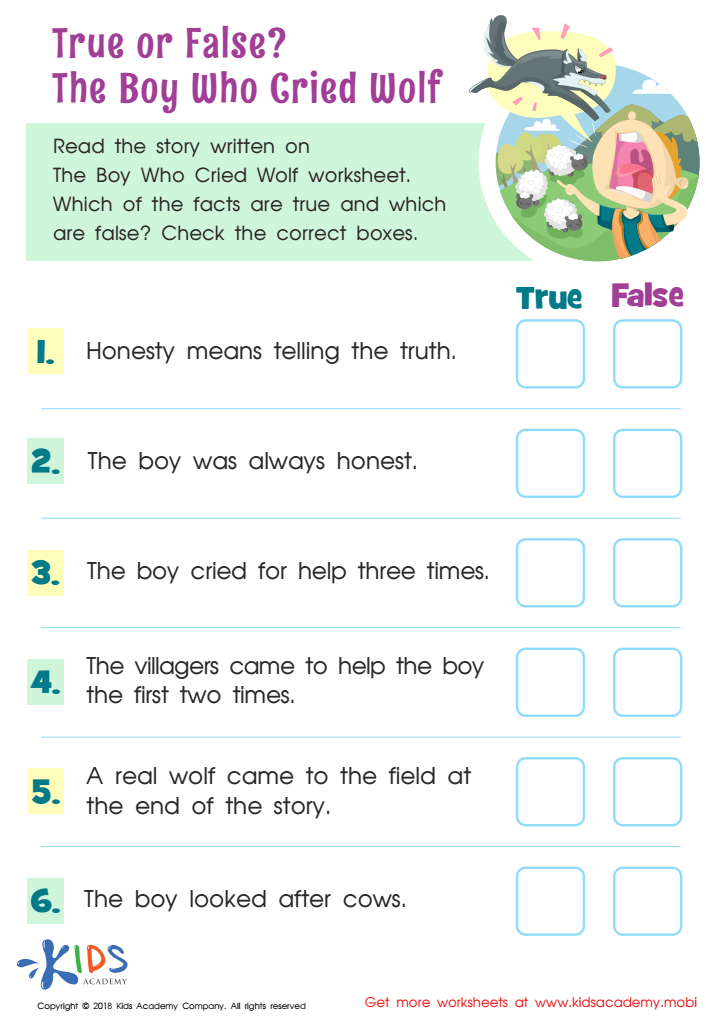
True or False? The Boy Who Cried Wolf Worksheet
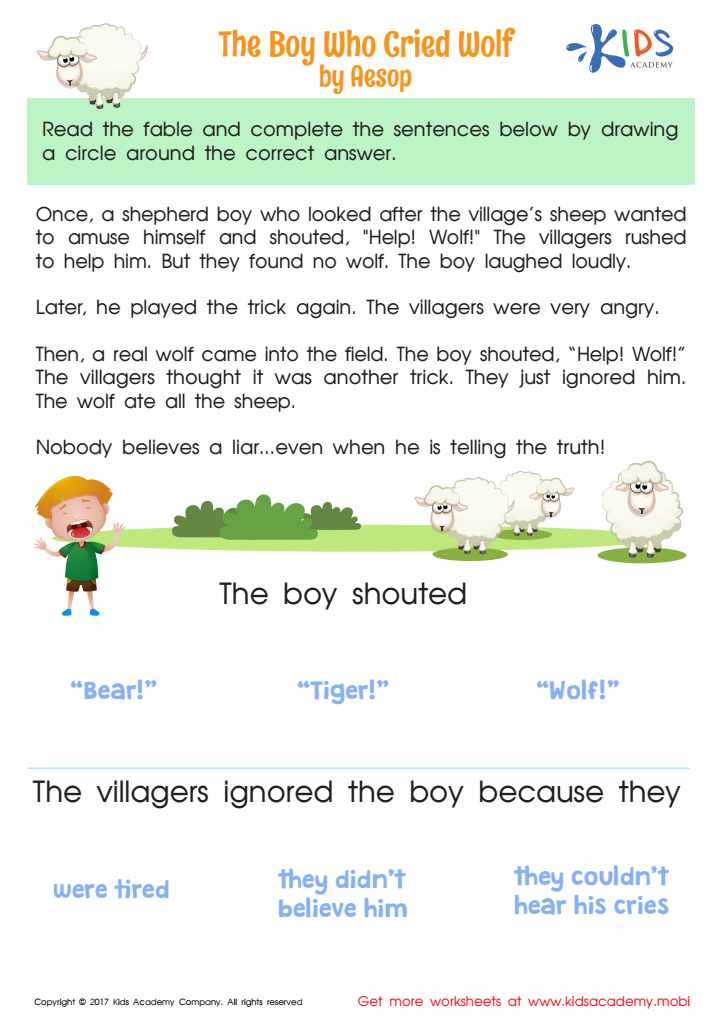
The Boy Who Cried Wolf Worksheet







Moral understanding in children aged 4-7 is crucial as it lays the foundation for their social and emotional development. During this stage, children start to interpret concepts of right and wrong, empathy, and fairness. By fostering moral understanding, parents and teachers can help children develop the ability to navigate social interactions and build positive relationships.
When children grasp moral concepts, they learn to recognize the feelings of others, which promotes empathy and compassion. This, in turn, can lead to less conflict in the classroom and at home, as they learn to consider the impact of their actions. Children's ability to make ethical choices also strengthens their self-esteem and critical thinking skills.
Moreover, early moral learning plays a role in reducing antisocial behavior and bullying, creating a safer and more inclusive environment for all children. Engaging with moral dilemmas in storybooks or discussions can prompt meaningful dialogue, encouraging children to reflect on their values. For parents and teachers, promoting moral understanding is an investment in the child's future well-being, helping to cultivate conscientious individuals who will contribute positively to society. In essence, fostering moral understanding during these formative years shapes not only the individual but also the community at large.








