Practicing subtraction Normal Worksheets for Ages 4-7
3 filtered results
-
From - To
Explore our engaging "Practicing Subtraction Normal Worksheets for Ages 4-7" designed to help young learners grasp basic subtraction concepts. These worksheets provide a variety of fun and interactive activities that simplify subtraction, making learning enjoyable and effective. Each worksheet is tailored to cater to the developmental needs of children aged 4-7, featuring colorful graphics and relatable examples. By practicing with these worksheets, your child will build confidence and foundational math skills essential for their academic journey. Perfect for at-home learning or classroom use, our subtraction worksheets encourage independent problem-solving and reinforce essential concepts through playful exercises. Start your child’s math adventure today!
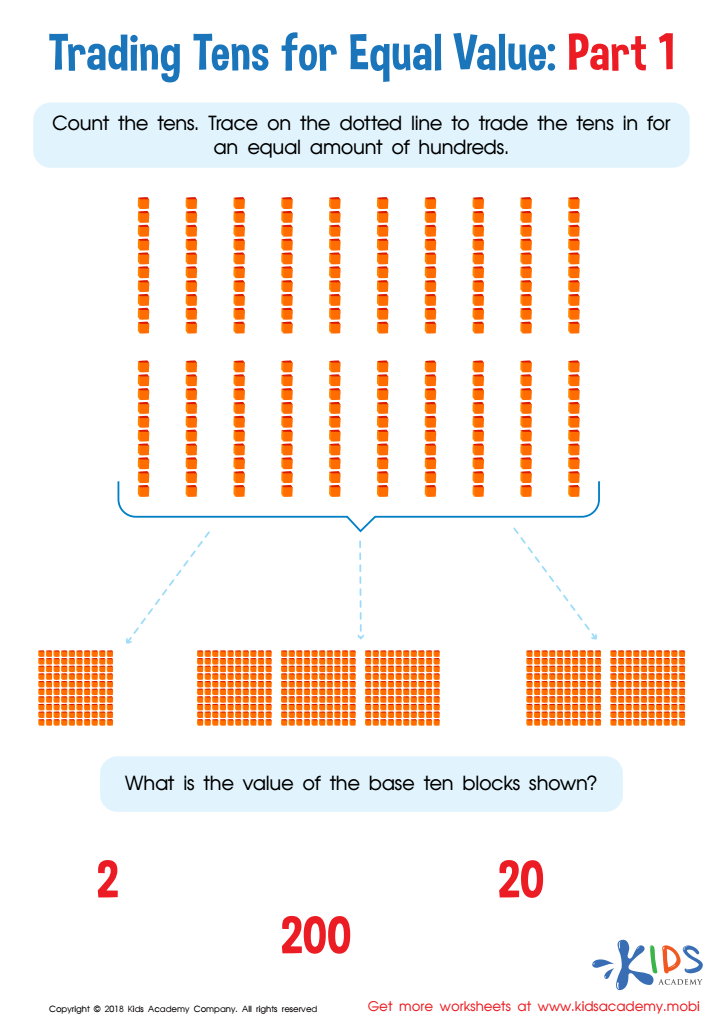
Trading Tens for Equal Value Worksheet: Part 1
 Assign to My Students
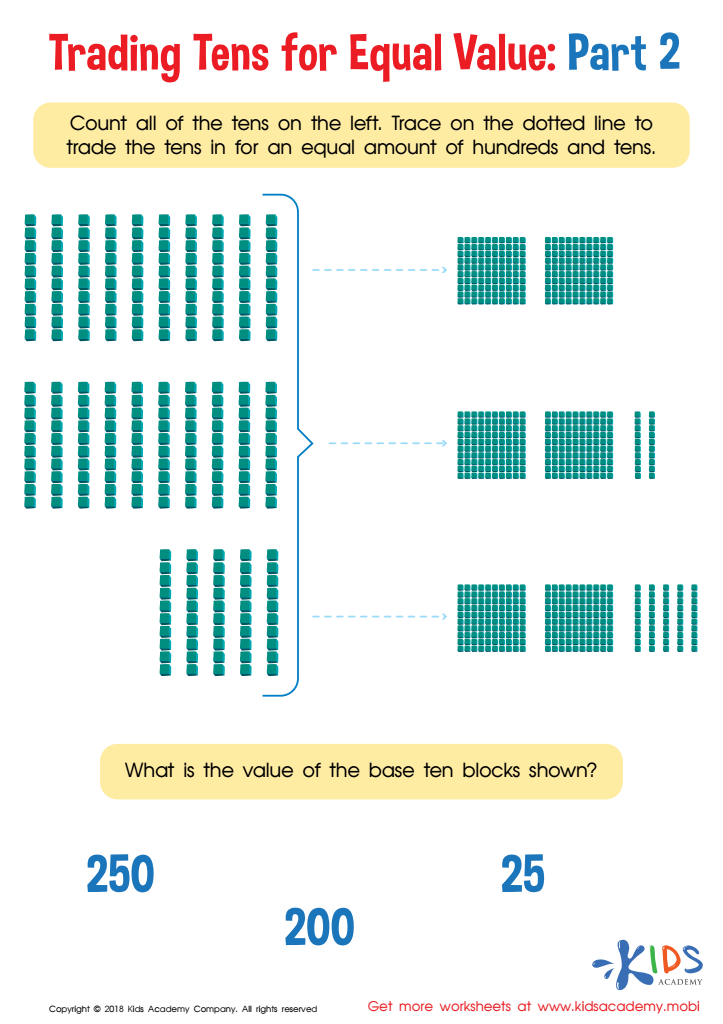
Trading Tens for Equal Value Worksheet: Part 2
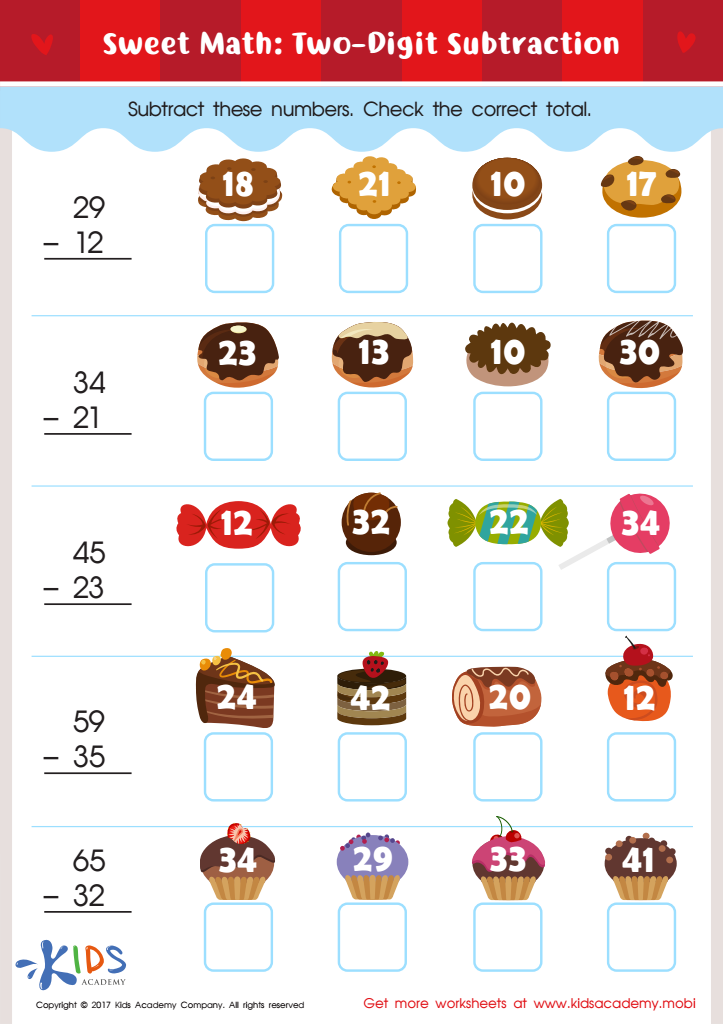
Two Digit Subtraction Worksheet





Practicing subtraction is crucial for young learners aged 4 to 7 as it's a foundational skill that significantly impacts their overall mathematical understanding. At this age, children are developing critical thinking and problem-solving abilities. Regular practice helps them grasp the concept of taking away, reinforcing their number sense and understanding of quantities. This foundational knowledge is essential for advancing to more complex mathematical concepts later on.
Furthermore, subtraction practice promotes cognitive skills such as logical reasoning and pattern recognition. Engaging children in interactive activities—like using physical objects or games—makes learning fun and effective. When teachers and parents prioritize subtraction practice, they instill confidence in their children, reducing math anxiety and fostering a positive attitude towards learning.
Additionally, subtraction is often encountered in everyday situations, from sharing snacks to helping with household chores, making it a practical life skill. Early mastery contributes to better academic performance, ensuring kids are better prepared for future math challenges. Ultimately, practice in subtraction nurtures independence, creativity, and perseverance in young learners, setting the stage for lifelong learning and problem-solving skills. Therefore, parents and teachers should encourage consistent subtraction practice to cultivate foundational math skills essential for children's development.








