
Reading skills development Normal Worksheets for Ages 4-7
5 filtered results
Difficulty Level
Grade
Age
-
From - To
Subject
Activity
Standards
Discover engaging Reading Skills Development Normal Worksheets tailored for children ages 4 to 7! These interactive worksheets are designed to enhance early literacy skills through fun and educational activities. Children will explore essential components of reading, such as phonics, vocabulary, and comprehension, fostering a love for books and storytelling. Our thoughtfully crafted worksheets encourage critical thinking and creativity while offering a balanced approach to learning. Perfect for teachers and parents alike, these resources provide a structured way to support young learners as they embark on their reading journey. Download or print to start transforming reading skills into a joyful adventure today!
Favorites
With answer key
Interactive
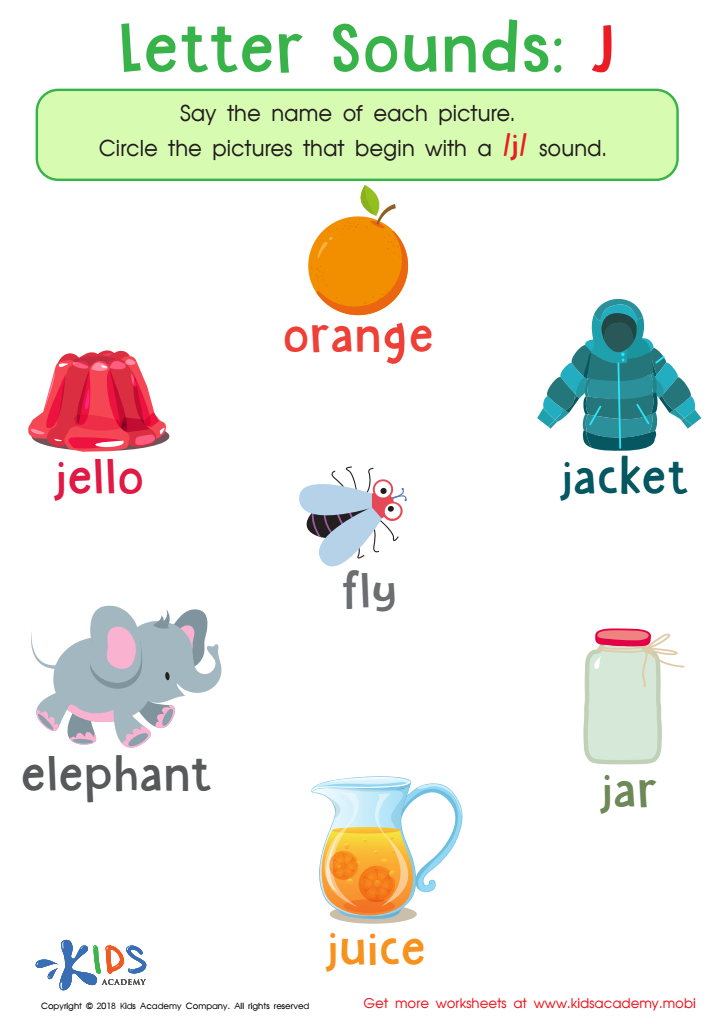
Letter Sounds: J Printable Worksheet
Preschoolers can learn to identify letter sounds by focusing on beginning sounds. This cute and colorful worksheet reviews the hard “j” sound. Kids can point it out by naming the words and circling only those starting with the “j” sound. Read the text out loud and listen closely!
 Assign to My Students
Letter Sounds: J Printable Worksheet
Worksheet
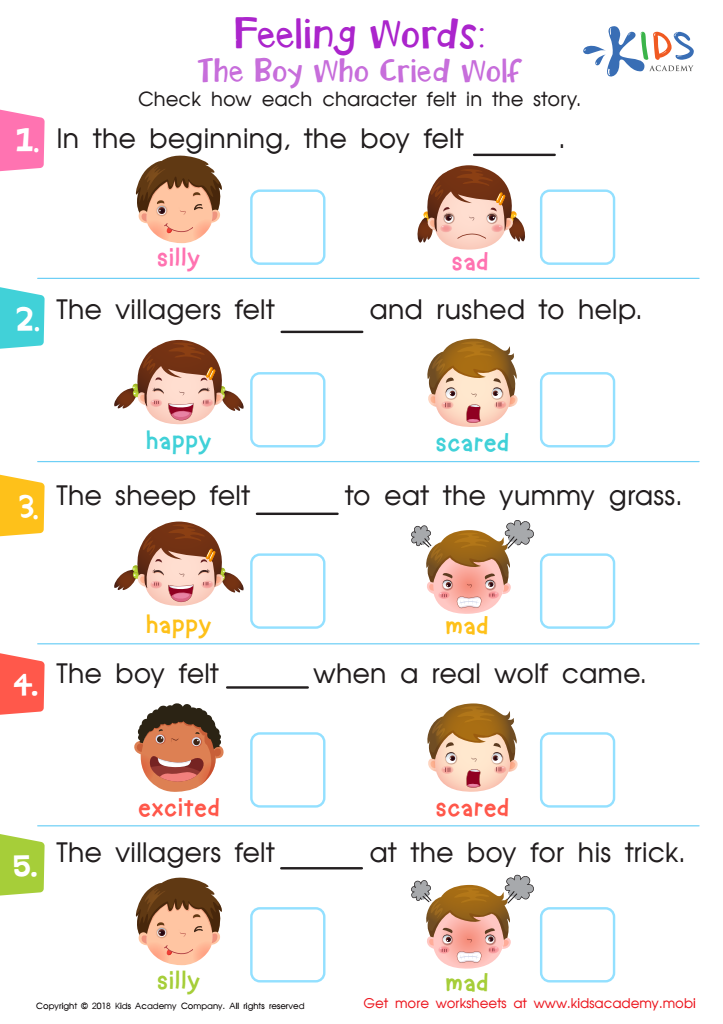
Feeling Words: The Boy Who Cried Wolf Worksheet
This worksheet helps students infer characters' traits and feelings by reading The Boy Who Cried Wolf. They choose the correct emotion for each character to improve their story comprehension. A great resource for the reading classroom, it teaches an essential comprehension skill.
Feeling Words: The Boy Who Cried Wolf Worksheet
Worksheet
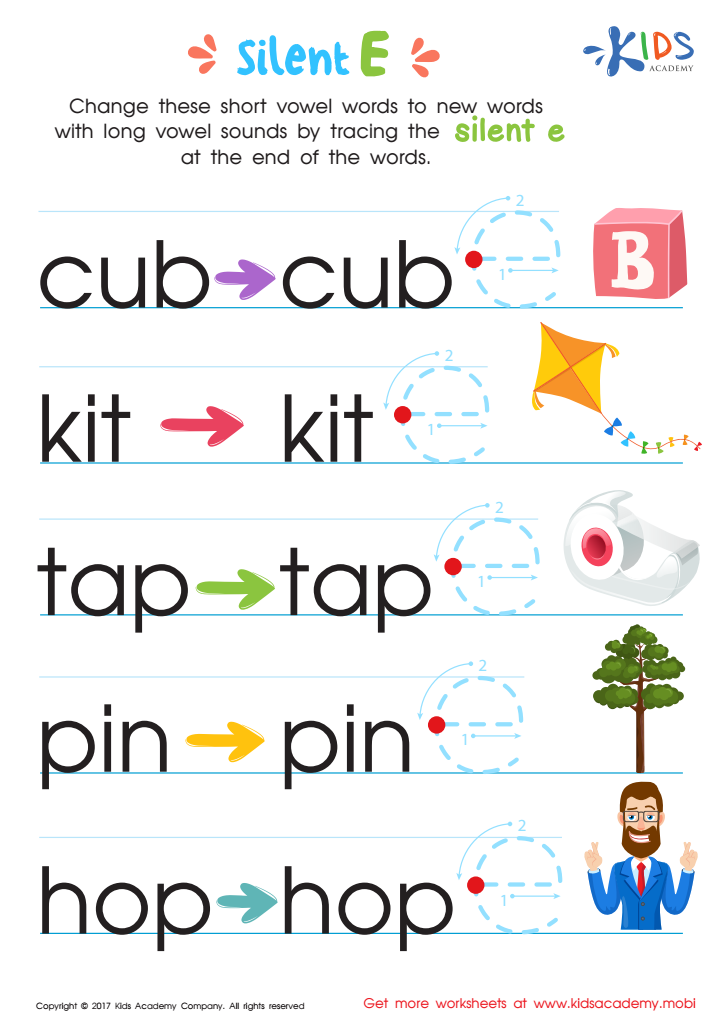
Silent E Words Worksheet
The letter e is amazing - it changes words without making a sound! Boost spelling and phonics with this Silent e worksheet from Kids Academy - fun and colorful!
Silent E Words Worksheet
Worksheet
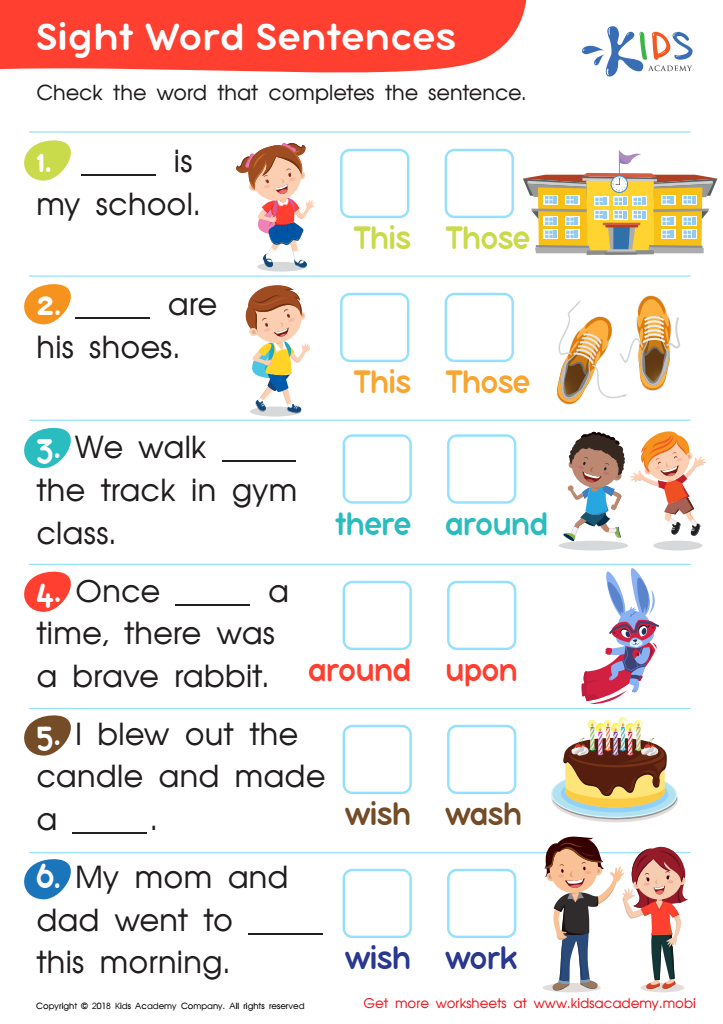
Sight Word Sentences Worksheet
Improve reading fluency! Have students fill in the blank with the correct sight word to complete sentences. Sight words are often tricky to decode - they don't follow phonics or spelling rules. To read smoothly, young learners must know them by memory. Use this printable and help kids master their sight words!
Sight Word Sentences Worksheet
Worksheet
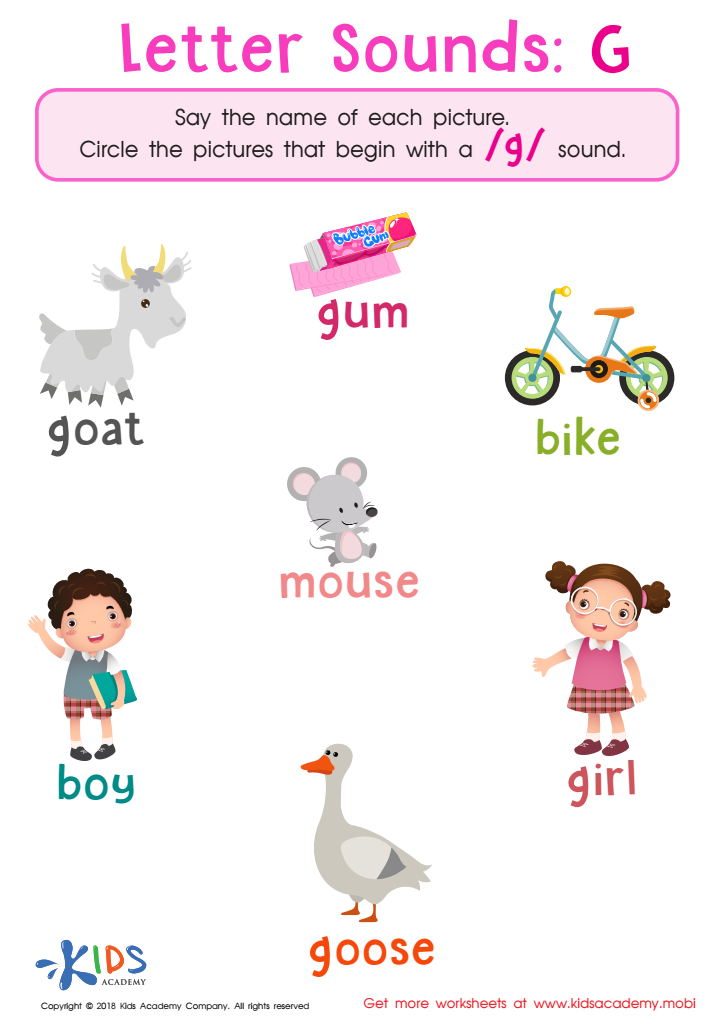
Letter G Sounds Worksheet
Help emerging readers build confidence by giving them practice identifying hard "G" with this free PDF worksheet. They'll use picture clues to name the words, and practice fine-motor skills tracing circles around the corresponding pics. It's a great way to introduce or reinforce hard "G" words.
Letter G Sounds Worksheet
Worksheet
Join Kids Academy for Free
Who is primarily going to use this learning content?





.jpg)


Reading skills development for children ages 4-7 is crucial, as it lays the foundation for their future academic success and overall cognitive growth. At this age, children are at a critical stage of learning, where they begin to understand the relationship between letters and sounds, develop vocabulary, and enhance comprehension skills. These skills not only facilitate a love for reading but also significantly contribute to developing critical thinking, communication, and social skills.
Parents and teachers play vital roles in fostering these reading skills. Through engaging activities like storytelling, phonics games, and reading together, they can create a rich literacy environment that nurtures a child's curiosity and promotes a positive attitude toward learning. Early reading proficiency can also lead to improved confidence and self-esteem, as children experience success in school and beyond.
Furthermore, strong reading skills impact future learning across subjects, as reading is integral to understanding mathematics, science, and social studies. By prioritizing reading skill development, parents and teachers empower children to thrive academically and socially, helping them become lifelong learners equipped to navigate an increasingly complex world. Supporting this crucial developmental phase is essential to shaping well-rounded, capable individuals.








