Sequencing events Normal Worksheets for Ages 4-7
4 filtered results
-
From - To
Our "Sequencing Events Normal Worksheets for Ages 4-7" are specially designed to enhance young learners' understanding and organization of events in a logical order. These engaging and effective worksheets foster critical thinking and comprehension, crucial for early learning development. With fun, relatable activities, children improve their sequencing skills by arranging pictures, stories, and everyday events. Ideal for classrooms or at-home learning, our worksheets provide a solid foundation for reading and thinking processes. They encourage independence and a sense of achievement in young minds. Perfect for children aged 4-7, make sequencing fun and educational with our premium resources!
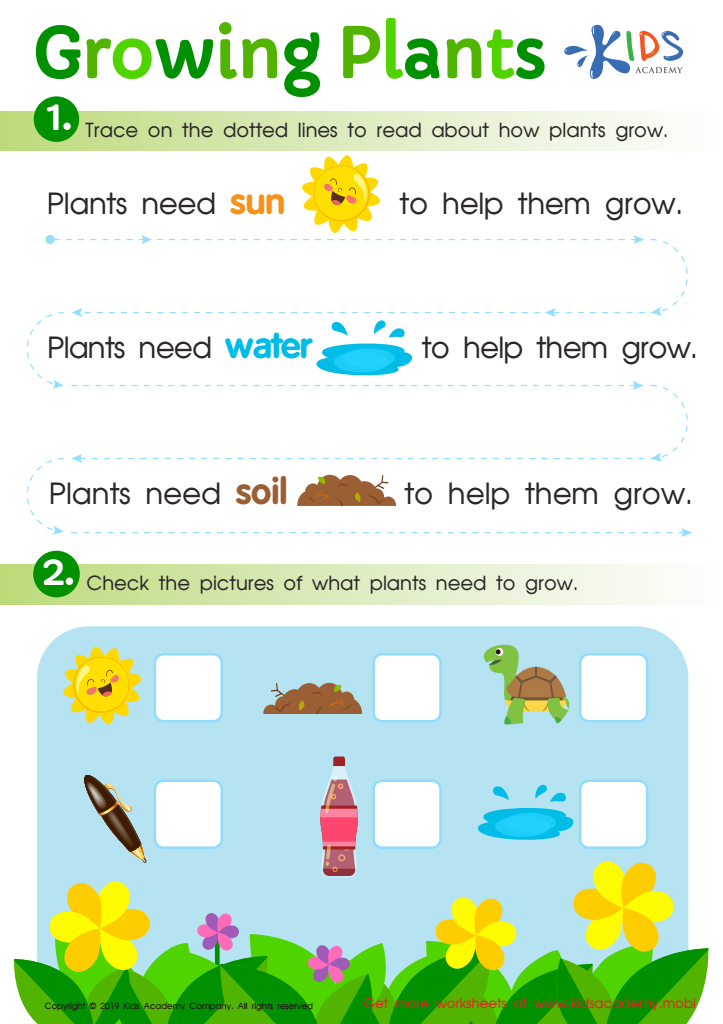
Growing Plants Worksheet
 Assign to My Students
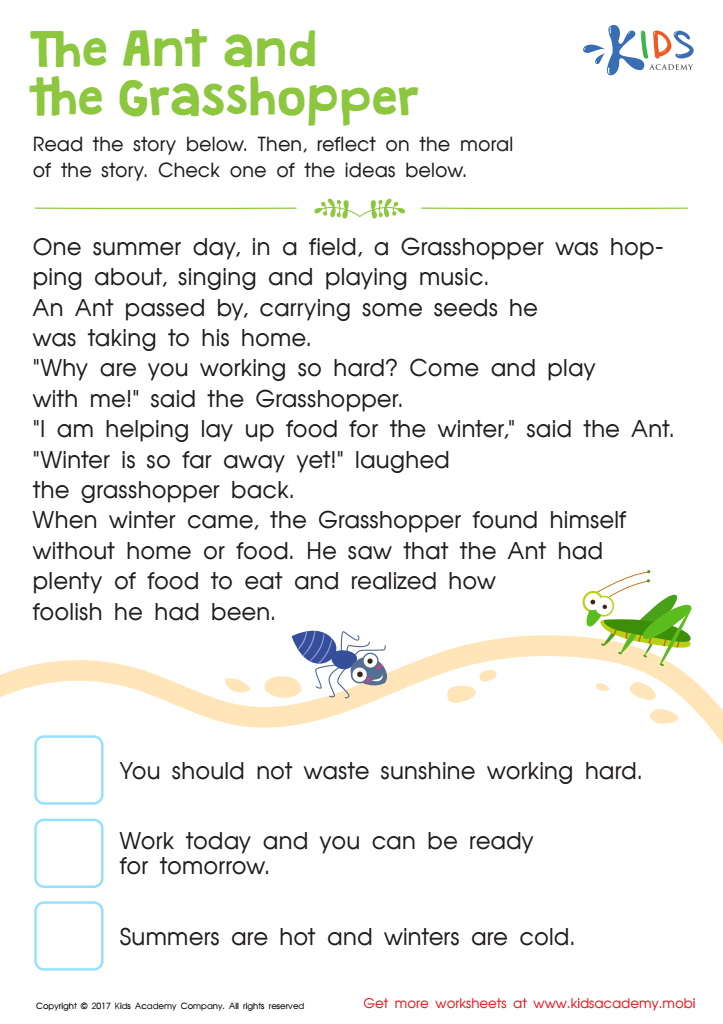
The Ant and The Grasshopper Printable

Emperor Penguin Journey Worksheet
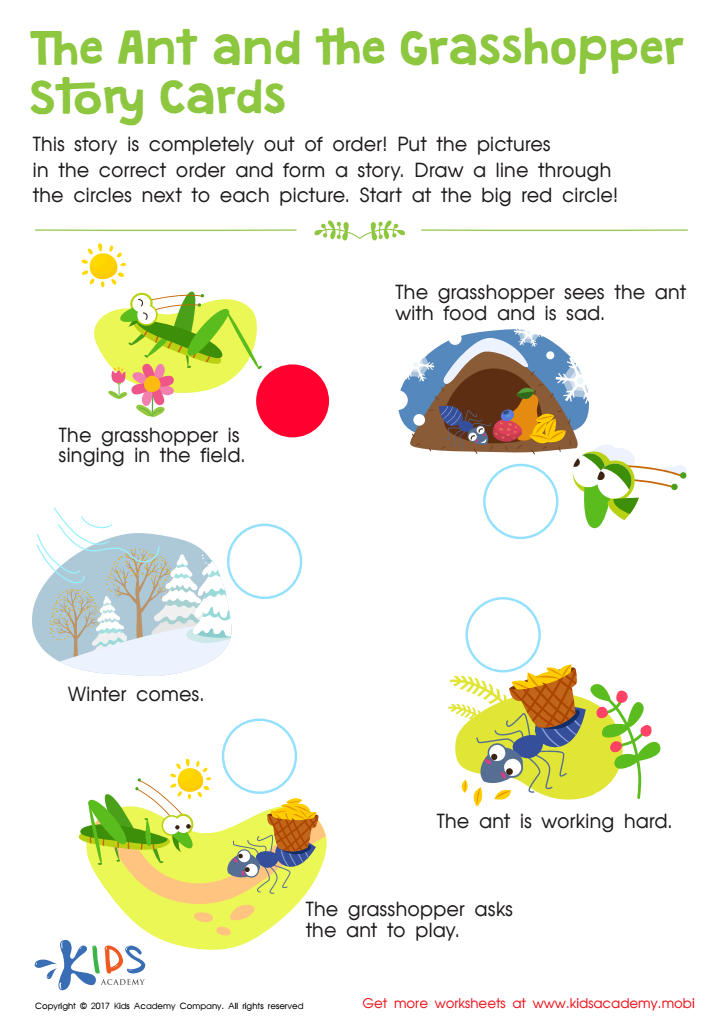
The Ant and The Grasshopper Worksheet






Sequencing events is a crucial developmental skill for young children, aged 4-7, because it lays the groundwork for understanding order, causality, and the fluid nature of time. When children grasp the concept of sequencing, they can better comprehend and tell stories, enhancing their language skills and communication. For instance, being able to narrate events in the correct order helps them make sense of daily routines, like getting dressed or following steps in a recipe.
Moreover, sequencing directly impacts academic abilities. In early reading, children who understand sequencing can predict story outcomes, thereby boosting their comprehension skills. Similarly, in math, sequencing supports the understanding of patterns, logical thinking, and problem-solving, which are fundamental to grasping more complex concepts later.
For parents and teachers, fostering these skills provides a scaffold for other key areas of development, including social-emotional growth. It helps children articulate their experiences and feelings coherently, facilitating better self-expression and empathy. By prioritizing sequencing activities—such as reading together, participating in simple sequencing games, or discussing daily events—adults create an enriching environment that nurtures cognitive development, literacy, and emotional intelligence concurrently. This foundational skill equips children with essential tools for academic success and well-rounded personal growth.








