Sound discrimination Normal Worksheets for Ages 4-7
3 filtered results
-
From - To
Enhance your child's auditory skills with our "Sound Discrimination Normal Worksheets" designed for ages 4-7. These engaging worksheets provide fun activities that focus on identifying and distinguishing different sounds, improving listening abilities critical for language development and literacy. With a variety of colorful illustrations and interactive exercises, children will enjoy exploring sounds through games and practice. Our age-appropriate materials not only support sound recognition but also foster cognitive skills necessary for early learning success. Boost your child's confidence and competency in sound discrimination with these thoughtfully crafted worksheets, making learning a delightful experience! Perfect for home or classroom use.
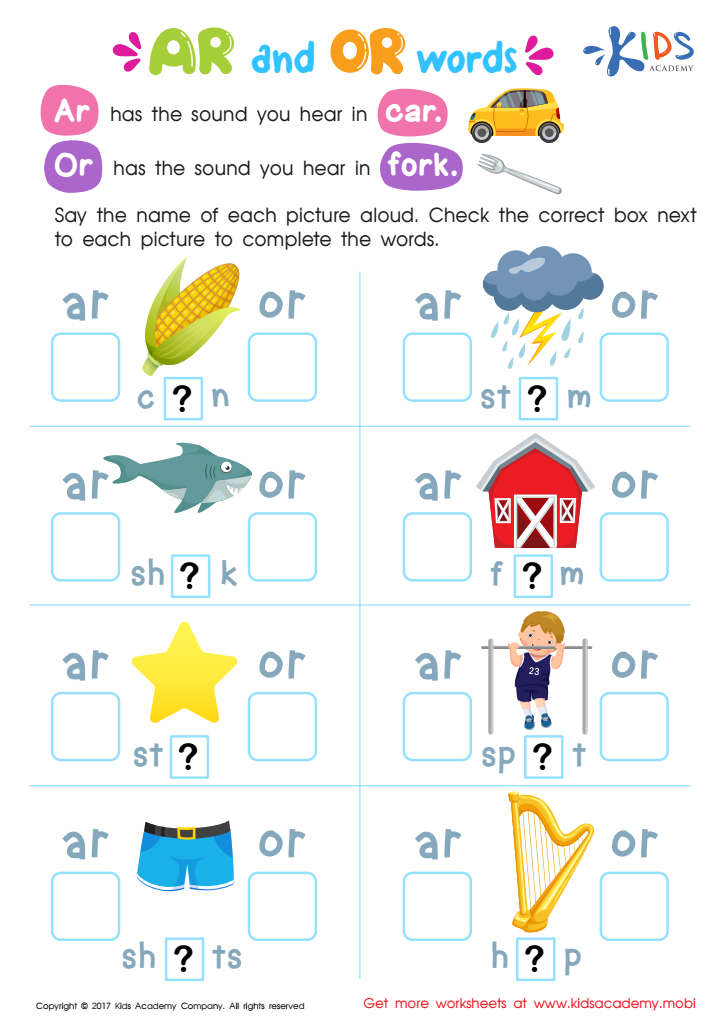
Ar and Or Words Phonics Worksheet
 Assign to My Students
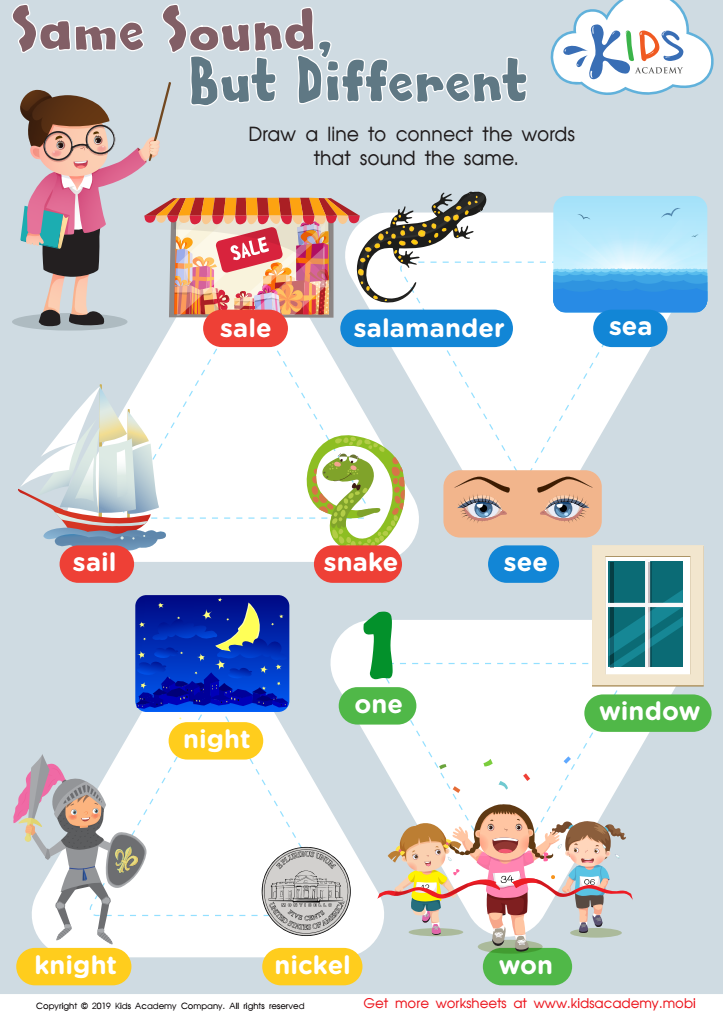
Sound Different Worksheet
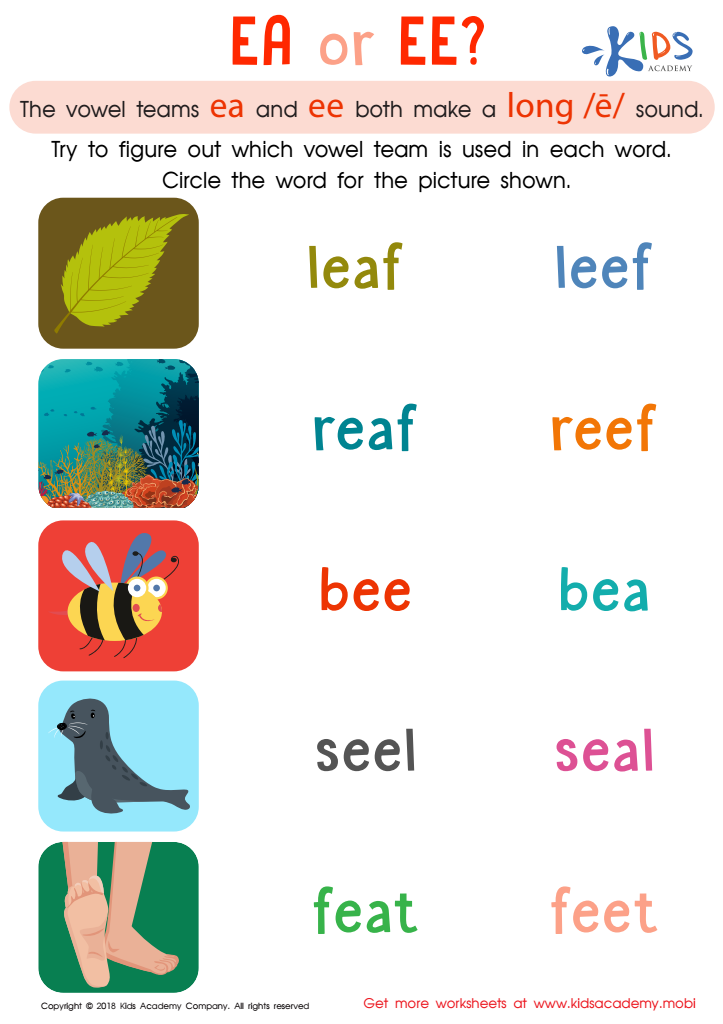
Reading: EA and EE Worksheet







Sound discrimination is a crucial developmental skill for children ages 4-7, and it significantly impacts their literacy and language acquisition. During this period, children learn to distinguish between different sounds, which forms the foundation for reading and writing. Effective sound discrimination helps young learners identify phonemes, or the individual sounds in words, enabling them to decode and spell accurately.
Parents and teachers should prioritize promoting sound discrimination because it enhances vocabulary development, listening skills, and comprehension. By engaging in activities such as rhyming, sound matching games, and phonetic play, adults can help children refine their auditory processing skills. This also aids in boosting confidence during communication as children become more adept at recognizing and producing sounds.
Furthermore, many children with difficulties in sound discrimination face challenges in learning, often leading to struggles in school. Early intervention can prevent long-term academic hurdles. Supporting sound discrimination lays a solid groundwork not only for literacy but also fosters overall cognitive development, allowing children to connect sounds with meaning. By caring about and nurturing these skills, parents and teachers can lay the foundation for successful communication, learning, and lifelong literacy, ensuring children thrive in their educational journey.








