Spatial understanding Normal Worksheets for Ages 4-7
3 filtered results
-
From - To
Introducing our "Spatial Understanding Normal Worksheets for Ages 4-7," designed to nurture early childhood cognitive skills through engaging and interactive activities. These printable worksheets aid young learners in recognizing shapes, patterns, and spatial relationships, fostering a strong foundation in geometry and visual perception. Created by educational experts, the exercises promote critical thinking, problem-solving, and fine motor skills, making learning fun and effective. Parents and teachers will appreciate the thoughtfully structured progression, ensuring children steadily advance in their understanding. Perfect for both classroom use and home practice, these worksheets aim to set your child on the path to academic success. Download today and watch them thrive!
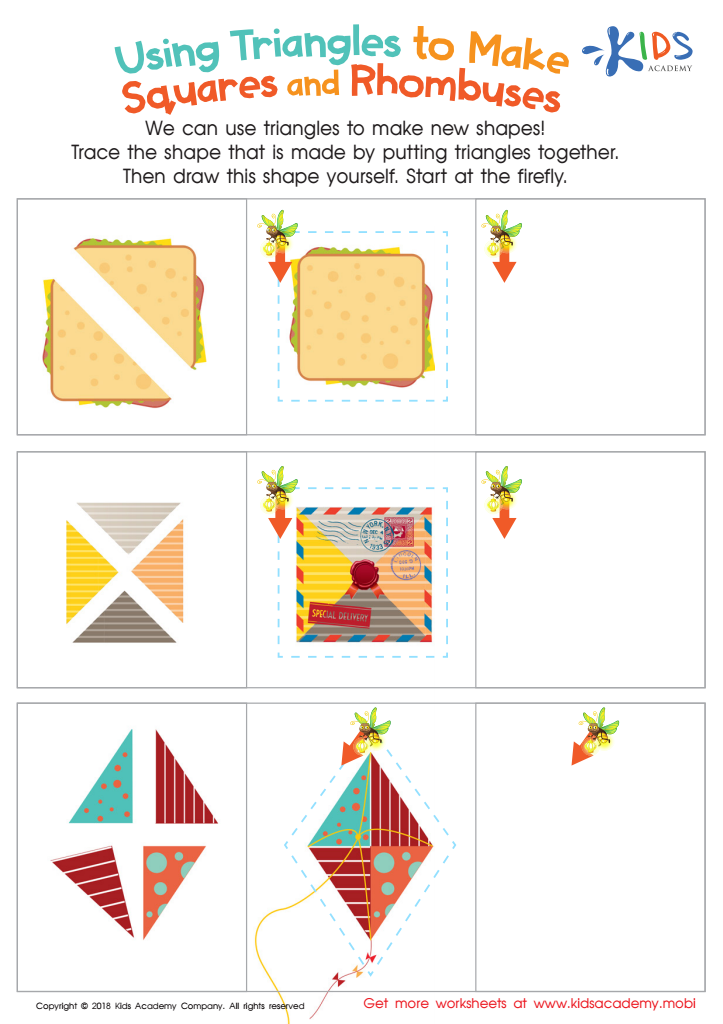
Using Triangles to Make Squares and Rhombuses Worksheet
 Assign to My Students
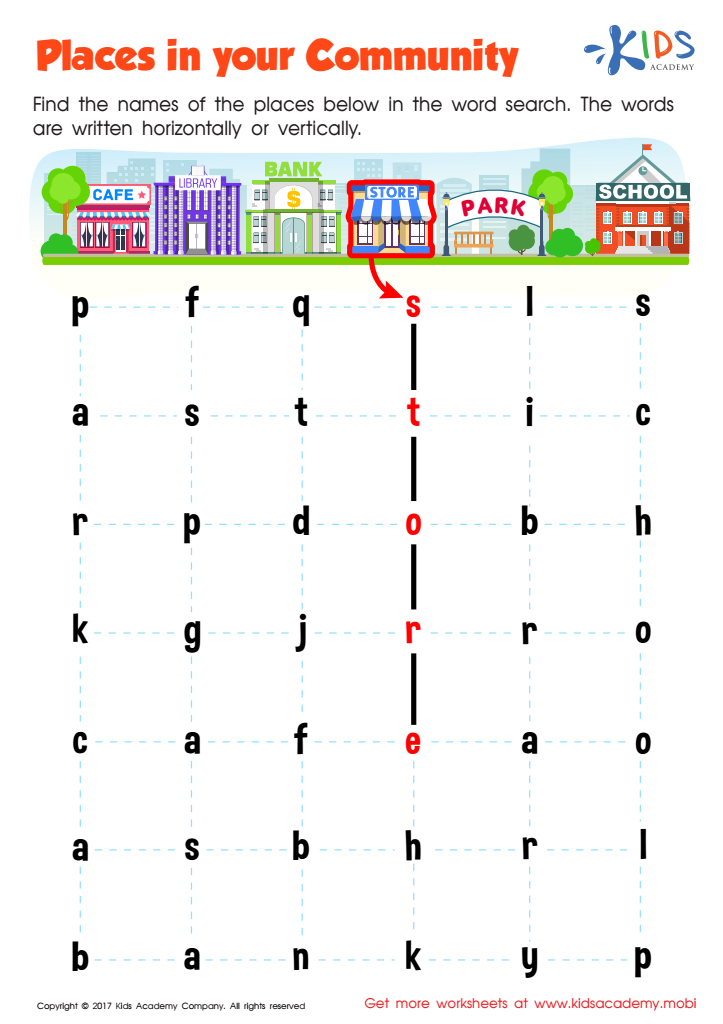
Places in Your Community Worksheet
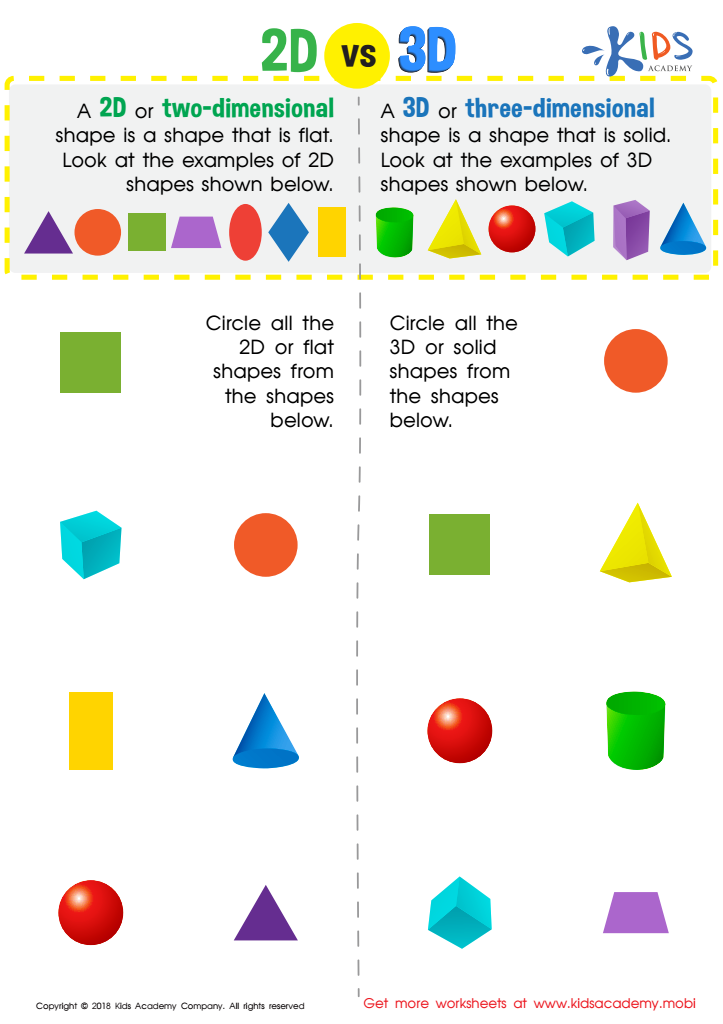
2D vs 3D Shapes Worksheet



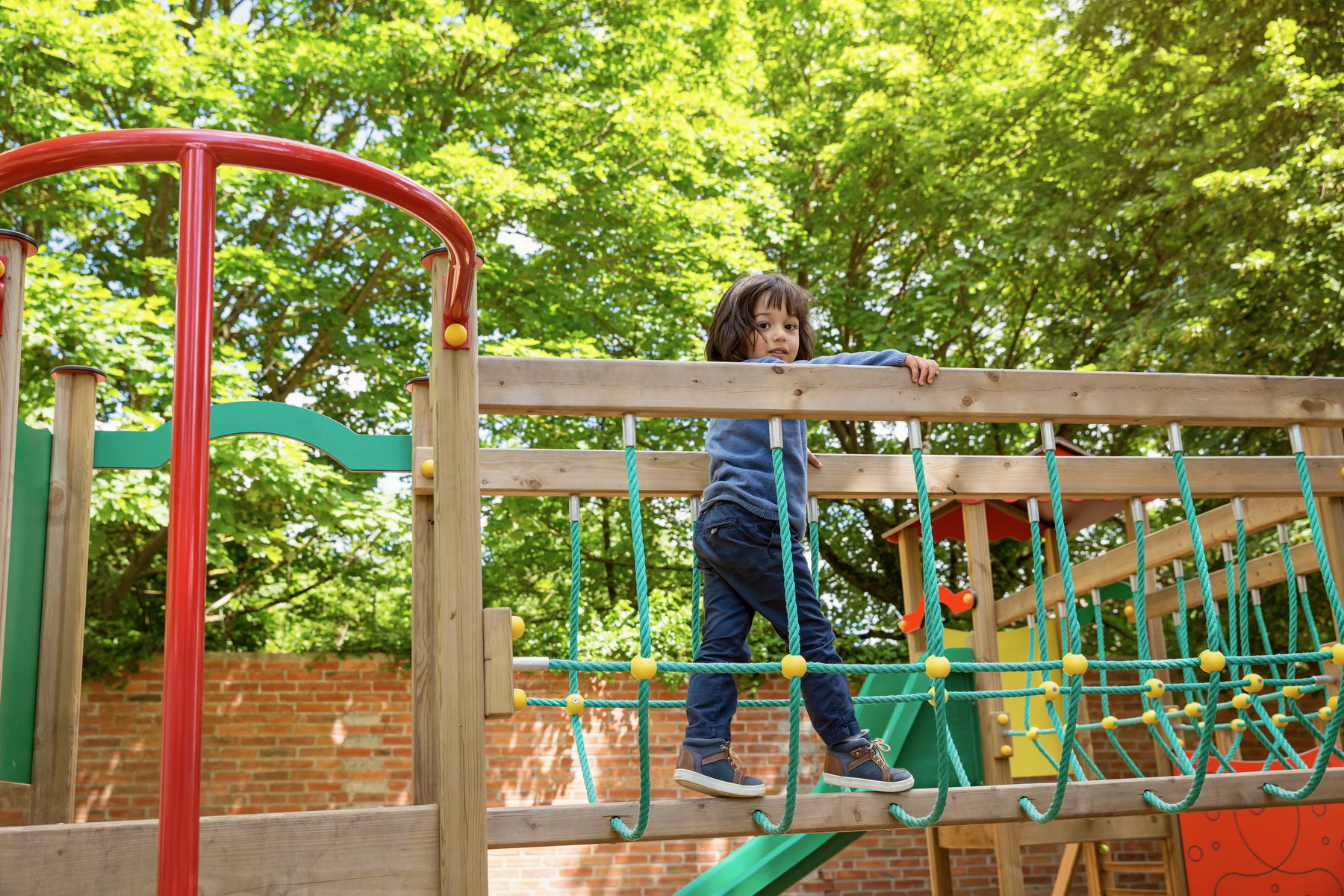


Spatial understanding is a crucial aspect of early childhood development, and it plays a significant role in a child's overall growth, particularly between ages 4 to 7. Parents and teachers should care about nurturing this skill for several reasons.
Firstly, spatial understanding enhances cognitive development. It enables children to comprehend and navigate their environment, which is foundational for problem-solving and critical thinking skills. Activities like puzzles, building blocks, and drawing help children grasp concepts of size, shape, distance, and position.
Secondly, it is vital for success in STEM (Science, Technology, Engineering, and Mathematics) subjects. Spatial skills underpin abilities in these areas, such as geometry in math, understanding maps in geography, and visualizing objects in science. A strong spatial foundation can therefore set the stage for later academic achievements and careers in these fields.
Lastly, spatial awareness also affects daily life and safety. Understanding their body's relationship to objects and space helps children move confidently and avoid accidents. This awareness contributes to their physical coordination and motor skills, which are essential for sports and other physical activities.
By supporting spatial understanding through engaging activities and play, parents and teachers lay a foundation for a child's academic, cognitive, and physical future, underscoring the importance of this developmental stage.








