Understanding communities Normal Worksheets for Ages 4-7
6 filtered results
-
From - To
"Understanding Communities Normal Worksheets for Ages 4-7" are thoughtfully designed to help young children learn about their surroundings and the various roles within a community. Our engaging, age-appropriate worksheets cover essential topics like neighborhoods, local helpers, and community places. These printable activities offer a fun and interactive way for kids to develop a sense of belonging and understand how communities function. Ideal for both classroom use and at-home learning, these worksheets promote critical thinking, vocabulary development, and social awareness. Give your child a head start in appreciating the world around them with our carefully crafted educational resources!
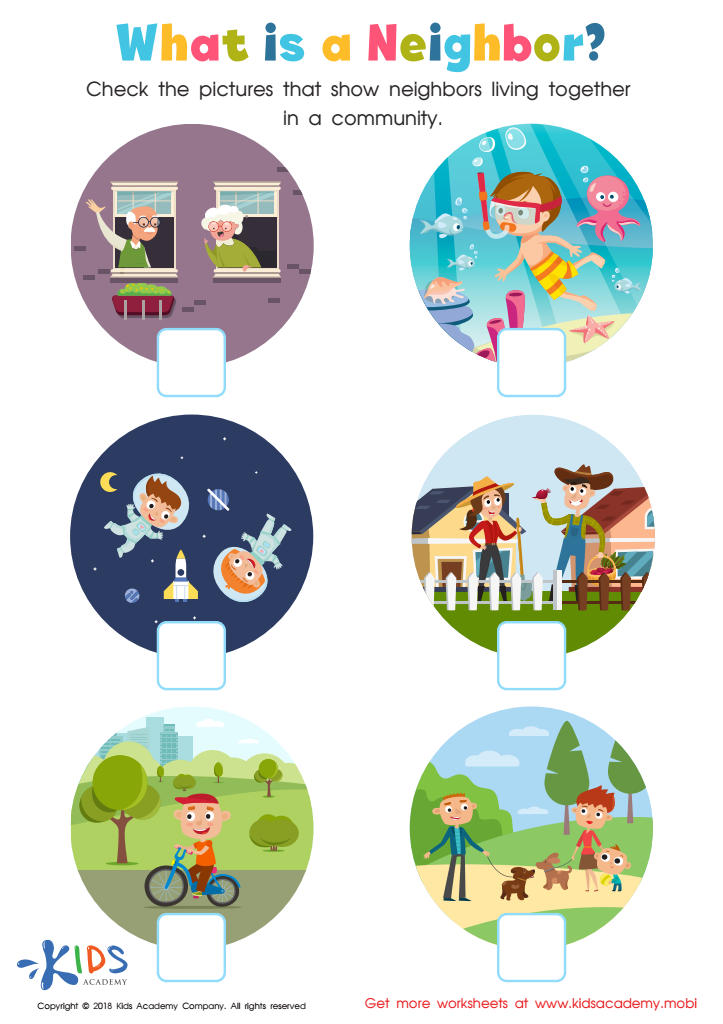
What is a neighbor Worksheet
 Assign to My Students
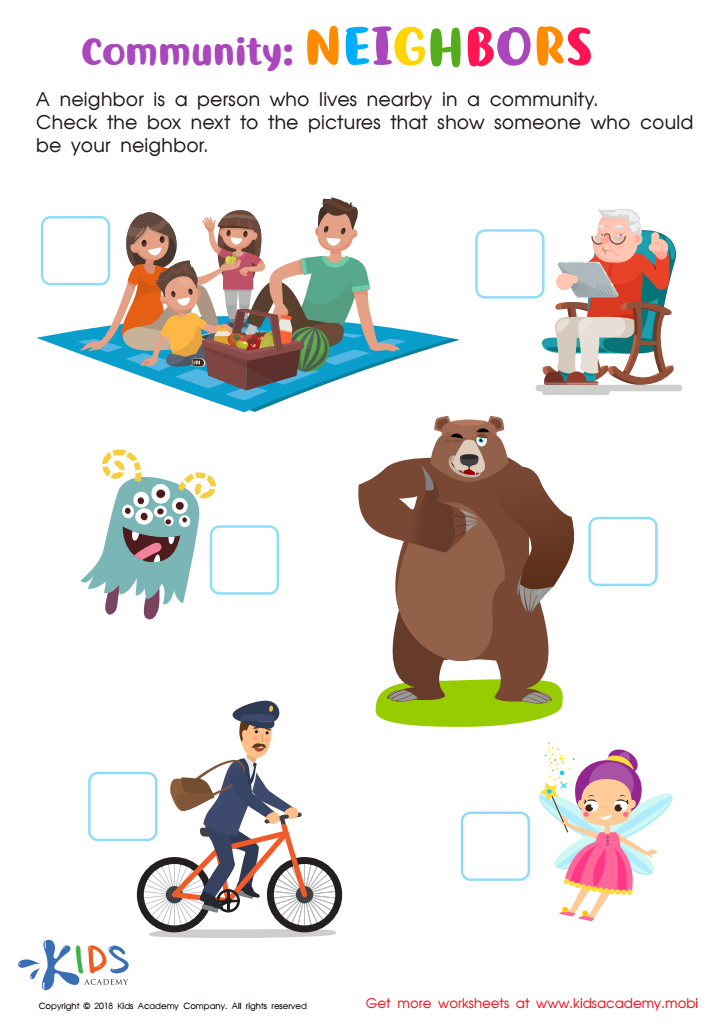
Community: Neighbors Worksheet
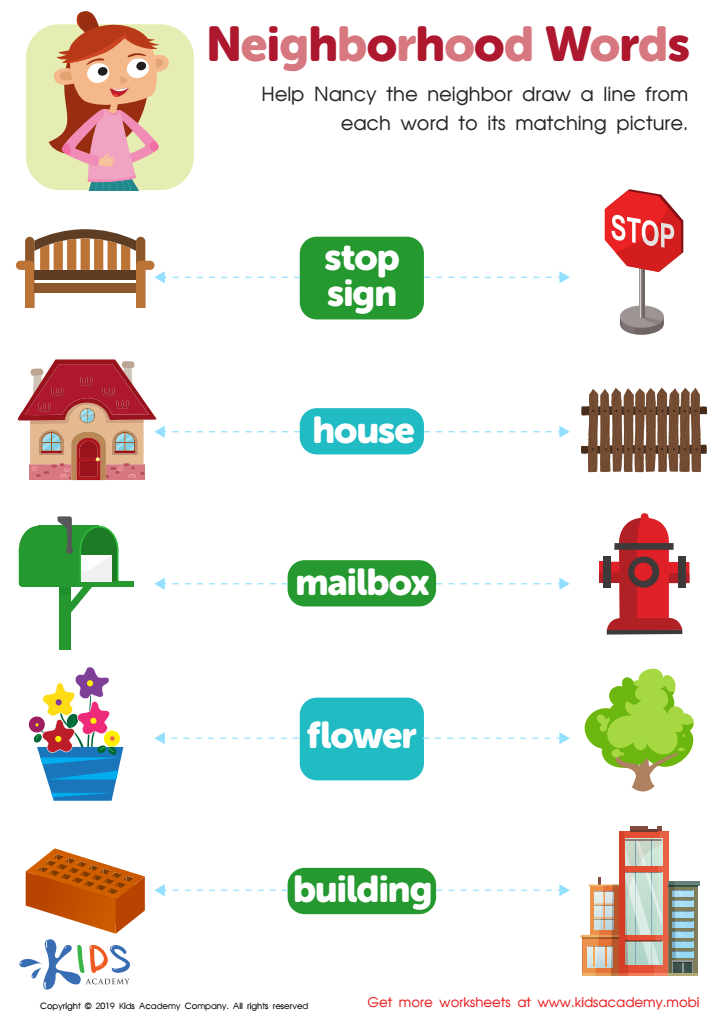
Neighborhood Words Worksheet
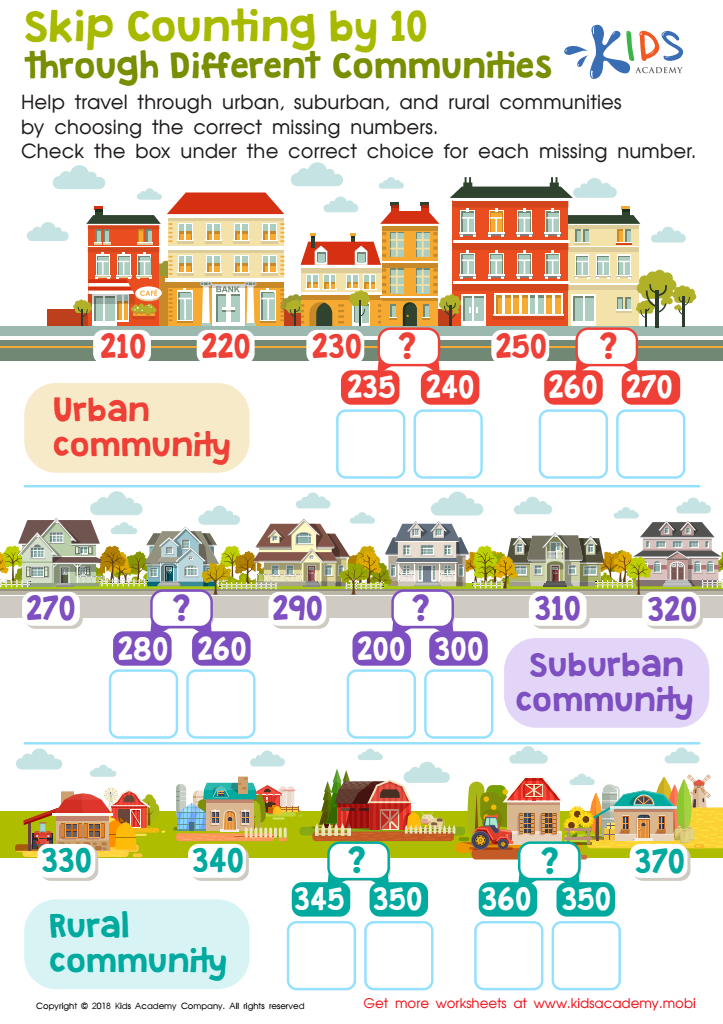
Skip Counting by 10 through Different Communities Worksheet
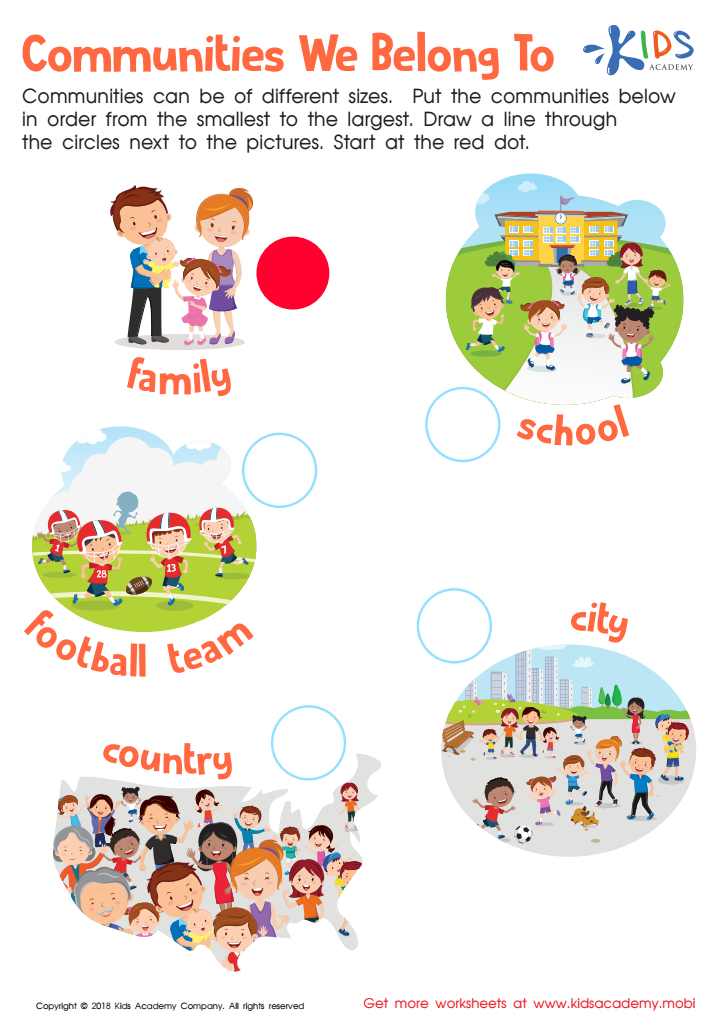
Communities We Belong to Worksheet
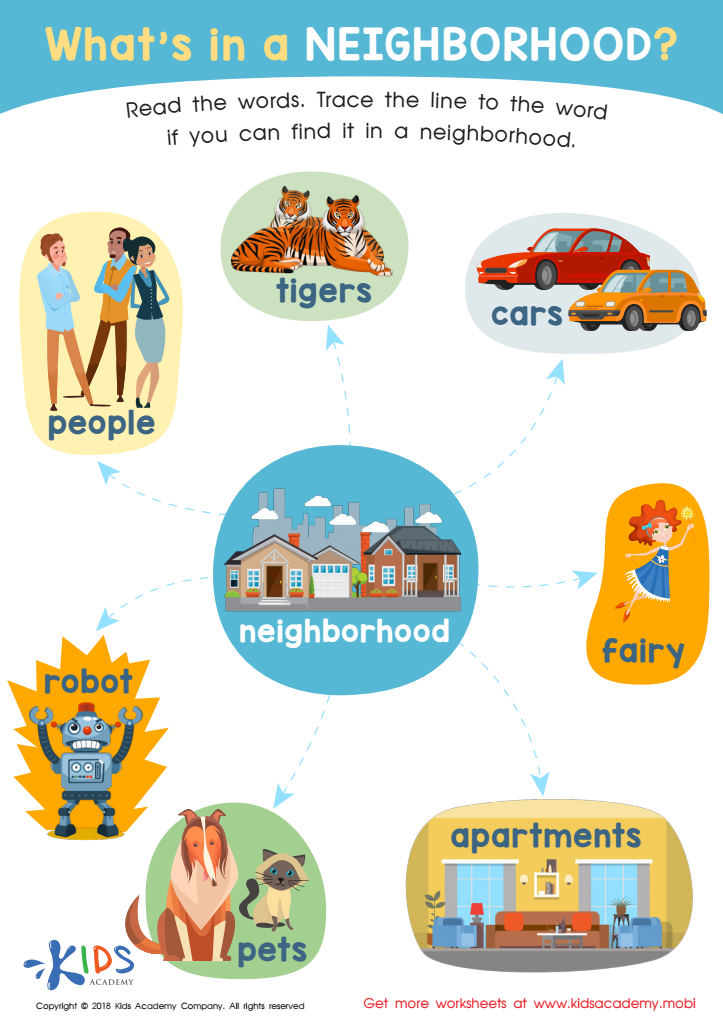
What's in a Neighborhood? Worksheet






Understanding communities is crucial for young children aged 4-7, as this foundational knowledge sets the stage for healthy social interaction and development. At this tender age, children learn the value of belonging and recognize their roles not just within their family but also in broader groups like schools and neighborhoods. When parents and teachers focus on teaching children about communities, they introduce concepts of cooperation, empathy, and shared responsibility.
Firstly, learning about communities helps children grasp the notion of diversity. They begin to see the rich mosaic of cultures, traditions, and lifestyles that exist around them, fostering acceptance and reducing prejudices at an early age. This can lead to inclusivity, where children learn to appreciate differences rather than fear them.
Secondly, understanding community dynamics enhances social skills. Children learn fundamentals of effective communication, problem-solving, and teamwork. These skills are essential for their academic journey and life beyond schooling. Through group activities and participative learning, they grasp the importance of working together, which increases their sense of contribution and self-worth.
Furthermore, a positive understanding of communities can instill civic-mindedness. Children get an early introduction to concepts like rules, responsibilities, and the significance of helping others. They learn that they are active participants in shaping their environment, empowering them to be conscientious individuals as they grow older.
In summary, focusing on understanding communities equips children with valuable life skills, promotes inclusivity, and forms the foundation for responsible citizenship, all of which are critical for their overall development.








