Understanding forces Normal Worksheets for Ages 4-7
3 filtered results
-
From - To
Discover the exciting world of forces with our "Understanding Forces Normal Worksheets" designed for children ages 4-7! These engaging worksheets introduce young learners to fundamental concepts of forces through fun activities that spark curiosity and creativity. With colorful illustrations and age-appropriate exercises, children will explore topics such as pushing, pulling, gravity, and motion in an interactive way. Perfect for enhancing early science skills, our worksheets promote critical thinking and hands-on learning. Ideal for classrooms or at-home learning, these resources will help your child develop a solid foundation in understanding the dynamics of the physical world. Dive into the fascinating realm of forces today!
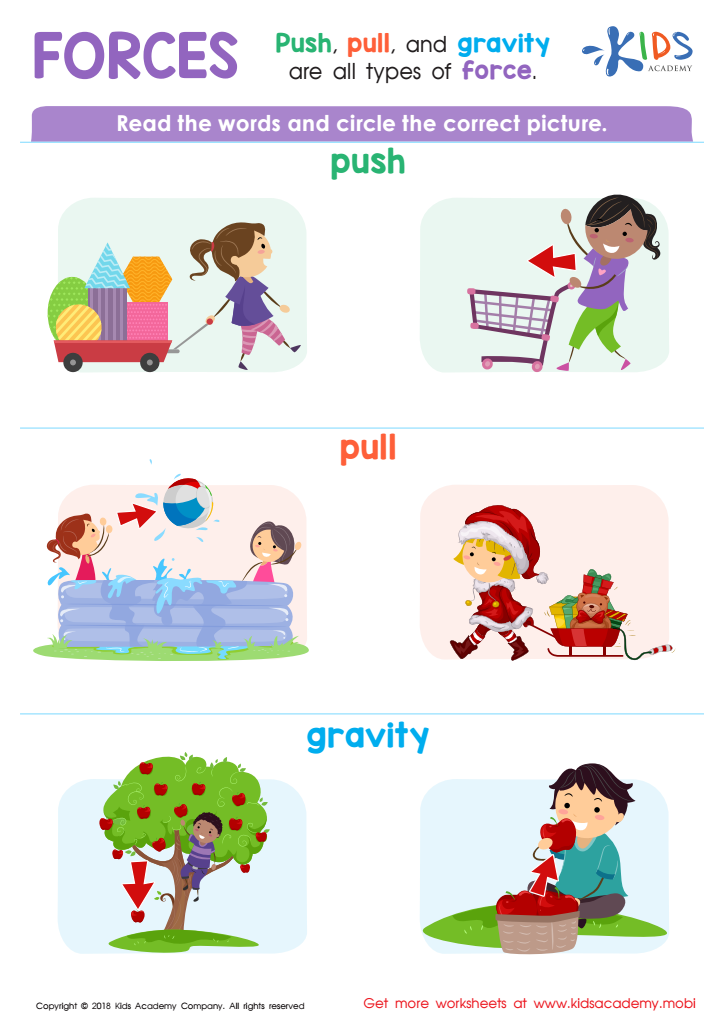
Forces Worksheet
 Assign to My Students
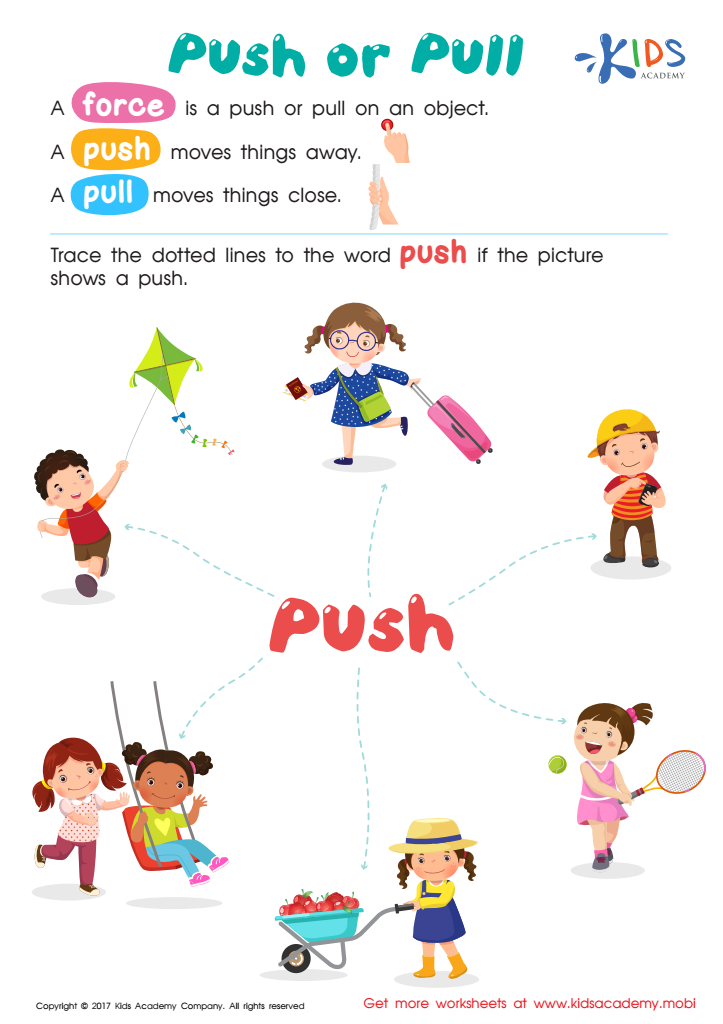
Push or Pull Worksheet
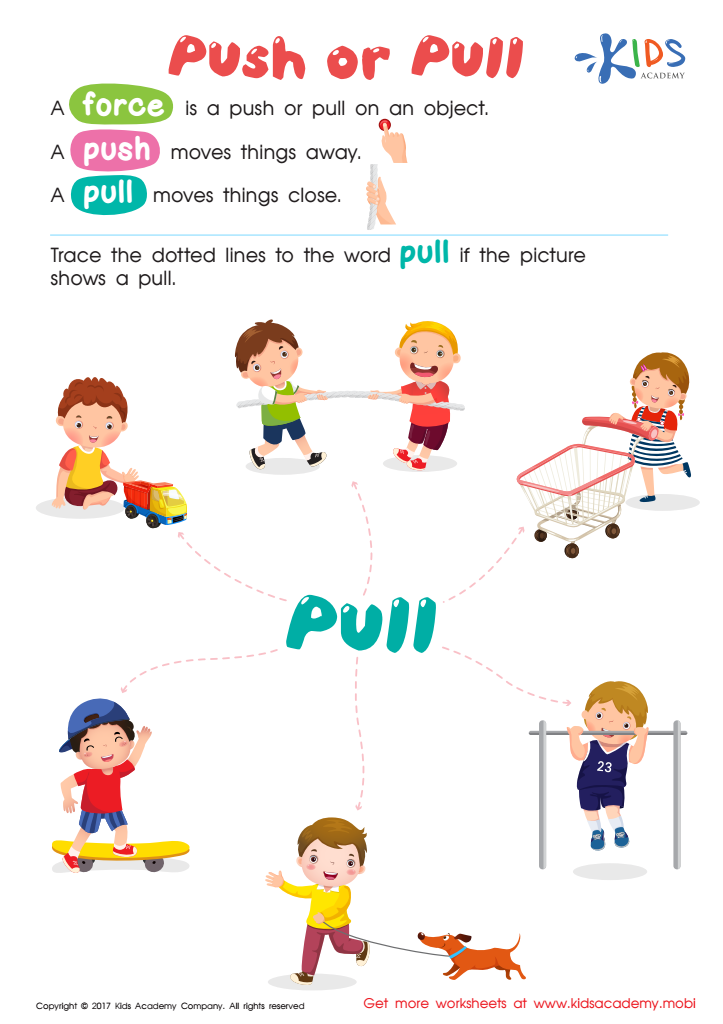
Pull or Push Worksheet






Understanding forces is a crucial concept in early education, especially for children aged 4 to 7. During these formative years, children's curiosity about the world around them leads to foundational learning experiences that shape their understanding of science. Forces, such as push and pull, directly relate to their everyday experiences — from playing with toys to exploring how objects move.
When parents and teachers invest time in teaching about forces, they encourage critical thinking and problem-solving skills. Real-life applications, such as understanding why some objects fall faster than others or how to build a simple ramp for cars, engage students and spark their imagination. This hands-on learning fosters a love for science, promoting inquiry and exploration.
Moreover, comprehending forces lays the groundwork for future learning in physics and other sciences. It helps children develop resilience as they experiment, make mistakes, and learn through trial and error.
By fostering a learning environment where curiosity about forces is nurtured, parents and teachers not only enrich children's immediate educational journeys but also empower them with skills that will benefit their lifelong learning and understanding of the world around them. Engagement in such topics nurtures an early scientific mindset, setting the stage for future academic success.








