Uppercase identification Normal Worksheets for Ages 4-7
5 filtered results
-
From - To
Boost your child's literacy skills with our engaging Uppercase Identification Normal Worksheets, designed specifically for children ages 4 to 7. These worksheets provide a fun and interactive way for young learners to recognize and differentiate uppercase letters. Each worksheet includes colorful activities that capture children’s attention, including matching games and tracing exercises. Perfect for at-home learning or classroom use, these resources encourage fine motor skills development and reinforce letter recognition in a playful manner. Download our Uppercase Identification Worksheets today and help your child master the fundamentals of literacy while enjoying every moment of learning!
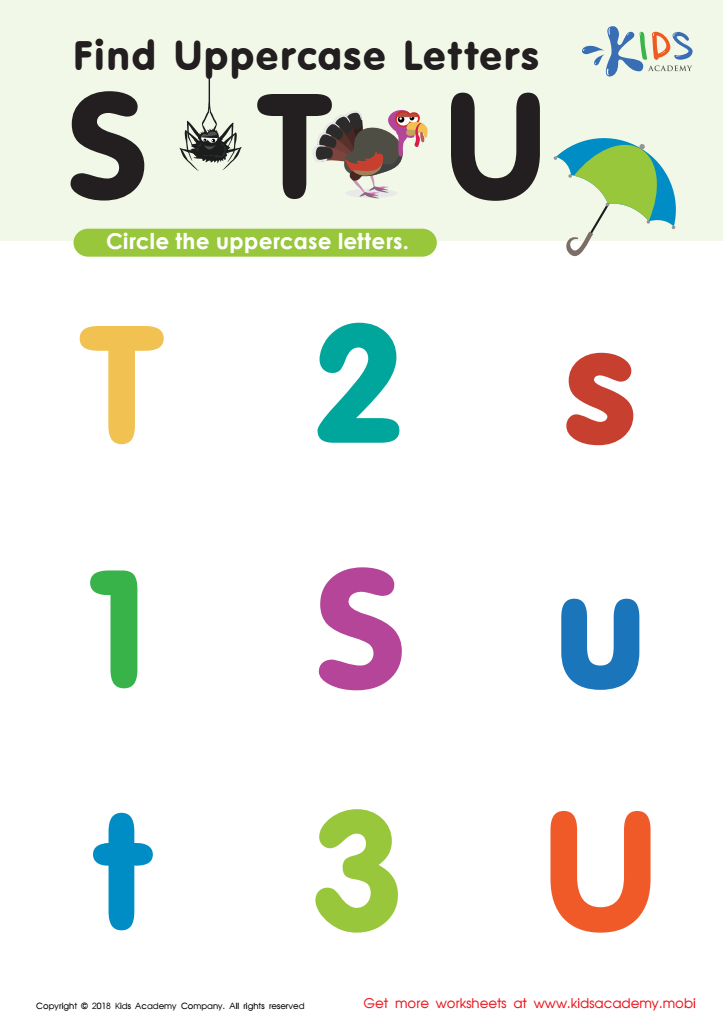
Find Uppercase Letters Worksheet
 Assign to My Students
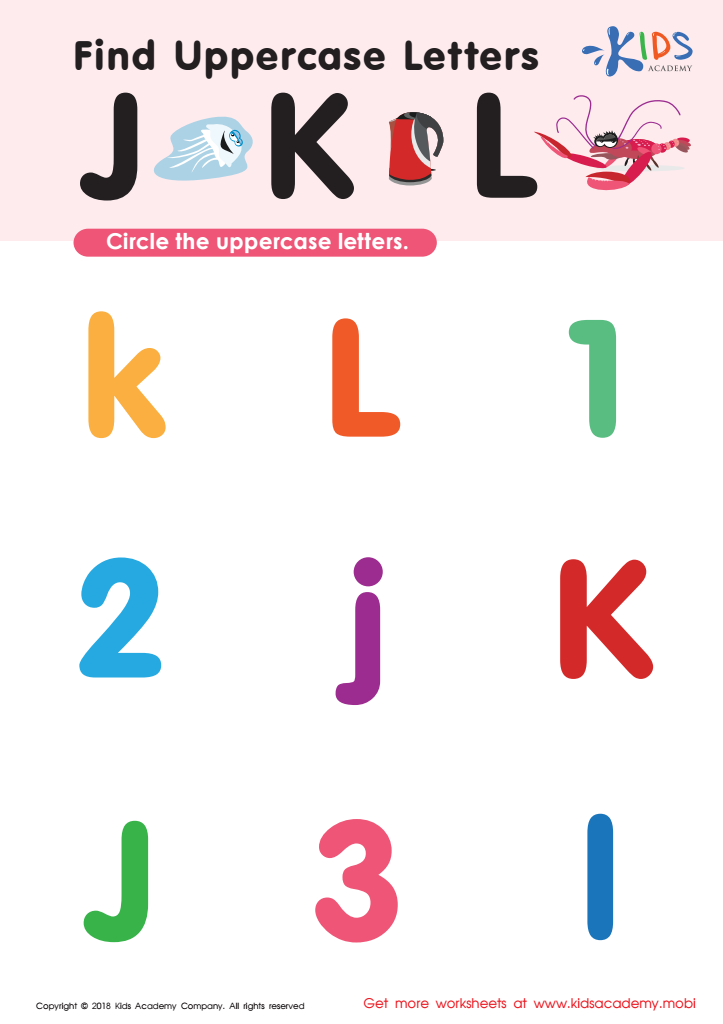
Find Uppercase Letters J, K, and L Worksheet

Find Uppercase Letters A, B, and C Worksheet
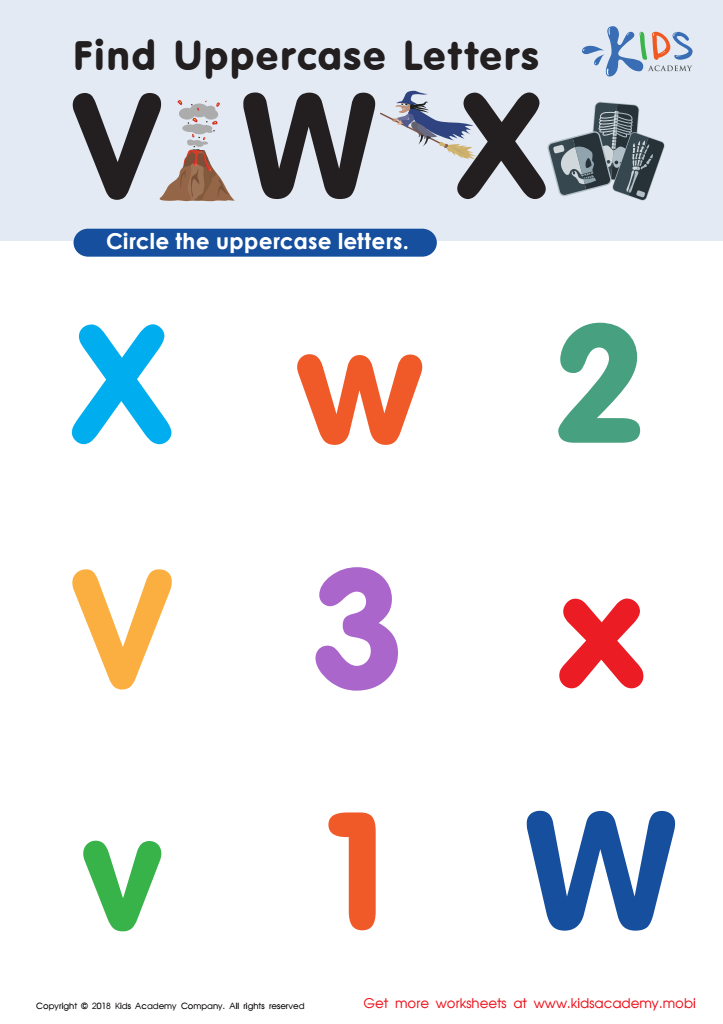
Find Uppercase Letters V, W, X Worksheet
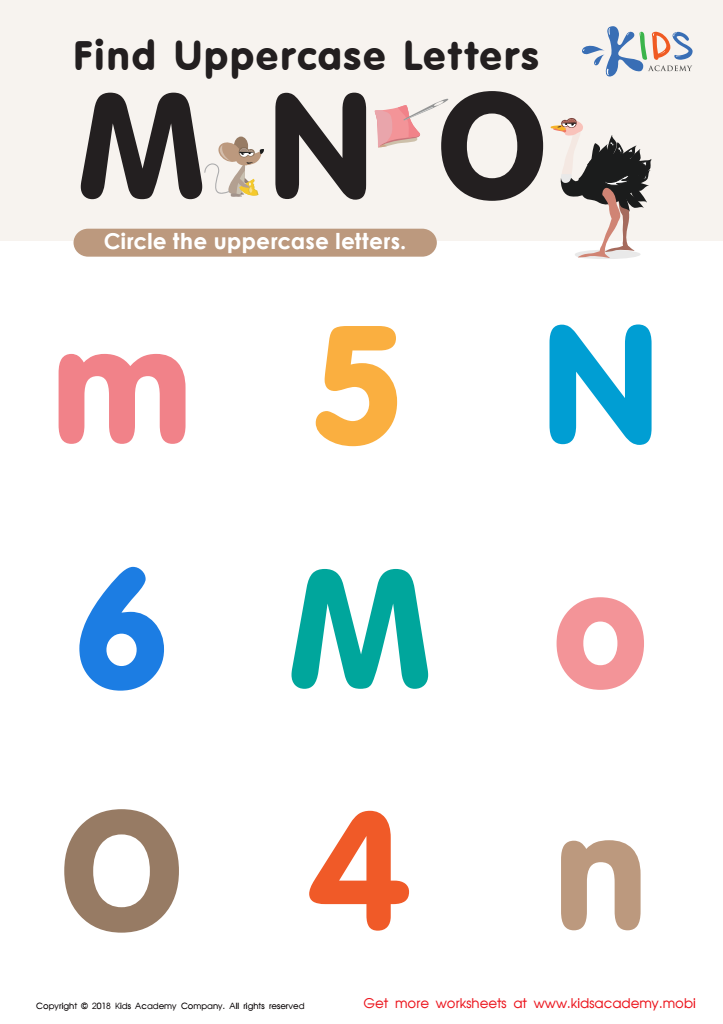
Find Uppercase Letters M, N, and O Worksheet








Parents and teachers should prioritize uppercase letter identification for children aged 4 to 7 as it lays a fundamental foundation for literacy skills. Recognizing uppercase letters is vital as it helps children understand the basic structure of written language. Since capital letters are often used at the beginning of sentences and for proper nouns, mastering them enhances reading comprehension and fluency.
Moreover, uppercase letters significantly contribute to spelling proficiency. Many children encounter familiar, common words with initial capital letters, and recognizing these reinforces vocabulary development. Additionally, during this crucial early stage of literacy, letter identification aids in developing fine motor skills essential for handwriting.
Engaging children in activities that promote uppercase letter recognition fosters an inclusive learning environment. It encourages curiosity and excitement about reading and writing, critical components of their overall academic success.
Furthermore, recognizing uppercase letters boosts children's self-esteem and confidence as they gain mastery over a vital skill. As partners in a child's education, both parents and teachers play a pivotal role in facilitating this learning, providing encouragement, and creating opportunities for fun, interactive learning experiences that keep children engaged.








