Visual perception enhancement Normal Worksheets for Ages 4-7
3 filtered results
-
From - To
Enhance your child's visual perception skills with our captivating worksheets designed for ages 4-7. These engaging printable activities focus on improving visual discrimination, memory, and spatial awareness, laying a strong foundation for essential learning skills. Each worksheet is thoughtfully crafted to make learning enjoyable while fostering important cognitive abilities. From matching images to completing patterns, your child will develop keen observation skills and boost their confidence in visual tasks. Perfect for homeschooling or supplemental classroom activities, our visual perception worksheets are a fantastic resource to support your child’s growth and prepare them for future academic success. Download now and watch them thrive!
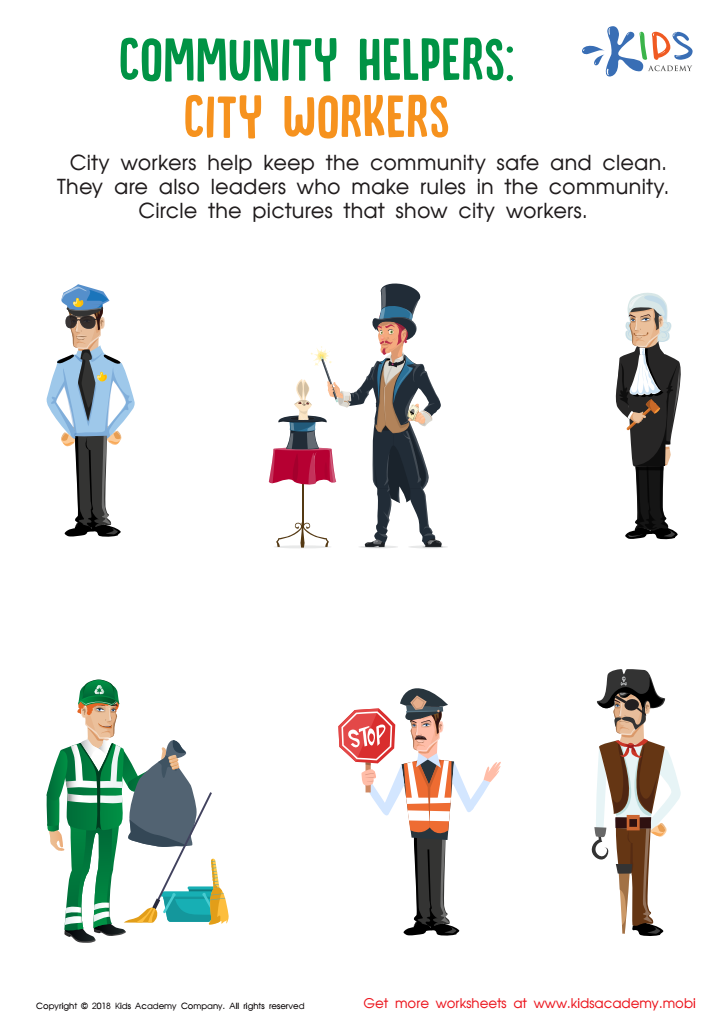
City Workers Community Helpers Worksheet
 Assign to My Students
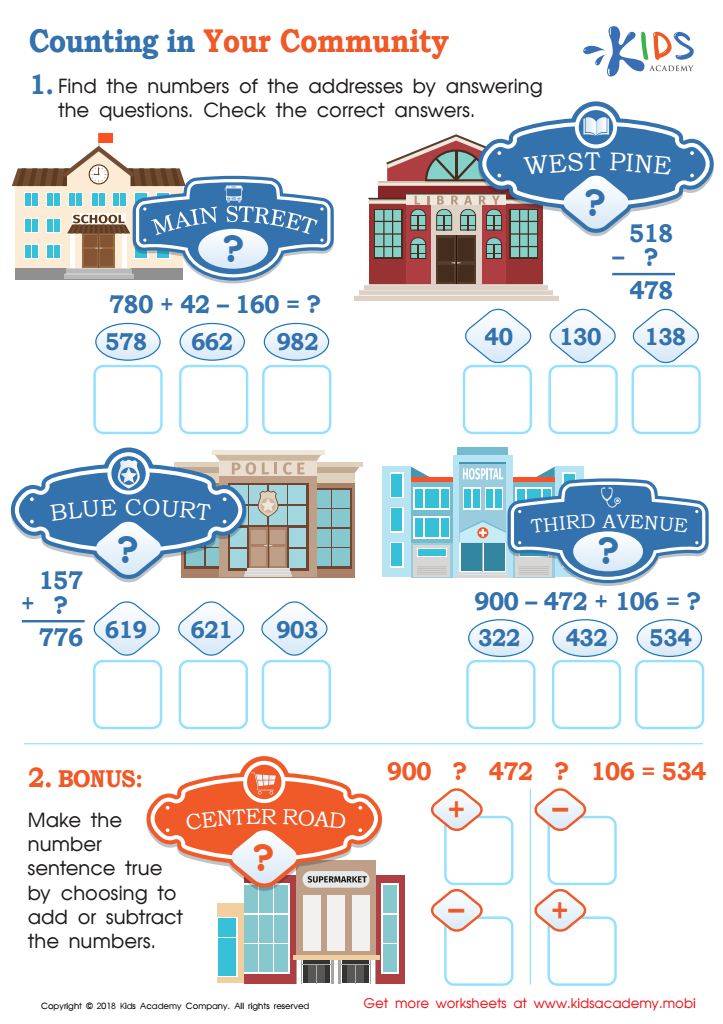
Counting in Your Community Worksheet
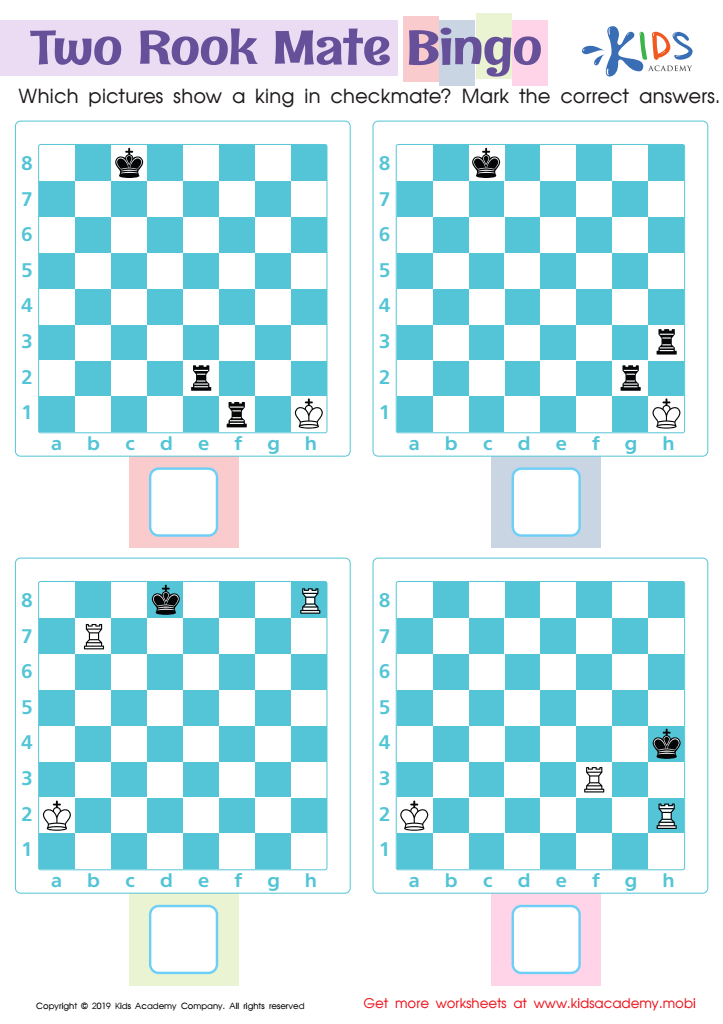
Two Rook Bingo Worksheet






Visual perception is crucial for children's overall development, particularly for those aged 4-7. During these formative years, children are learning to process and interpret visual information, which impacts academic performance, social interactions, and everyday activities. Enhancing visual perception can help improve skills like reading, writing, and ultimately, comprehension, as children learn to decode letters and words more effectively.
Teachers and parents should recognize that visual perceptual skills include visual discrimination, memory, spatial awareness, and figure-ground perception, all of which play essential roles in a child's ability to navigate their environment and absorb information. Enhanced visual perception can lead to increased confidence and motivation in school, allowing for more active participation and enjoyment in learning.
Furthermore, these skills are interconnected with fine motor development and coordination, critical for tasks such as holding a pencil or cutting with scissors. By promoting visual perception activities, educators and parents can lay a strong foundation that supports not just academic success but also the development of essential life skills. Addressing visual perception in children allows for early identification of potential learning difficulties and paves the way for timely intervention, fostering a more positive educational experience overall.








