Basic Arithmetic Normal Addition and Subtraction Word Problems Worksheets for Ages 4-7
4 filtered results
-
From - To
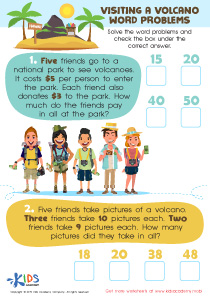
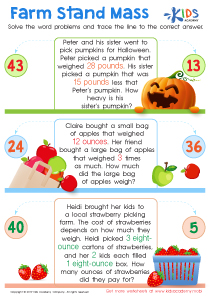
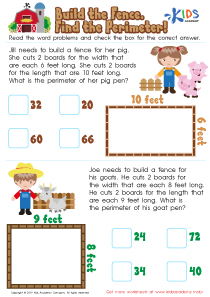
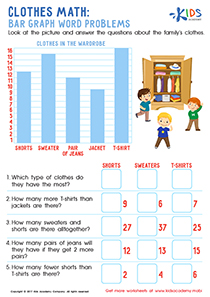
Discover our engaging Basic Arithmetic Normal Addition and Subtraction Word Problems Worksheets, designed specifically for children ages 4-7. These worksheets help young learners develop essential math skills through interactive and relatable word problems. Skills such as problem-solving and critical thinking are enhanced, making math enjoyable and accessible. Each worksheet includes fun scenarios that captivate children's imagination while reinforcing their understanding of addition and subtraction. With varying levels of difficulty, these resources cater to all learning stages. Perfect for at-home practice or in the classroom, our worksheets provide a solid foundation for early math competency. Start your child's learning journey today!
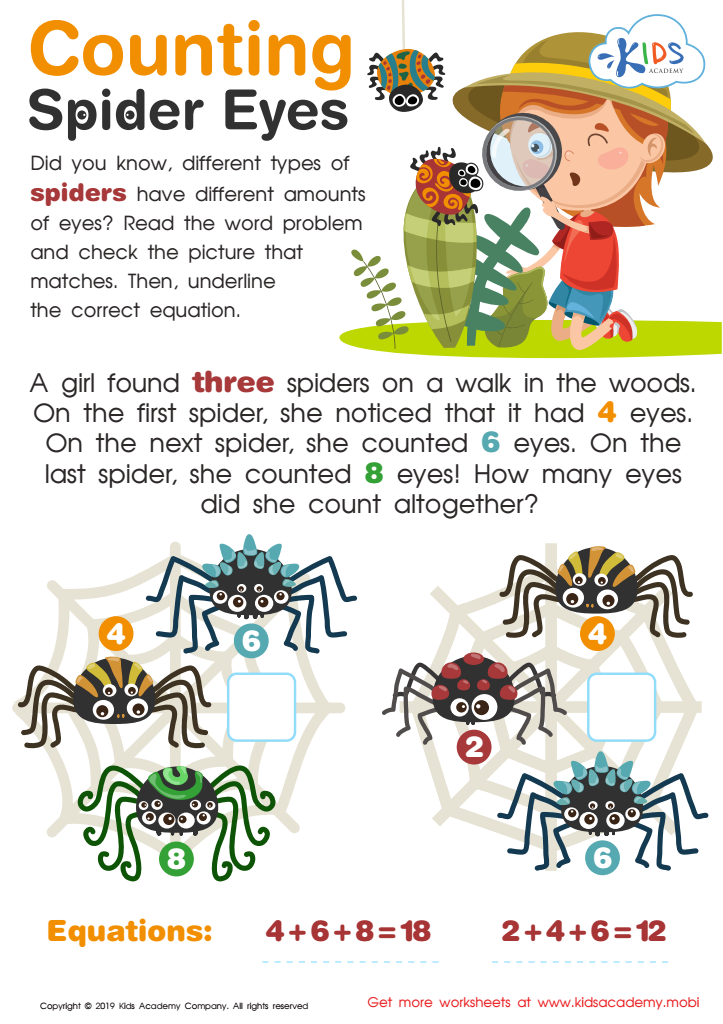
Counting Spider Eyes Worksheet
 Assign to My Students
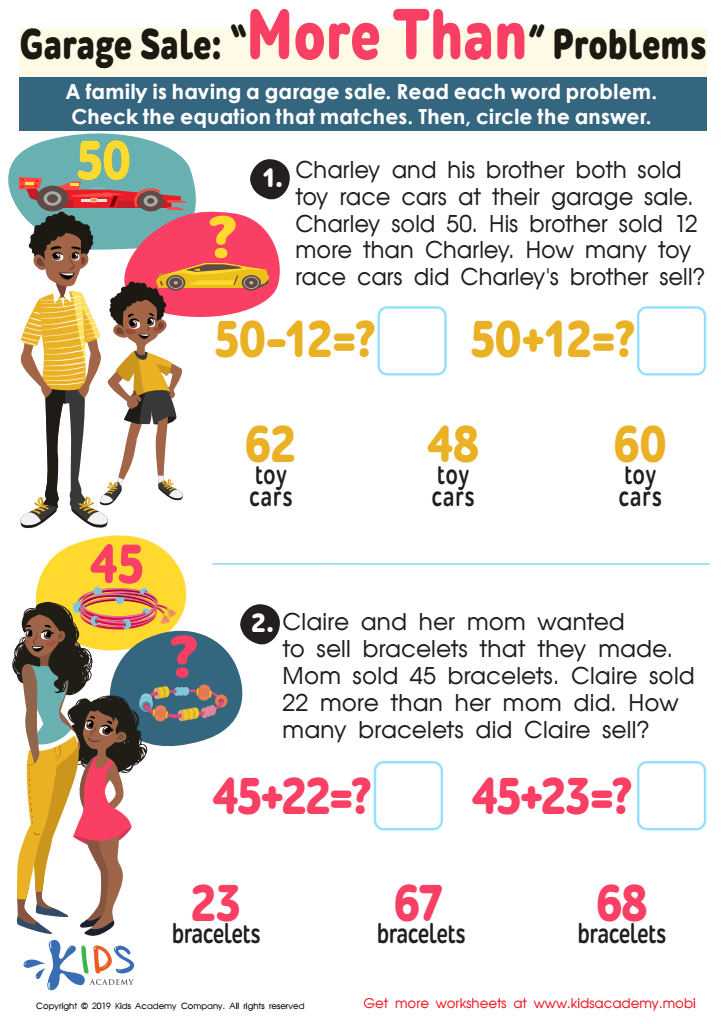
Garage Sale - More yhan Worksheet
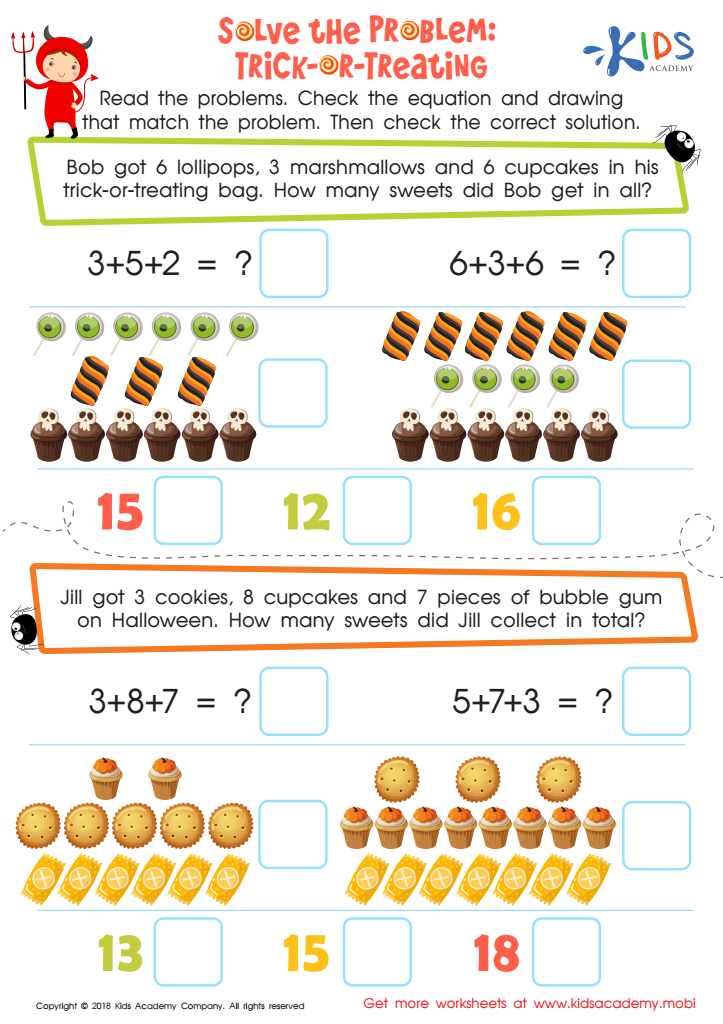
Solve the Problem: Trick–or–treating Worksheet
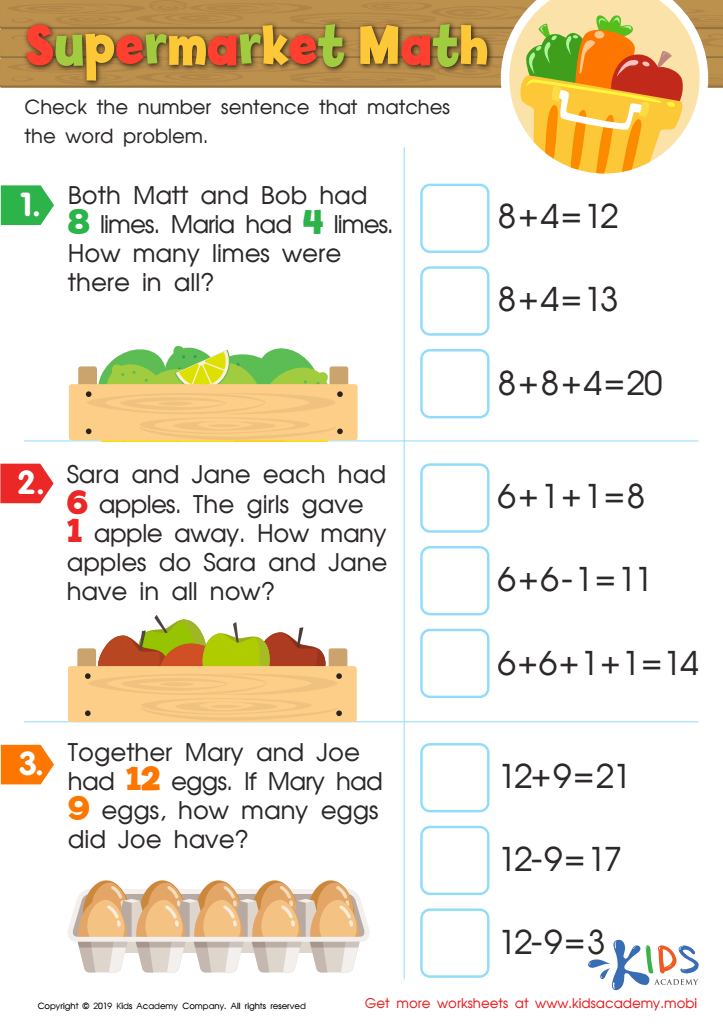
Supermarket Math Worksheet








Basic arithmetic normal addition and subtraction word problems are crucial for children ages 4-7 as they lay the foundation for essential mathematical skills and critical thinking. At this developmental stage, children begin to grasp the concepts of numbers, quantities, and relationships, which are key in everyday situations. By engaging with word problems, students learn to interpret and analyze real-world scenarios, enhancing their comprehension and reasoning abilities.
Additionally, these problems encourage children to practice language skills as they decipher the context of each problem. This builds both their vocabulary and comprehension, as they translate written scenarios into mathematical operations. Furthermore, mastering these skills fosters a positive attitude towards math, making them more confident in their capabilities as they tackle more complex concepts in the future.
Teachers and parents should also consider that such engagement helps develop problem-solving strategies and encourages persistence. Working through the challenges of word problems helps nurture a growth mindset, showing children that it's okay to struggle and that perseverance leads to success. Ultimately, encouraging mastery of normal addition and subtraction word problems equips children with tools they need in school and daily life, setting a strong foundation for future learning in mathematics and beyond.