Addition Practice Normal Addition & Subtraction Worksheets for Ages 4-7 - Page 2
29 filtered results
-
From - To
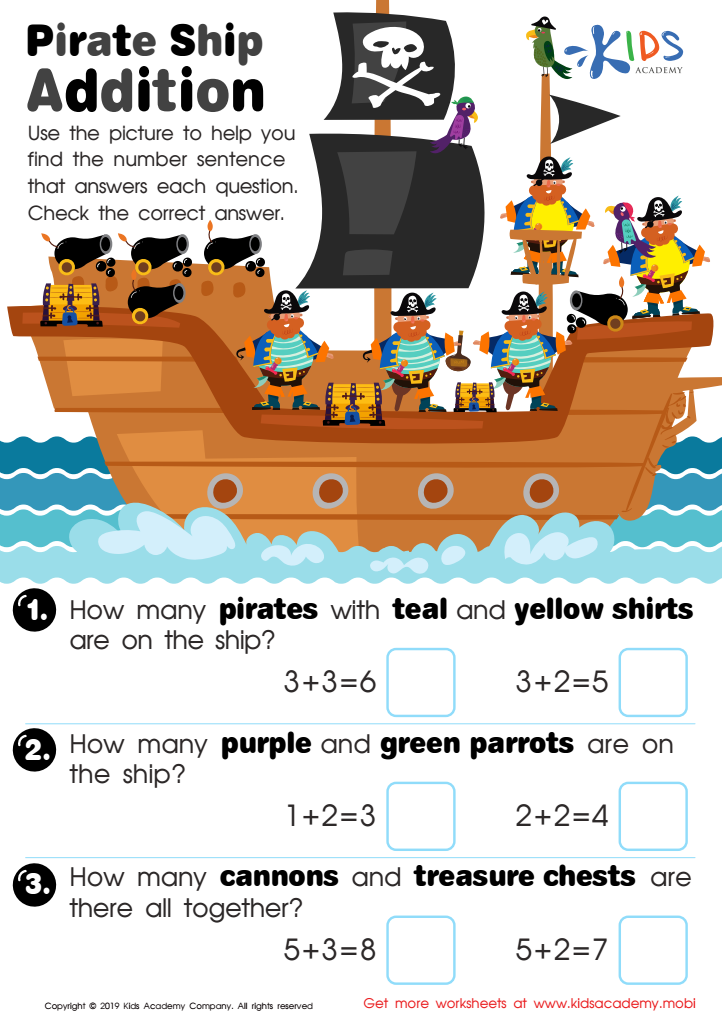
Pirate Ship Addition Worksheet
 Assign to My Students
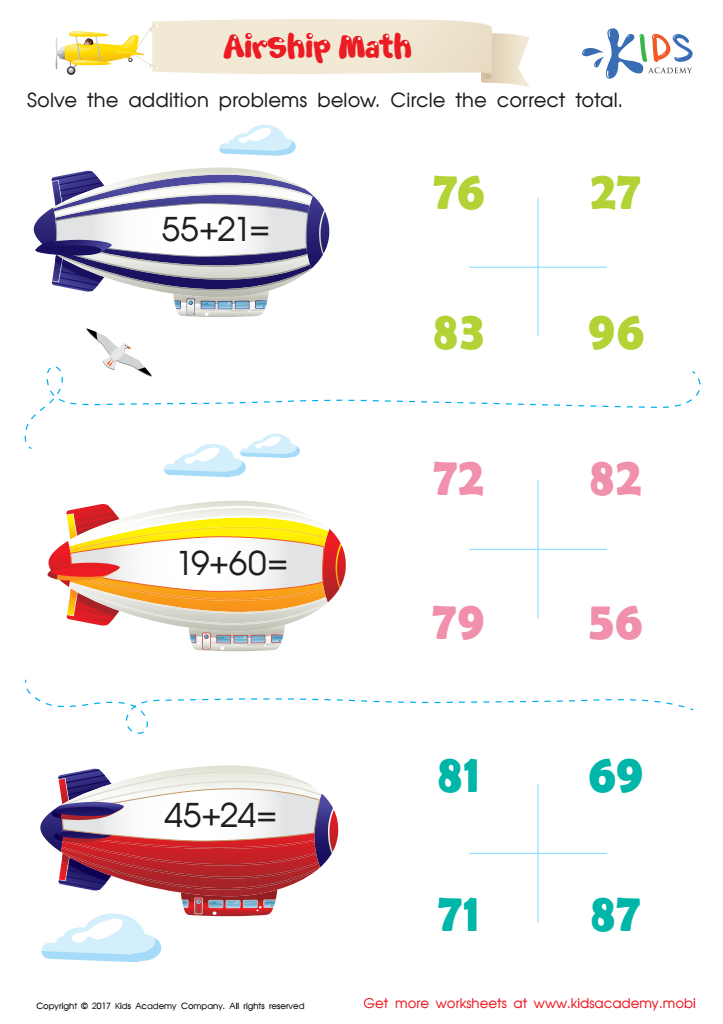
Airship Math Addition Printable
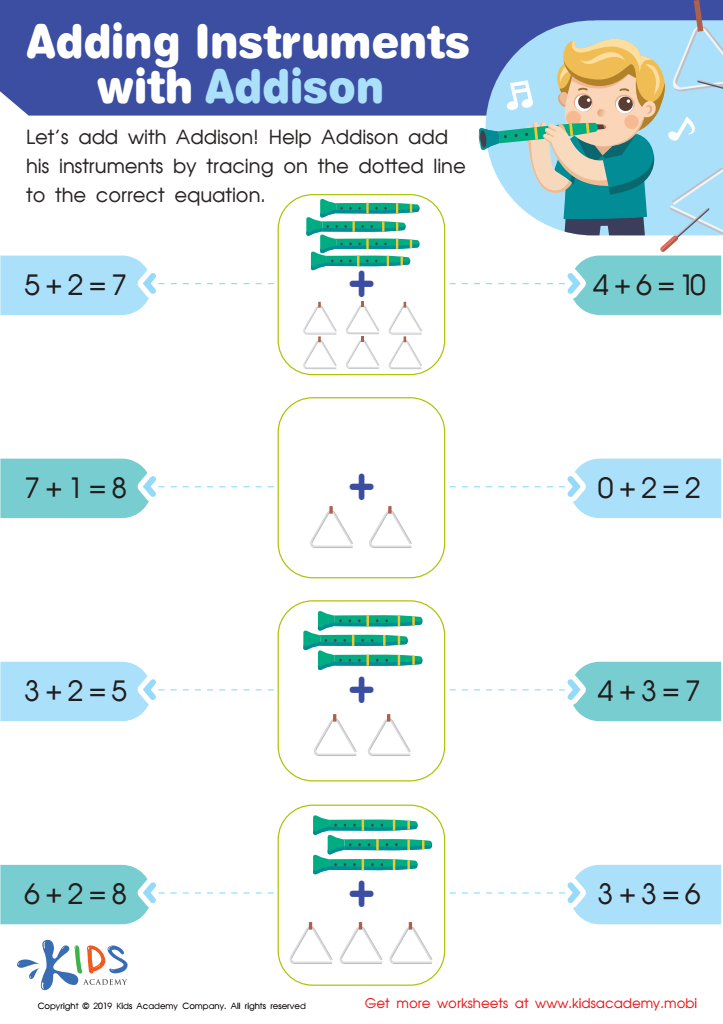
Adding Instruments with Addison Worksheet
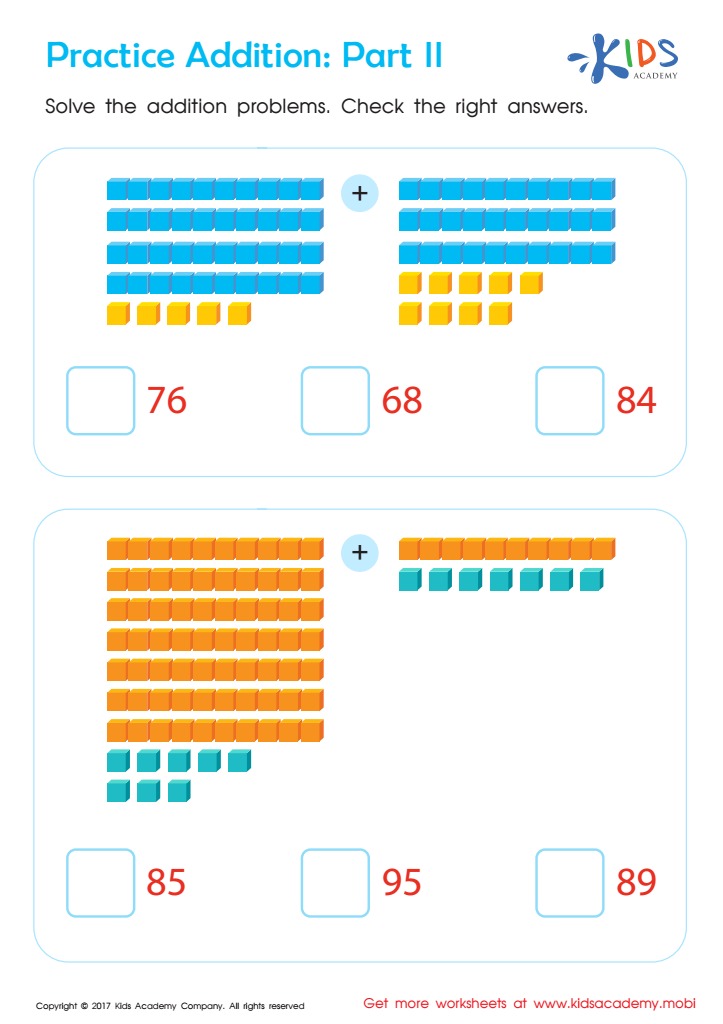
Practice Addition: Part 2 Worksheet
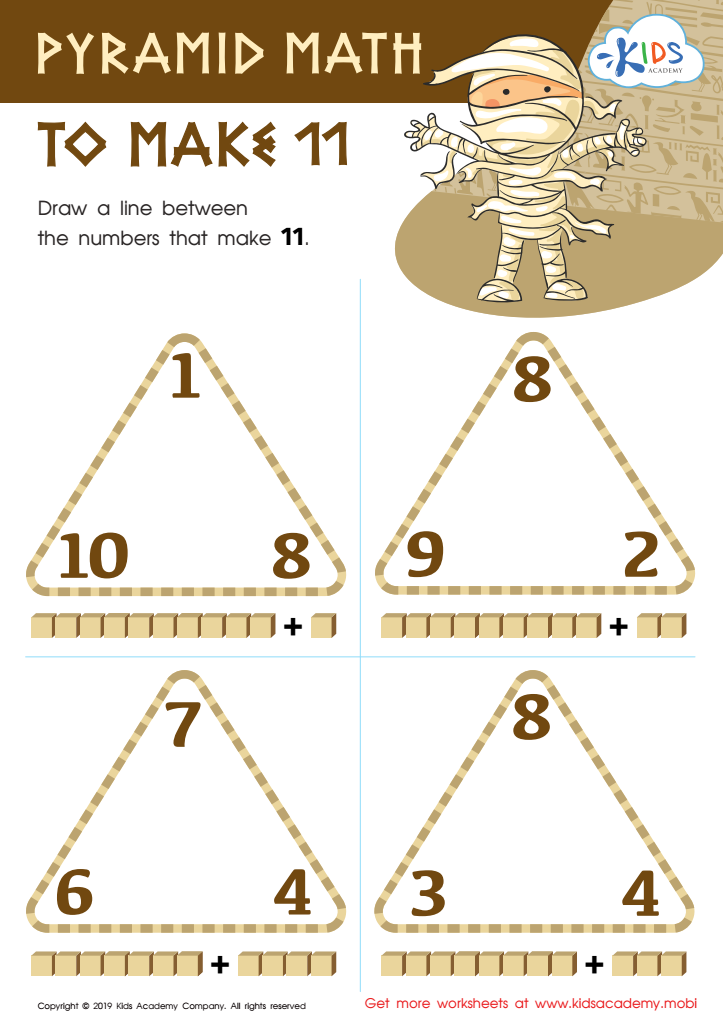
Pyramid Math to Make 11 Worksheet








Ensuring young children, ages 4-7, receive consistent practice in addition and subtraction is crucial for their mathematical foundation and cognitive development. These early arithmetic skills serve as building blocks for more complex mathematical concepts. Parental and teacher engagement in this practice helps instill a positive attitude towards math, minimizing anxiety or trepidation in later years.
Frequent addition and subtraction exercises reinforce memory, improve number sense, and enhance problem-solving abilities. When youngsters grasp these basic operations, it boosts their confidence, which translates to better performance in other subjects and overall academic progress. Moreover, this practice fosters logical thinking and critical analysis skills that are valuable in everyday life.
Early math fluency is also linked to improved cognitive functions such as attention, memory, and reasoning. When parents and teachers actively participate in providing such practices, they create a supportive learning environment, catering to individual learning paces and styles. This bond also strengthens their relationship, making learning a shared and positive experience.
In summary, prioritizing addition and subtraction practice for young children not only builds essential arithmetic skills but also enhances cognitive development and emotional confidence, laying a solid groundwork for future educational success.








