
Mental math practice Normal Addition & Subtraction Worksheets for Ages 4-7
5 filtered results
Difficulty Level
Grade
Age
-
From - To
Subject
Activity
Standards
Enhance your child's math skills with our engaging Mental Math Practice Normal Addition & Subtraction Worksheets designed specifically for ages 4-7. These worksheets focus on building a strong foundation in basic arithmetic through fun and interactive exercises, promoting mental calculation techniques. Young learners will enjoy mastering addition and subtraction concepts while boosting their confidence in solving problems swiftly. Our age-appropriate activities cater to diverse learning styles, ensuring every child has the opportunity to excel in mathematics. Perfect for home or classroom use, our resources make math enjoyable and accessible. Unlock your child's potential with our vibrant and educational worksheets today!
Favorites
With answer key
Interactive
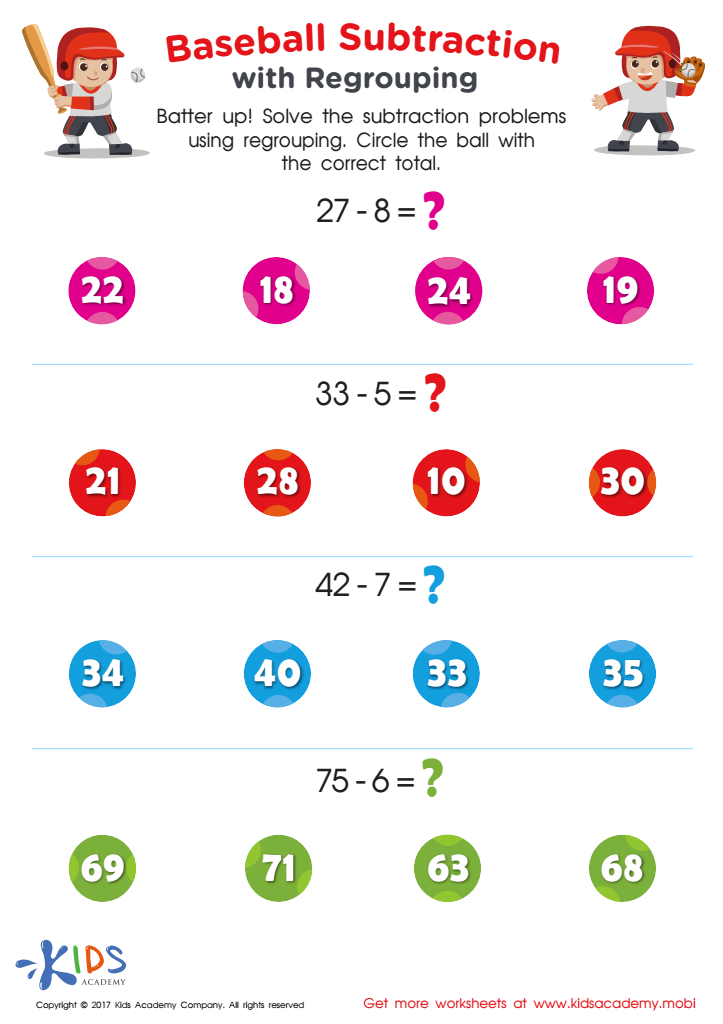
Subtraction With Regrouping for 2nd Grade Worksheet
Kids solve two-digit subtraction problems using regrouping and color in the baseballs.
2nd graders may find regrouping for subtraction tricky, so give them a helping hand with this fun worksheet! They practice two-digit subtraction and regrouping by coloring in baseballs as they solve the problems. Let them practice the skill and enjoy the game at the same time.
 Assign to My Students
Subtraction With Regrouping for 2nd Grade Worksheet
Worksheet
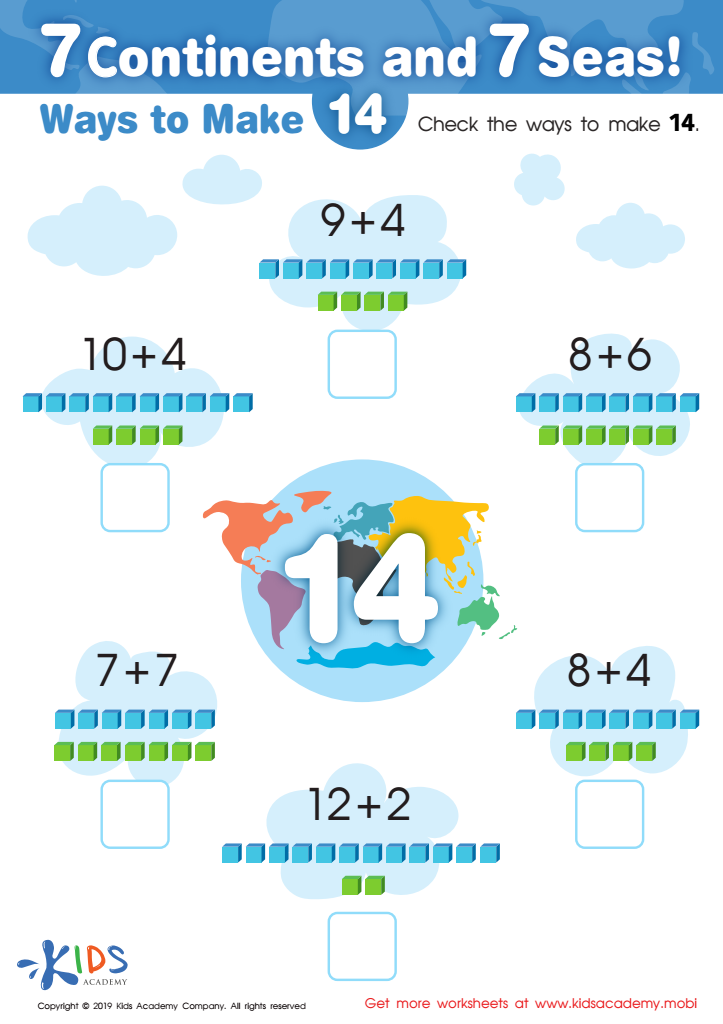
7 Continents and 7 Seas Worksheet
Remind kids of the continents and show them how different numbers can add up to the same figure. Give examples, like 2+2 =4, and 3+1 =4. Ask if they can provide other examples, then work through the simple additions in this worksheet with them. Ask them to circle all equations that make 14.
7 Continents and 7 Seas Worksheet
Worksheet
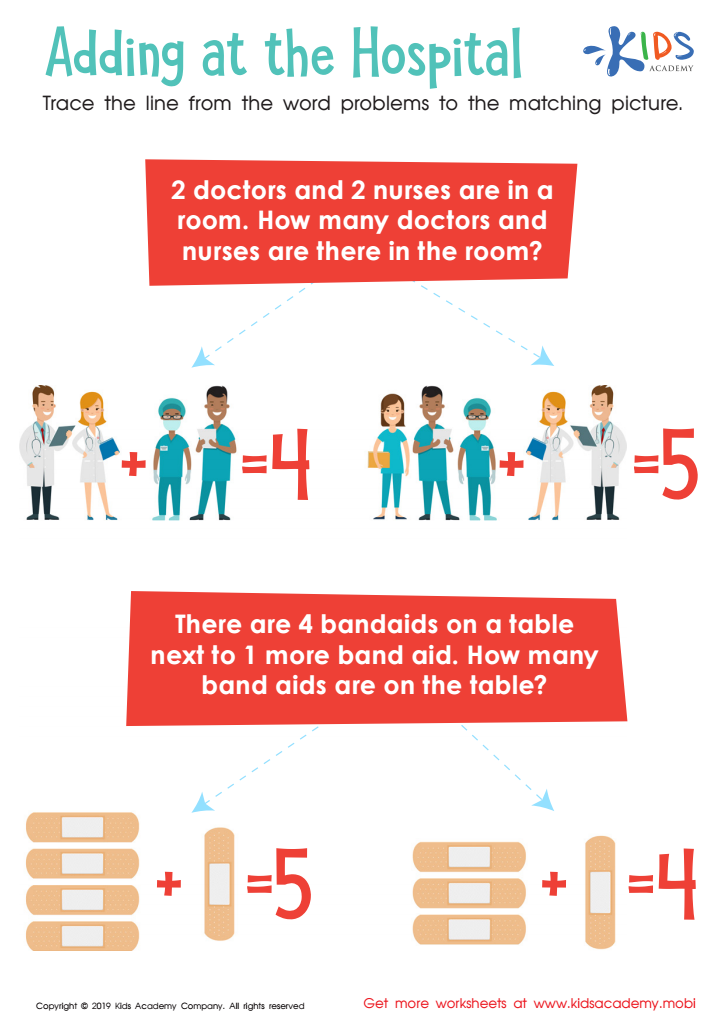
Adding at the Hospital Worksheet
A hospital visit doesn't have to be scary for kids. With this worksheet, they can count along with doctors and nurses, by reading the word problems and tracing lines to the corresponding picture. Guide them through it and you'll help them have a fun experience.
Adding at the Hospital Worksheet
Worksheet
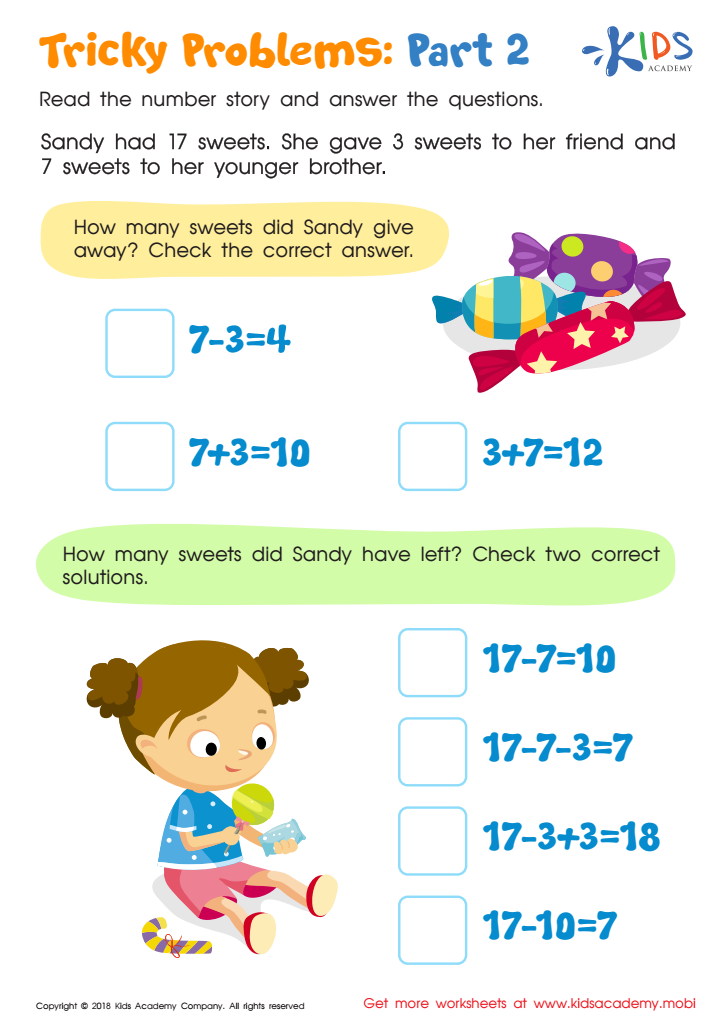
Tricky Problems Worksheet: Part 2
Help your little math learner visualize number stories with this engaging worksheet. They'll connect pictures to the story and use math facts to find the sums. After that, they'll be able to identify the correct number sentences to match. Let them practice and get better at problem solving!
Tricky Problems Worksheet: Part 2
Worksheet
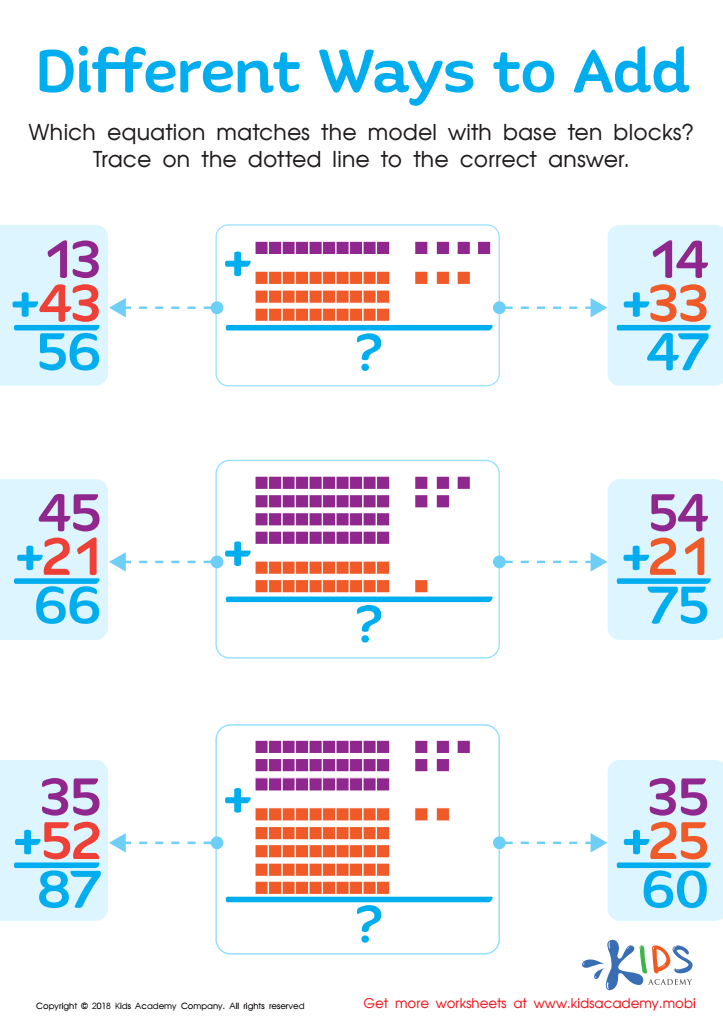
Different Ways to Add Worksheet
This worksheet enhances math skills by having students match equations to base ten pictures and tracing lines. It not only helps with fine motor skills, but also encourages number sense, with various ways to add and build upon existing math knowledge.
Different Ways to Add Worksheet
Worksheet
Join Kids Academy for Free
Who is primarily going to use this learning content?








Mental math practice in normal addition and subtraction for children aged 4-7 is essential for several reasons. First, it builds a strong foundational understanding of numbers and their relationships, promoting cognitive development at a critical stage in a child's learning journey. When children practice mental math, they enhance their ability to solve problems quickly, which fosters confidence in their mathematical skills.
Moreover, engaging in these exercises nurtures critical thinking and enhances memory retention. Children learn to visualize problems and develop strategies for calculating sums and differences mentally, which are skills they will use throughout their academic and daily lives. This practice also encourages a growth mindset, helping them understand that making mistakes is part of the learning process.
Parents and teachers should integrate mental math into daily routines, reinforcing concepts through fun games and activities. This integration not only makes math enjoyable but also strengthens the parent-teacher partnership in supporting a child’s learning. Ultimately, investing time in mental math during these formative years equips children with the tools needed for future academic success, promoting not only math skills but also overall cognitive development and problem-solving abilities.








