Shape identification Normal Geometry Worksheets for Ages 4-7
5 filtered results
-
From - To
Welcome to our Shape Identification Normal Geometry Worksheets, designed specifically for children ages 4 to 7! These engaging and interactive worksheets help young learners explore basic shapes while developing their math skills. Through various fun activities, children will identify, compare, and sort shapes, enhancing their visual recognition and reasoning abilities. Our worksheets feature colorful illustrations and simple instructions, making learning enjoyable and accessible. Perfect for classroom use or at-home practice, these resources promote a love for geometry and lay a solid foundation for future mathematical concepts. Start your child's journey into the world of shapes and geometry today!
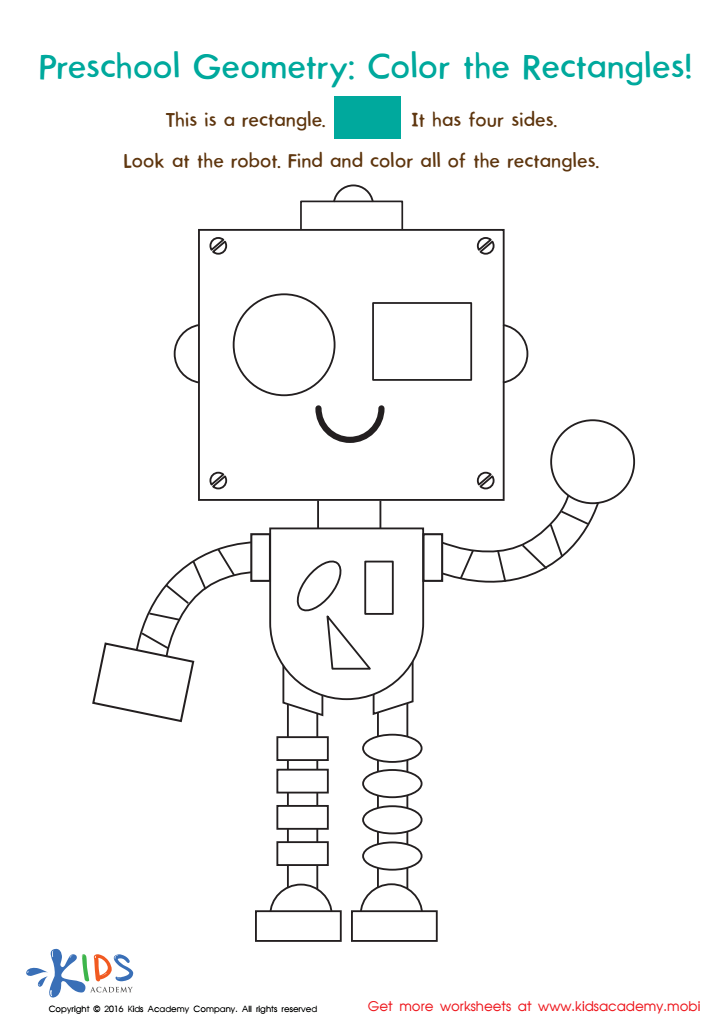
Geometry Worksheet
 Assign to My Students











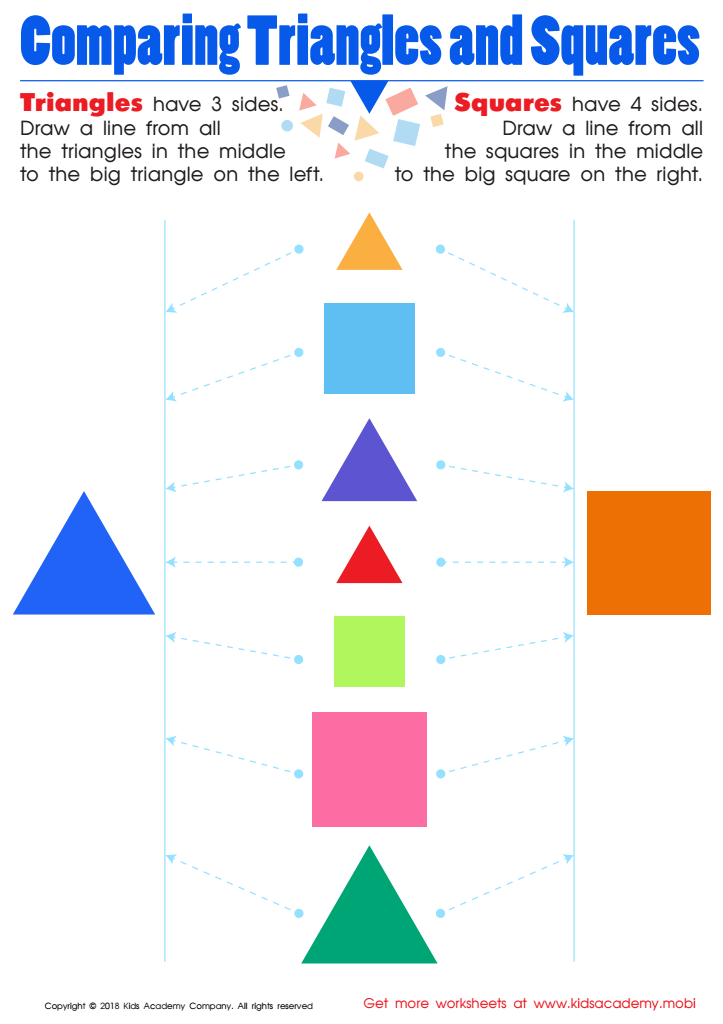
Comparing Triangles Squares Worksheet
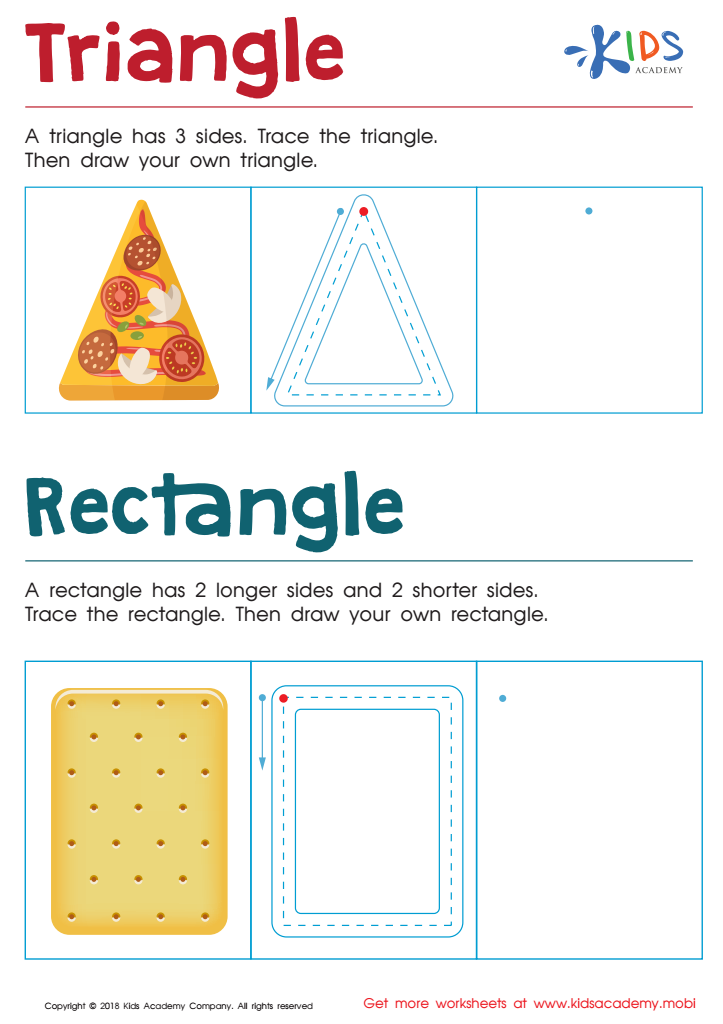
Triangle Rectangle Worksheet
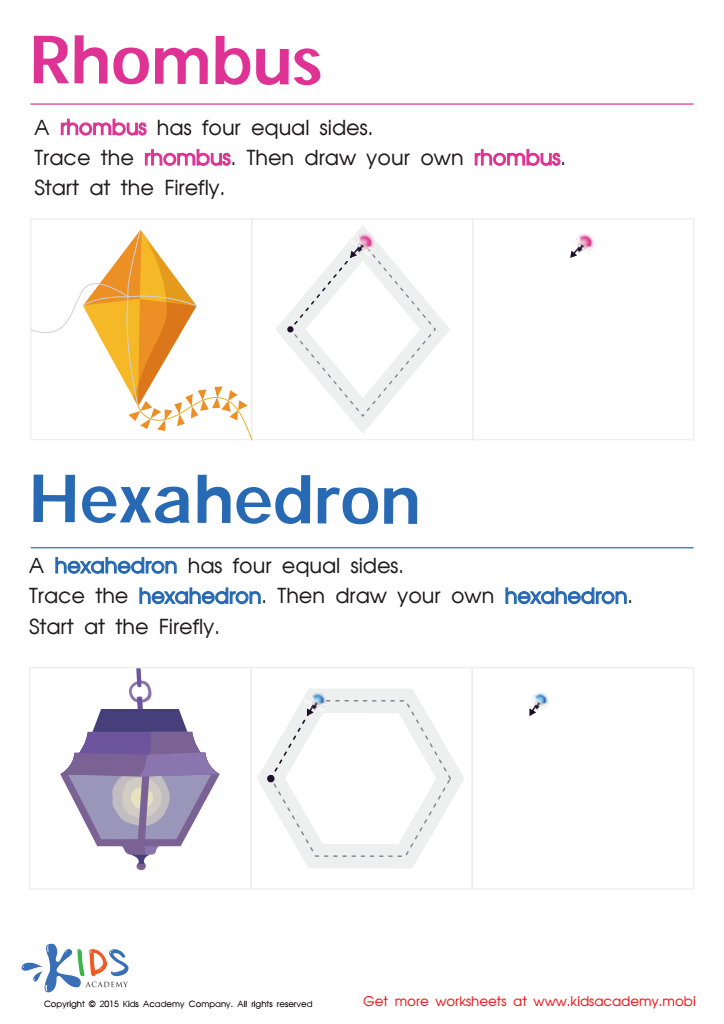
Draw a Rhombus And a Hexahedron Printable
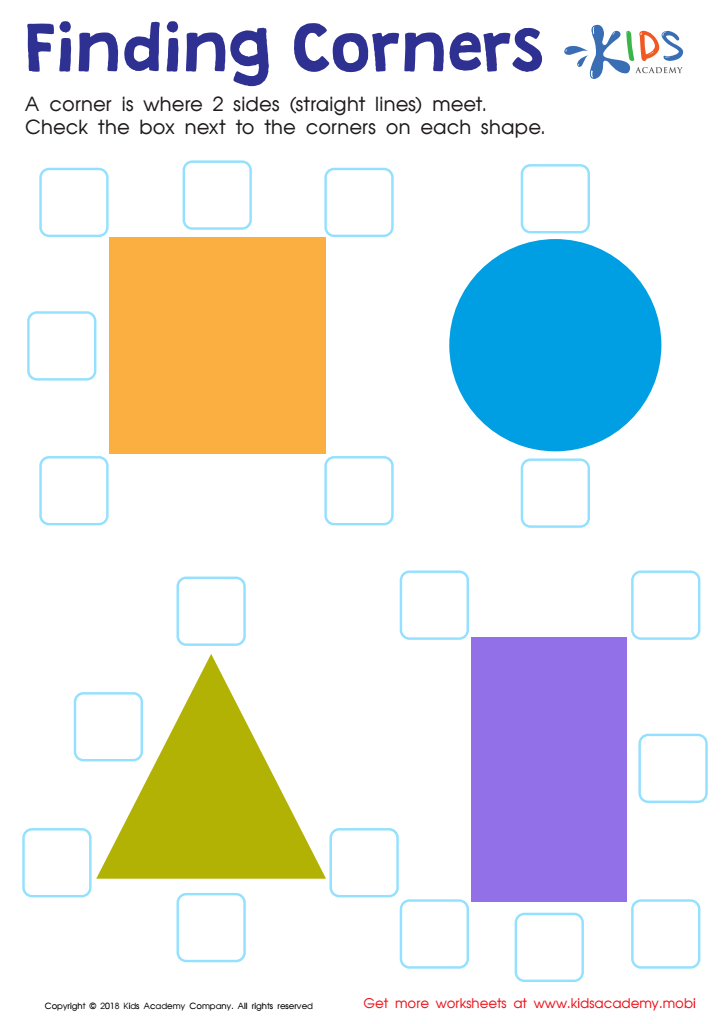
Finding Corners Worksheet








Shape identification is a crucial aspect of early childhood education, particularly for children ages 4-7, as it lays the foundation for broader mathematical understanding and cognitive development. Recognizing different shapes helps children develop spatial awareness and enhances their problem-solving skills. It teaches them to distinguish between properties such as sides, angles, and symmetry, which are fundamental concepts in geometry.
Parents and teachers should care about shape identification because it fosters critical thinking and boosts confidence in young learners. When children engage with shapes, they also develop language skills; they learn to describe and categorize their environment using words related to geometry. This vocabulary expansion is essential for effective communication and comprehension in later subjects.
Additionally, shape identification plays a significant role in real-life applications. Understanding shapes helps children make sense of everyday objects and environments, aiding in navigation and construction skills. Furthermore, shape recognition is often a precursor to more complex mathematical concepts that they will encounter in future education stages.
By prioritizing shape identification, parents and teachers can cultivate a strong mathematical foundation that not only supports academic success but also nurtures a child's natural curiosity and love for learning.








