
Matching skills Normal Numbers Worksheets for Ages 4-7
3 filtered results
Difficulty Level
Grade
Age
-
From - To
Subject
Activity
Standards
Enhance your child's educational journey with our Matching Skills Normal Numbers Worksheets designed for ages 4-7. Tailored to promote early numeracy, these engaging worksheets help children develop their number recognition and matching abilities through fun activities. Young learners will enjoy vibrant illustrations and interactive exercises that cultivate critical thinking and fine motor skills. Each worksheet encourages independent learning and reinforces foundational concepts essential for academic success. Ideal for homeschoolers or classroom use, our printable resources make learning numbers both enjoyable and effective. Help your child build confidence in their math skills today with our Matching Skills Normal Numbers Worksheets!
Favorites
With answer key
Interactive
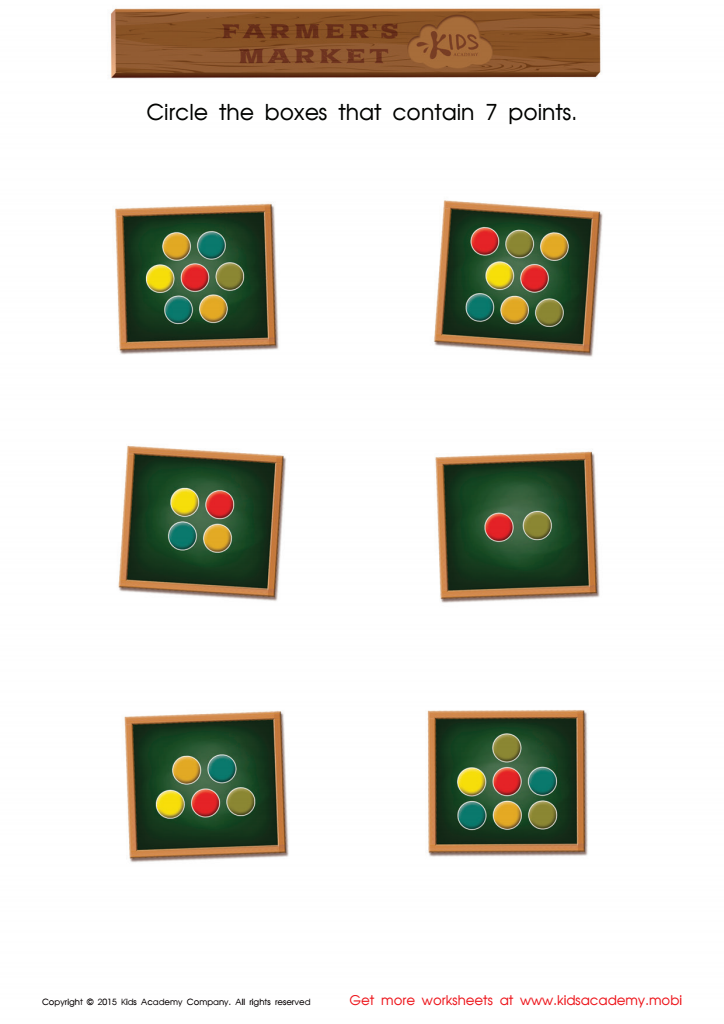
Count and Match Points 7 Math Worksheet
Help your child count and recognize similar numbers by using this fun, colorful worksheet. Guide them to count the dots in each box, then circle those with a total of 7. It's a great way for your child to see how different arrangements lead to the same number.
 Assign to My Students
Count and Match Points 7 Math Worksheet
Worksheet
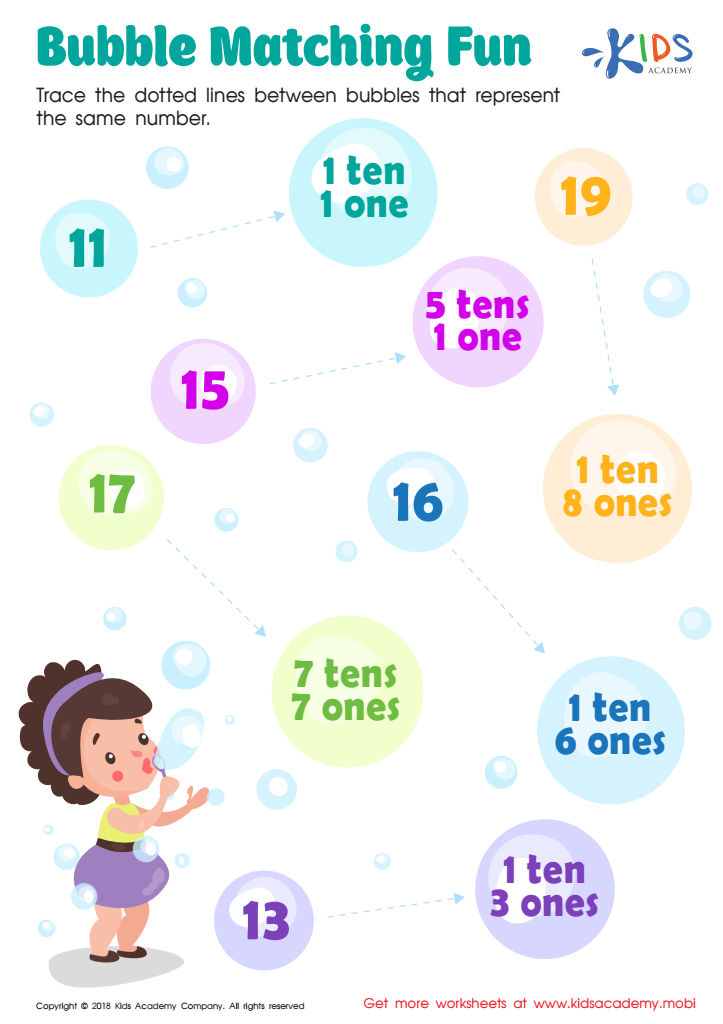
Bubble Matching Fun Worksheet
Try this fun worksheet to stimulate your young one's learning! Test their number matching skills by having them trace the dotted lines between bubbles representing the same numbers. Look through the exercise with your child and watch their understanding of how two numbers can add up to the same value grow!
Bubble Matching Fun Worksheet
Worksheet
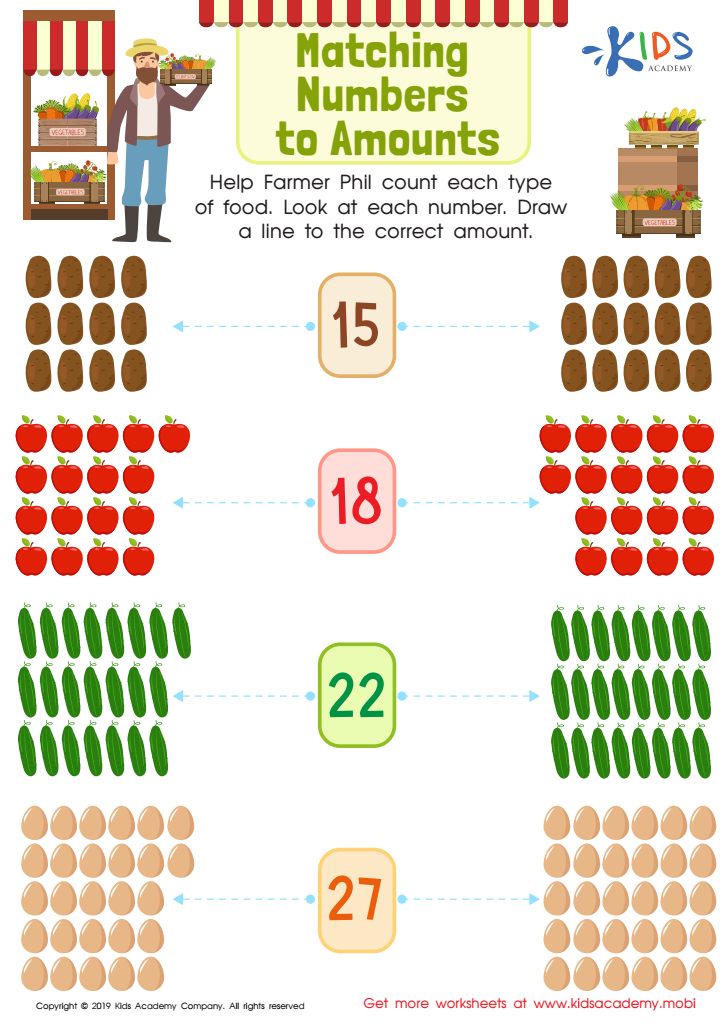
Matching Numbers to Amounts Worksheet
Farmer Phil needs your kid's help! Ensure they know the basics of math such as counting, adding and subtracting. Before beginning, help your child identify and count the different foods in the picture. Then, draw a line to the correct amount.
Matching Numbers to Amounts Worksheet
Worksheet
Join Kids Academy for Free
Who is primarily going to use this learning content?








Matching skills with normal numbers is crucial for children aged 4-7 as it lays the foundation for essential mathematical understanding and cognitive development. At this stage, children are developing their number sense, which involves recognizing, matching, and manipulating numbers. By engaging in activities that focus on matching skills, children improve their ability to identify numbers, count, and begin to understand quantity. This early exposure is vital for fostering confidence in math, which can positively impact their overall attitude towards learning.
Furthermore, developing strong matching and number recognition skills enhances fine motor skills and promotes cognitive abilities such as sorting, classifying, and problem-solving—all key components of a well-rounded education. This groundwork is essential as it prepares them for more complex mathematical concepts in later years, such as addition and subtraction.
For parents and teachers, understanding the importance of these skills encourages them to create engaging, hands-on learning experiences that are both educational and enjoyable. By incorporating games and activities that involve matching numbers, they can make learning fun while ensuring that children are equipped with the foundational skills they need for future academic success. Investing time in these skills ultimately contributes to a child's lifelong learning journey.








