Mental math skills Normal Numbers Worksheets for Ages 4-7
3 filtered results
-
From - To
Unlock your child's potential with our Mental Math Skills Normal Numbers Worksheets, perfect for kids aged 4 to 7. These engaging printables are designed to boost early math skills, including number recognition, counting, and basic arithmetic, through fun and interactive exercises. Tailored to young learners, our worksheets stimulate curiosity and enhance problem-solving abilities in an age-appropriate manner. By incorporating colorful visuals and playful challenges, we make learning math enjoyable and effective. Prepare your child for future academic success with activities that develop essential mental math skills from a young age. Explore our collection today and watch your little one thrive!
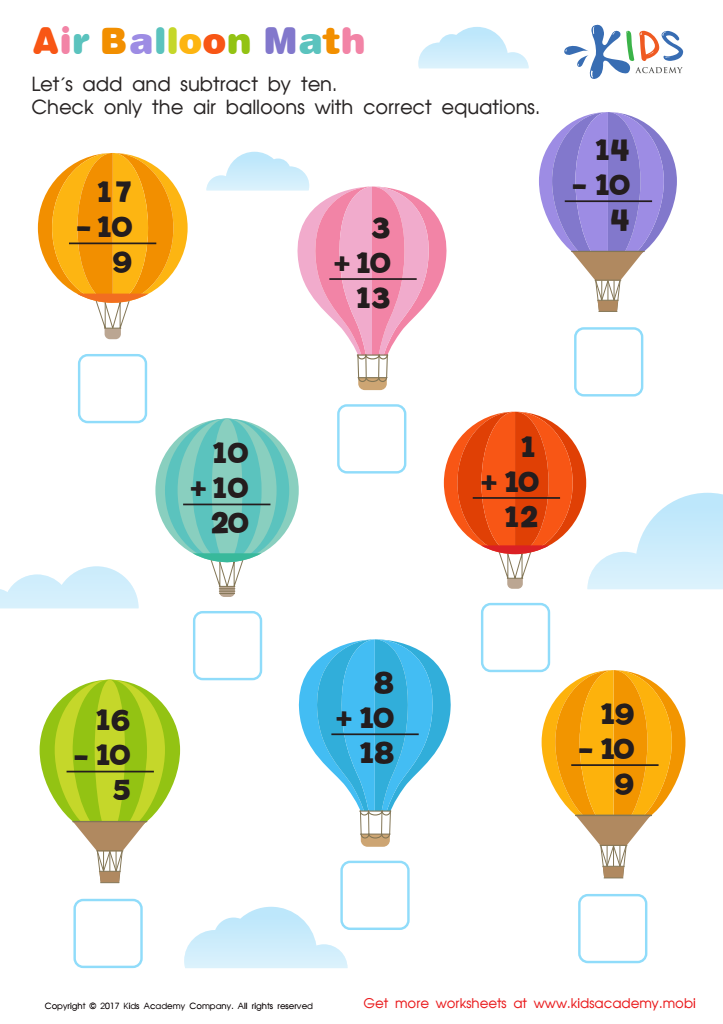
Air Balloon Math Worksheet
 Assign to My Students
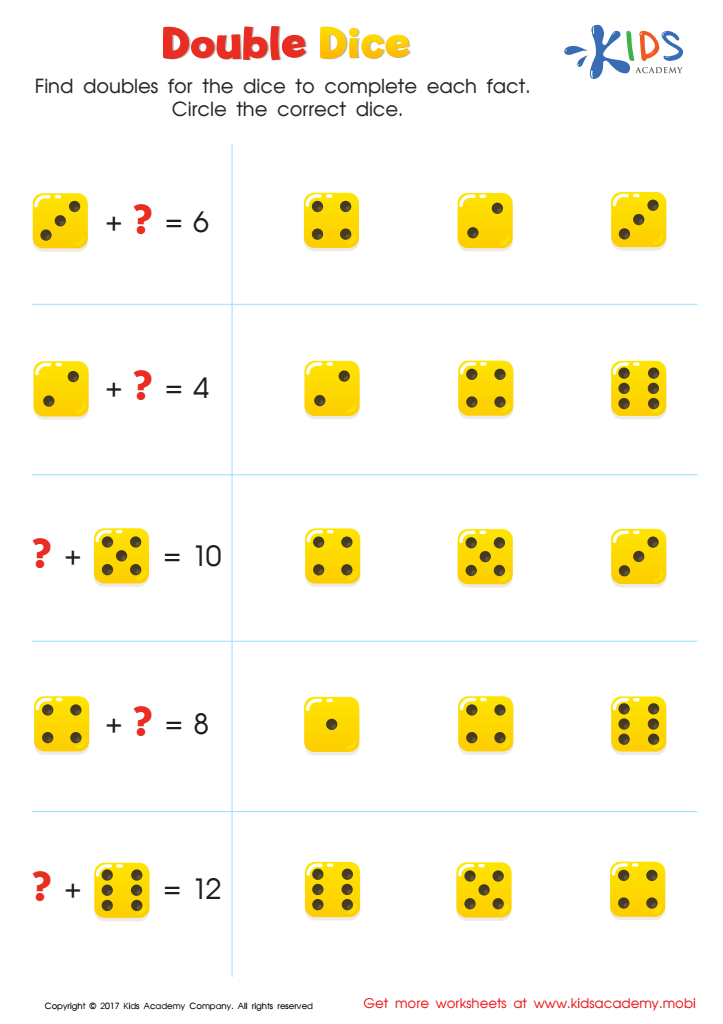
Addition Facts: Double Dice Worksheet
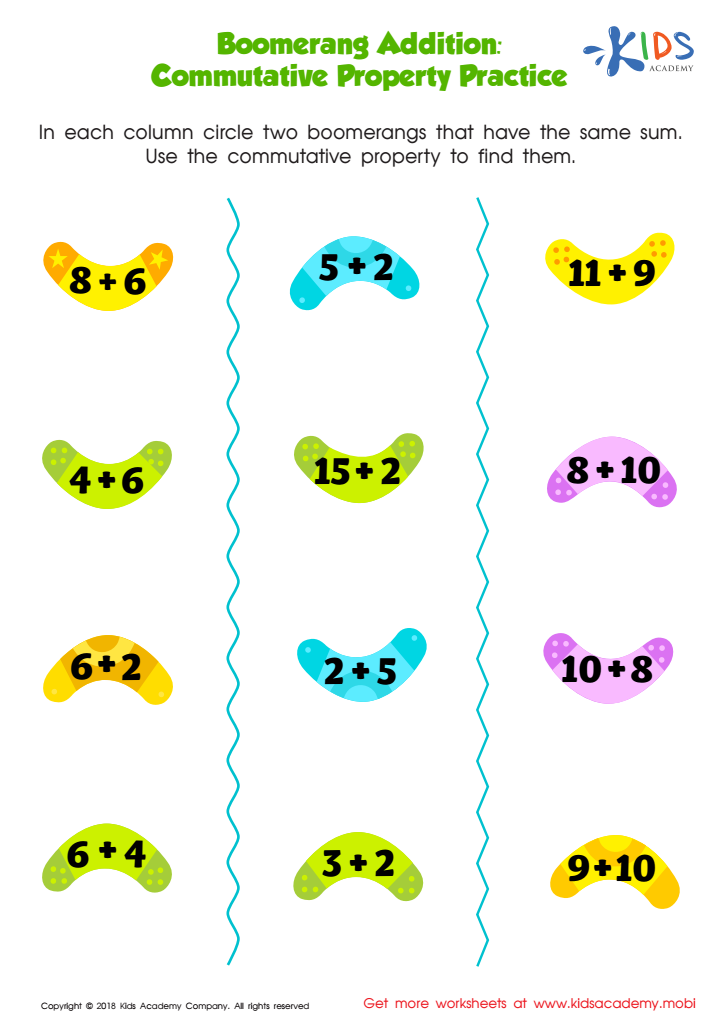
Boomerang Addition Worksheet







%20(1).jpg)
Mental math skills are crucial for young children aged 4-7, as they form the foundation for more complex mathematical concepts and critical cognitive development. At this critical stage, children are highly receptive to learning new skills, making it an ideal time to introduce basic arithmetic operations.
Parents and teachers should care about developing these skills because they promote number sense, which is a deep understanding of numbers and their relationships. When children practice mental math, they enhance their problem-solving abilities and numerical fluency. This not only helps them in academic settings but also equips them with practical skills for everyday tasks, such as counting change or measuring ingredients, fostering independence and confidence.
Moreover, mental math can improve a child's memory and concentration. By doing simple calculations mentally, children learn to focus and retain information longer, which is beneficial across all areas of learning. Early proficiency in mental math also builds a positive attitude towards mathematics, reducing anxiety and making future learning experiences more enjoyable and less intimidating.
Incorporating mental math into daily routines can be a fun and engaging way for parents and teachers to support a child's overall cognitive development. Simple activities like playing counting games, solving puzzles, or even discussing numbers in household chores can make a significant difference in their early education.








