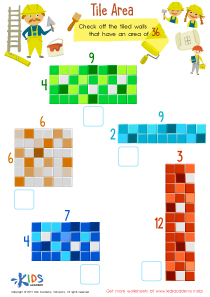
Understanding comparisons Normal Numbers Worksheets for Ages 4-7
3 filtered results
-
From - To
Welcome to our "Understanding Comparisons Normal Numbers Worksheets" designed specifically for children ages 4 to 7! Our engaging worksheets help young learners grasp essential mathematical concepts by comparing numbers in fun and interactive ways. Through colorful visuals and easy-to-follow exercises, kids will enhance their critical thinking and number comprehension skills. Activities include recognizing greater/lesser values, ordering numbers, and using visual aids that support their understanding. Perfect for both classroom and home learning, these worksheets foster foundational math abilities while making learning enjoyable. Explore our resources today and watch your child's confidence in math soar as they master the art of comparison!
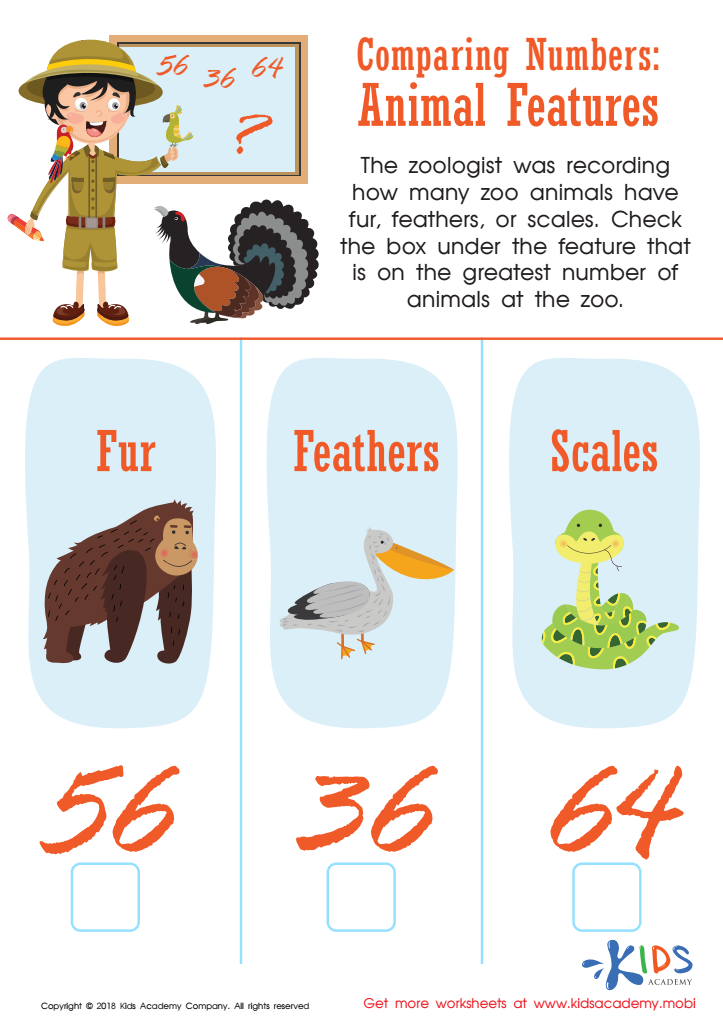
Animal Features Worksheet
 Assign to My Students
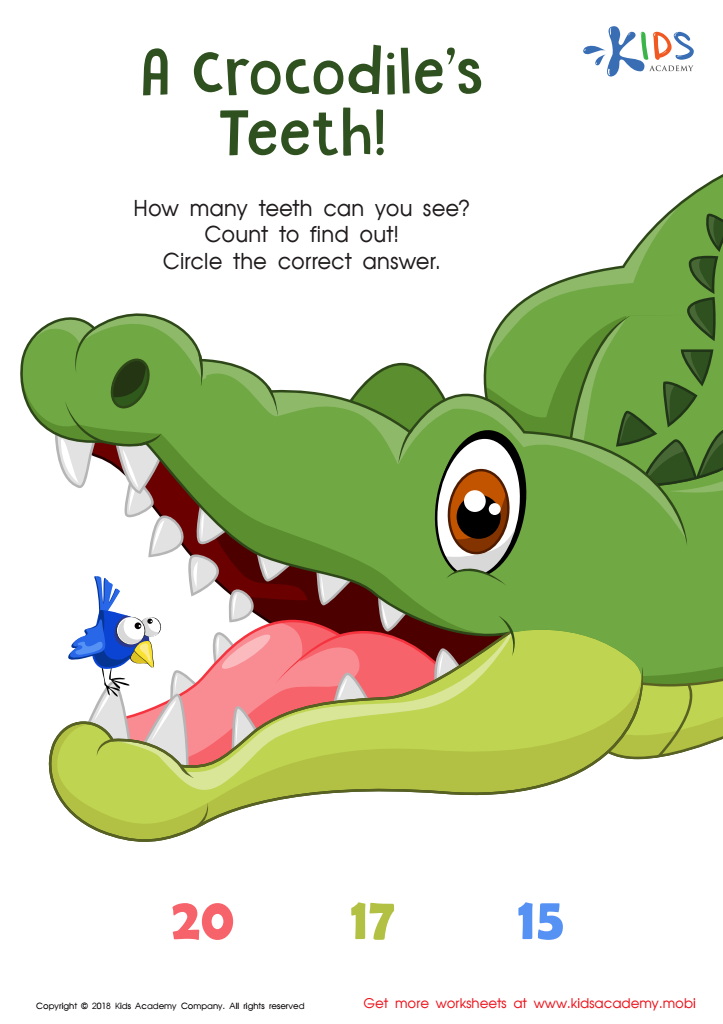
A Crocodile's Teeth Worksheet
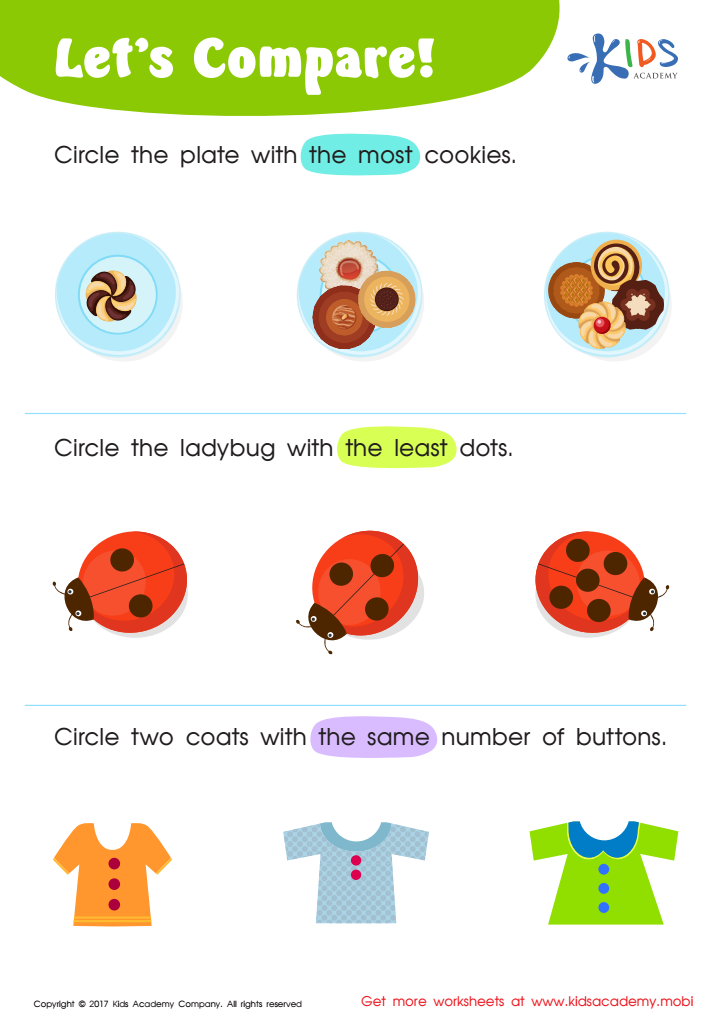
Matching: Classifying Toys by Size Worksheet







Understanding comparisons of normal numbers is crucial for children aged 4 to 7 as it lays the foundation for their mathematical development and critical thinking skills. At this age, children are beginning to explore numbers and develop their ability to quantify and compare different quantities. By emphasizing comparisons, such as more than, less than, and equal to, parents and teachers can help children recognize relationships between numbers, enhancing their numerical literacy.
Developing these skills promotes confidence and problem-solving abilities in young learners, aiding their transition to more complex mathematical concepts in later grades. When children grasp comparisons, they can engage in everyday situations, such as sharing toys or snacks, which reinforces their understanding in a practical context.
Moreover, this early understanding supports cognitive development by encouraging logical reasoning and analytical thinking. It helps children articulate their thought processes, facilitating communication skills essential for collaborative learning. For educators and parents, nurturing these skills can foster a love for math, making learning enjoyable and interactive. Ultimately, emphasizing the importance of understanding comparisons and normal numbers during these formative years can significantly enhance a child's academic trajectory and equip them for lifelong learning in mathematics and beyond.