Animal identification Normal Math Worksheets for Ages 4-7
3 filtered results
-
From - To
Discover our engaging Animal Identification Normal Math Worksheets designed specifically for children ages 4-7! These interactive worksheets combine essential math skills with fun animal themes, making learning enjoyable and effective. Through exciting activities, kids will enhance their counting, sorting, and problem-solving abilities while exploring a variety of animals. Our educational materials foster creativity and critical thinking, ensuring that young learners develop a solid foundation in math concepts. Perfect for home or classroom use, these worksheets cater to different learning styles and help build confidence in young mathematicians. Start your child's learning adventure with our delightful animal-inspired math exercises today!
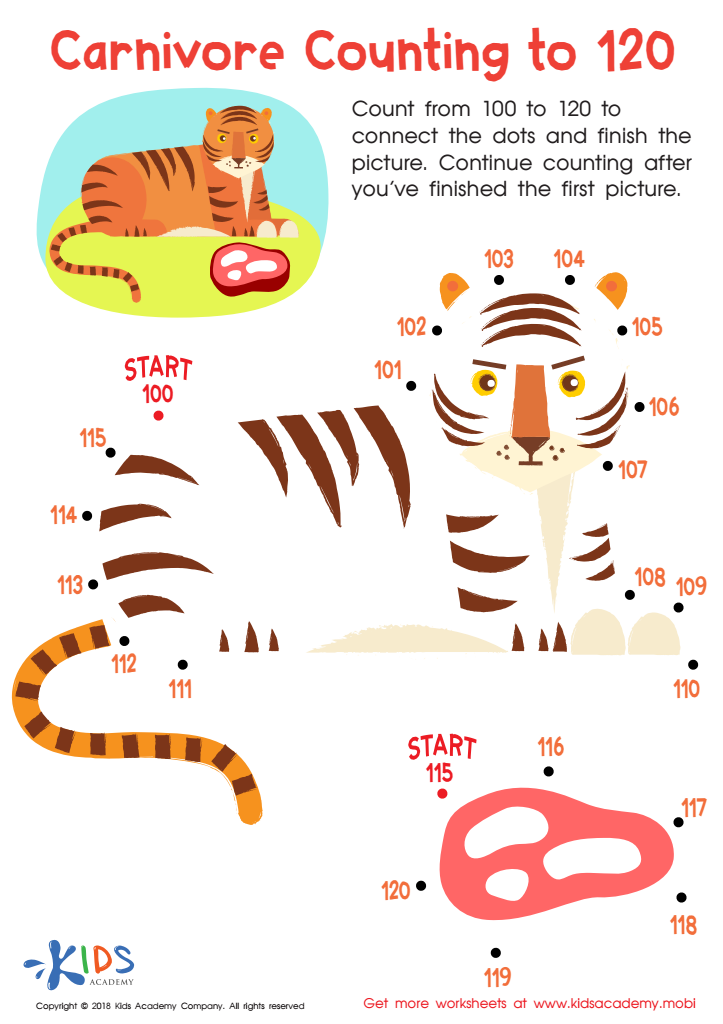
Carnivore Counting to 120 Worksheet
 Assign to My Students
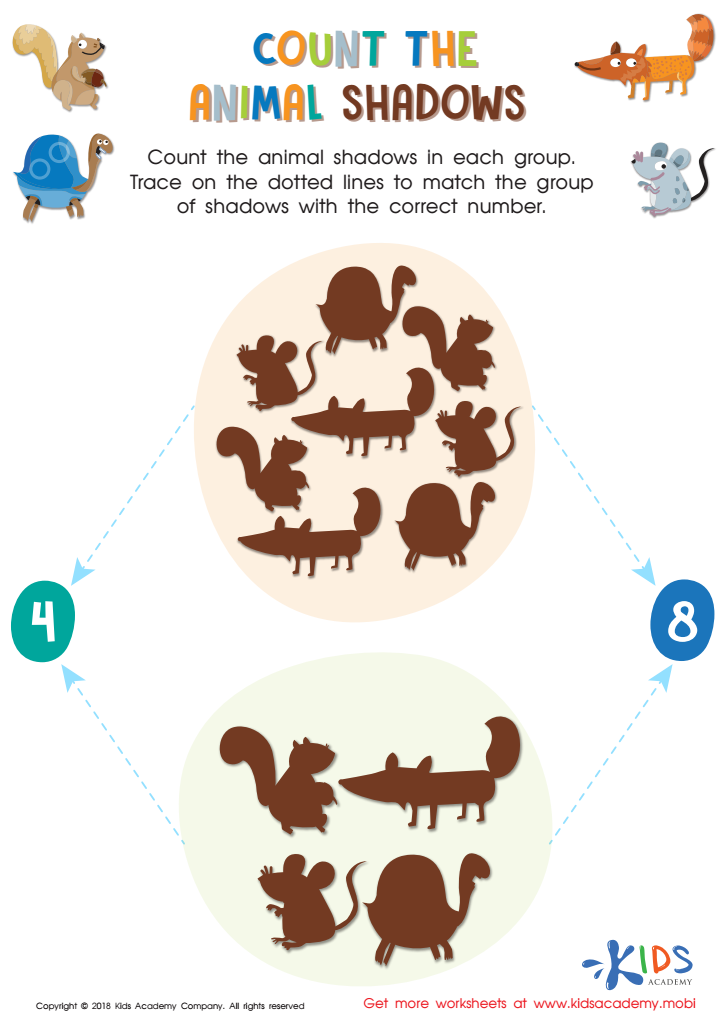
Count the Animal Shadows Worksheet
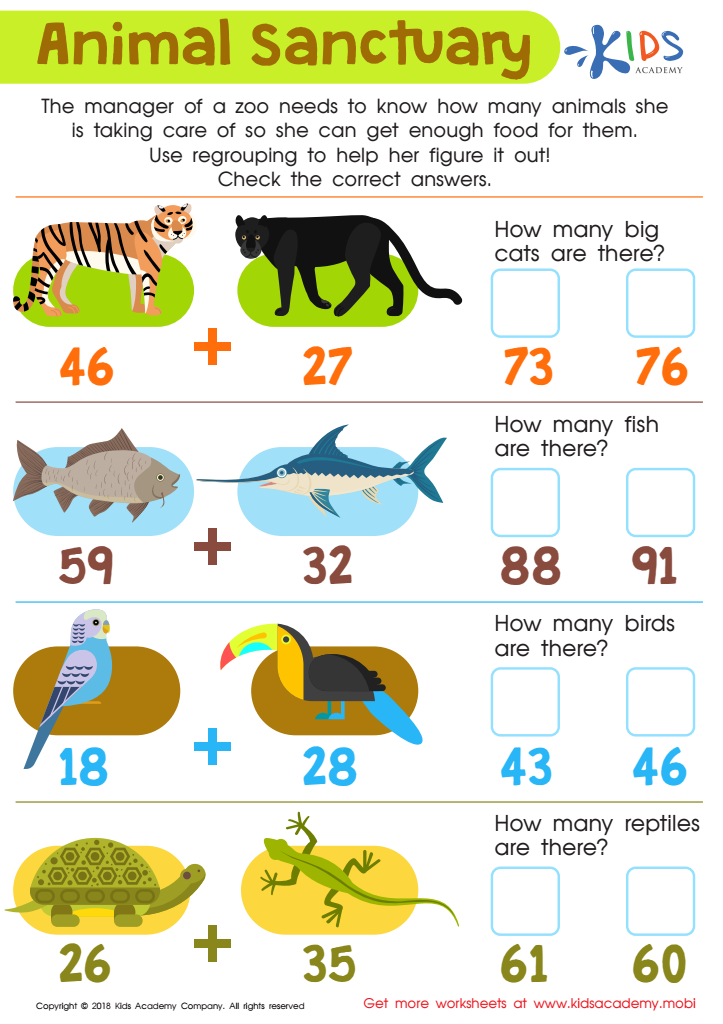
Animal Sanctuary Worksheet








Animal identification in normal math for ages 4-7 is crucial for several reasons. Firstly, it engages young learners in a fun, relatable way, fostering an early love for both math and nature. By employing animals in math lessons, children can visualize numbers, patterns, and quantities through colorful examples and relatable contexts. This can enhance their emotional connectivity to the learning material.
Secondly, learning about animals can boost kids' observational skills and vocabulary. They can identify characteristics, habitats, and behaviors, which deepens their understanding of the natural world while developing critical thinking skills. This can also lead to discussions about conservation and respect for living creatures, promoting empathy and social awareness from an early age.
Additionally, integrating animal themes in math helps build foundational skills, such as counting, sorting, and basic operations, all aligned with developmental milestones. It makes math concepts more tangible and relevant, which is important for this age group. Consequently, parents and teachers should advocate for animal identification in math instruction to create a holistic and engaging learning environment that supports cognitive, emotional, and social development in young children. By doing so, they pave the way for well-rounded, curious, and compassionate individuals.








