
Basic measurement concepts Normal Math Worksheets for Ages 4-7
3 filtered results
Difficulty Level
Grade
Age
-
From - To
Subject
Activity
Standards
Explore our “Basic Measurement Concepts Normal Math Worksheets” designed specifically for children ages 4-7! These engaging worksheets introduce essential measurement skills, helping young learners grasp concepts such as length, weight, and volume in a fun and interactive way. Each worksheet is tailored to align with early learning standards, featuring colorful visuals and age-appropriate tasks that encourage critical thinking and problem-solving. Perfect for parents and educators, these resources support the development of foundational math skills through enjoyable activities. Start your child's journey towards math proficiency with our comprehensive collection of basic measurement worksheets today! Download and print for easy access!
Favorites
With answer key
Interactive
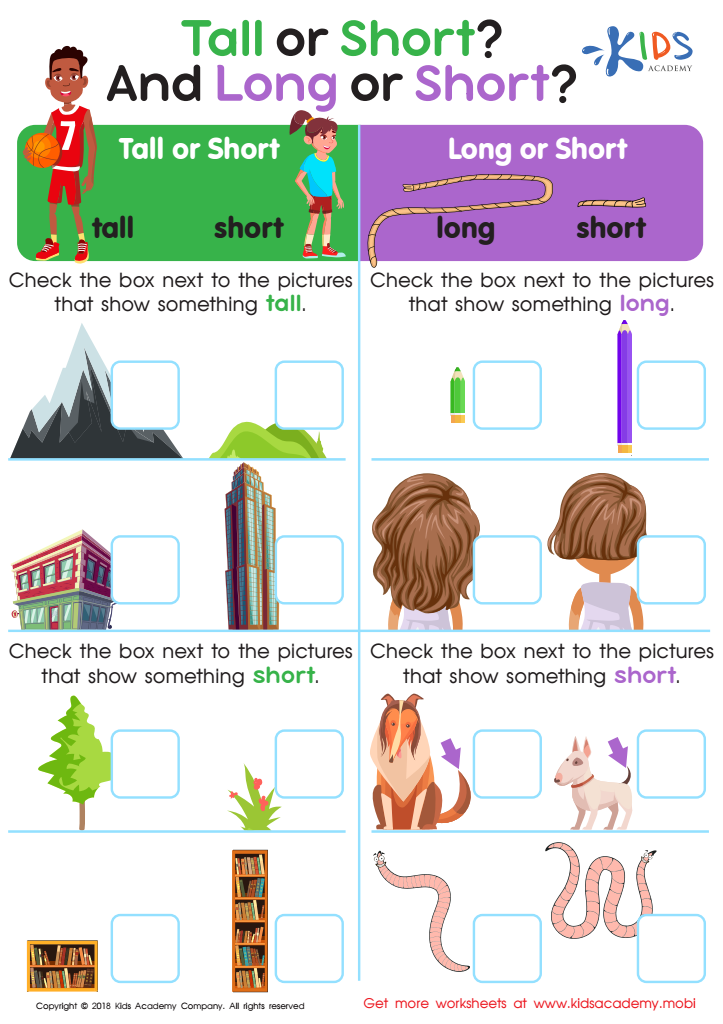
Tall or Short and Long or Short? Worksheet
This worksheet is fun and helpful for kids to understand the difference between height and length. With pictures of familiar objects, they can compare and choose the box with the right answer. This helps them gain skills and a better foundation for future measuring.
 Assign to My Students
Tall or Short and Long or Short? Worksheet
Worksheet
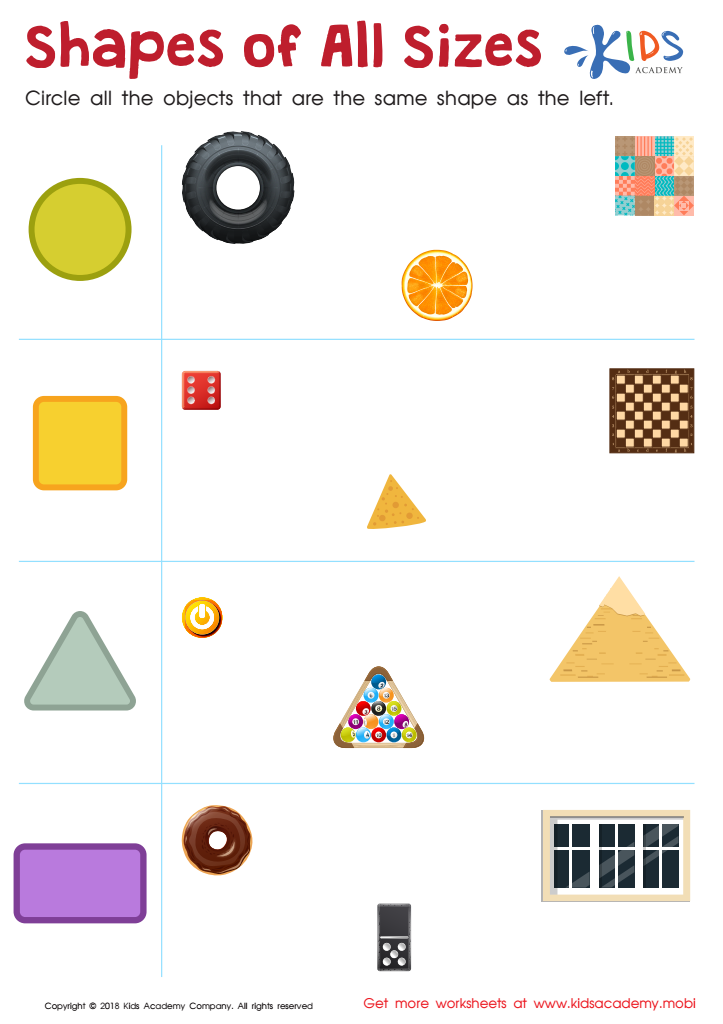
Shapes of All Sizes Worksheet
Students will have fun comparing basic shapes to familiar objects with this worksheet. It's an excellent way to help them recognize similarities in geometric shapes, building strong foundations for understanding congruence and similarity.
Shapes of All Sizes Worksheet
Worksheet
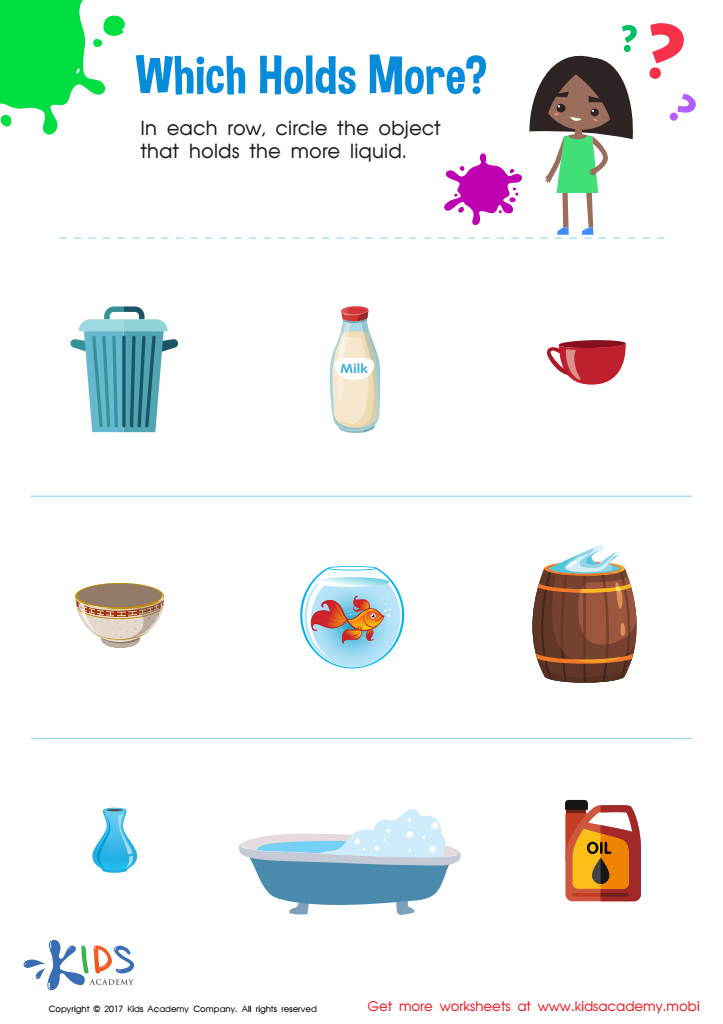
Which Holds More: Capacity Worksheet
Kids learn volume with containers of different capacities, such as mugs and barrels, and understand which can hold more liquid. A fun and interactive way to teach essential math concepts.
Which Holds More: Capacity Worksheet
Worksheet
Join Kids Academy for Free
Who is primarily going to use this learning content?








Basic measurement concepts are crucial for young learners aged 4-7 as they set the groundwork for essential life skills and future academic success in mathematics and beyond. Children at this age are naturally curious, and engaging them with fundamental measurement concepts—like length, weight, volume, and time—encourages exploration and inquiry. When parents and teachers introduce these ideas through interactive activities, they foster a love of learning and problem-solving.
Understanding measurement helps children make sense of their environment. For example, coding activities using rulers or measuring cups introduces them to comparison and estimation, which are key academic skills. Moreover, these experiences enhance critical thinking, as children learn to ask questions, make predictions, and analyze results.
Incorporating basic measurement concepts into daily life makes math relatable. Parents can encourage measurement during cooking, shopping, or even during play. This promotes practical math skills and helps children connect classroom lessons to real-world applications. Ultimately, when parents and teachers prioritize measuring skills, they equip children with the tools needed for logical reasoning, collaboration, and confident decision-making, which will serve them well throughout their education and in daily life.








