Understanding prepositions Normal Math Worksheets for Ages 4-7
3 filtered results
-
From - To
Discover our "Understanding Prepositions" math worksheets designed for kids aged 4-7! These engaging activities seamlessly blend math and positional language, helping young learners grasp foundational concepts while improving their understanding of prepositions. Each worksheet encourages placement and direction comprehension, enhancing spatial reasoning and vocabulary. With visually appealing graphics and interactive tasks, children will enjoy practicing these crucial skills. Perfect for both classroom and home use, our worksheets support holistic learning through fun and practical exercises. Elevate your child's math readiness and linguistic abilities by exploring our well-crafted resources today at Kids Academy!
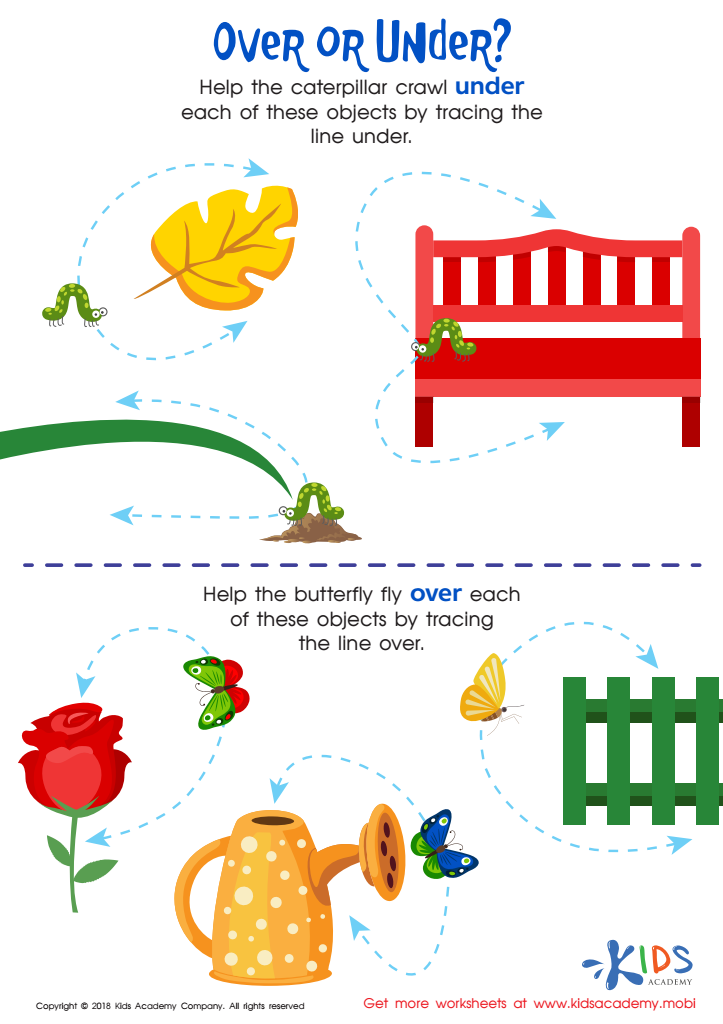
Over or Under? Worksheet
 Assign to My Students
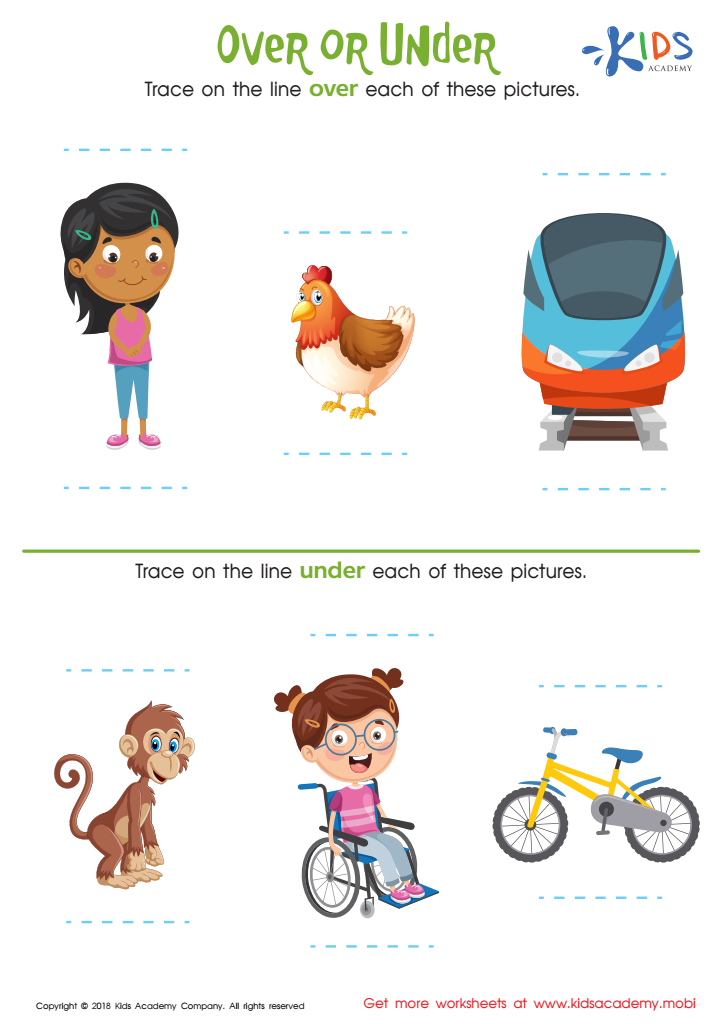
Over or Under Worksheet
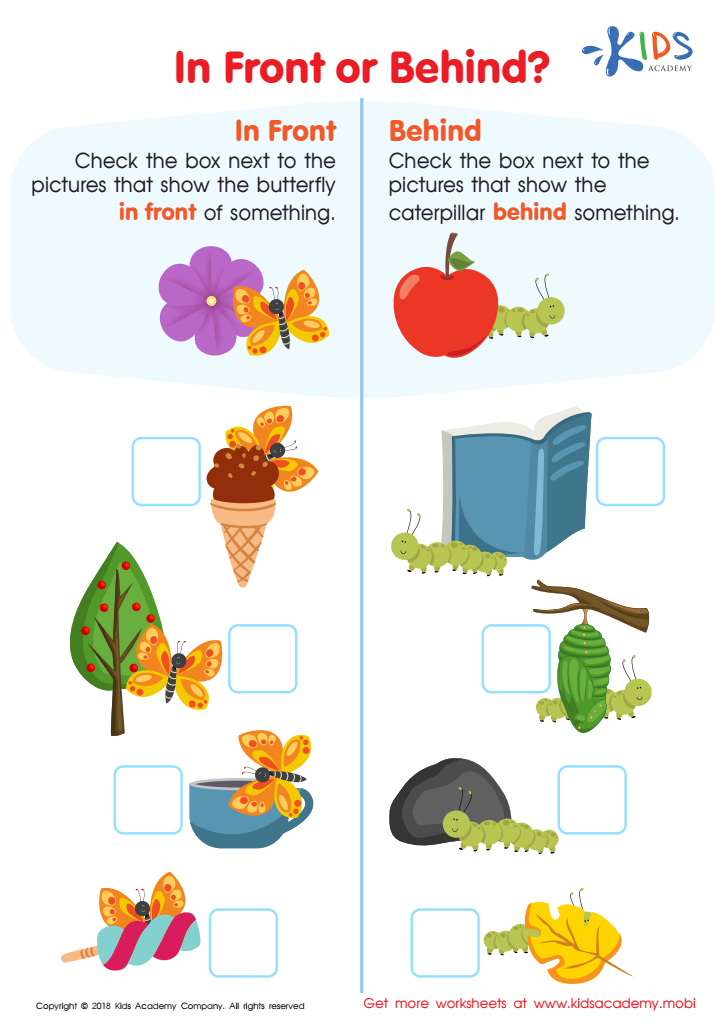
In Front or Behind Worksheet








Understanding prepositions and mastering basic math concepts at an early age are fundamental for children's cognitive and academic development. For young learners aged 4-7, these skills lay the groundwork for more complex language and mathematical reasoning that they will encounter later in their education.
Prepositions are essential for language development, enabling children to understand and describe spatial relationships and directions, which enriches their ability to communicate effectively. For example, terms like "in," "on," "under," and "beside" help children follow instructions, describe the world around them, and build sentences that are more structurally correct. This foundational skill is critical for reading comprehension and effective communication, impacting their overall academic success.
Similarly, basic math skills such as counting, recognizing numbers, understanding simple addition and subtraction, and grasping concepts like "more than" or "less than" form the bedrock of mathematical literacy. Early math skills are strong predictors of later academic outcomes, as they foster problem-solving and logical thinking abilities. Engaging young children in playful and meaningful mathematical activities helps them develop a positive attitude toward math, essential for motivation and sustained learning.
Therefore, parents and teachers should devote attention to these areas to support balanced cognitive development, ensuring children have the necessary tools to succeed both in school and in their daily lives.








