Number Sequencing Normal Numbers up to 100 Worksheets for Ages 4-7
3 filtered results
-
From - To
Explore our engaging "Number Sequencing Normal Numbers up to 100 Worksheets" specially designed for children ages 4-7. These worksheets provide a fun and interactive way for young learners to practice their number sequencing skills, helping them understand the order of numbers up to 100. By using these resources, children will improve their counting abilities while developing critical early math skills. Each worksheet features colorful designs and age-appropriate activities to maintain interest and promote learning. Ideal for home or classroom use, our number sequencing exercises support creativity and cognitive development, setting a strong foundation for future math success. Start your learning journey today!
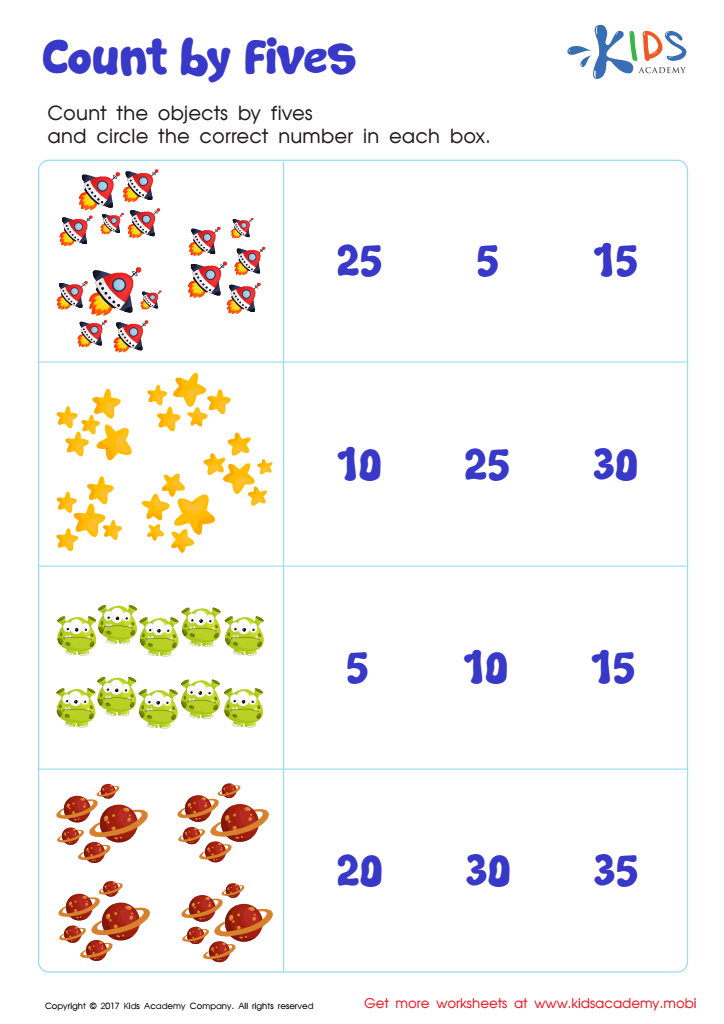
Skip Counting by 5s: Space Math Printable
 Assign to My Students
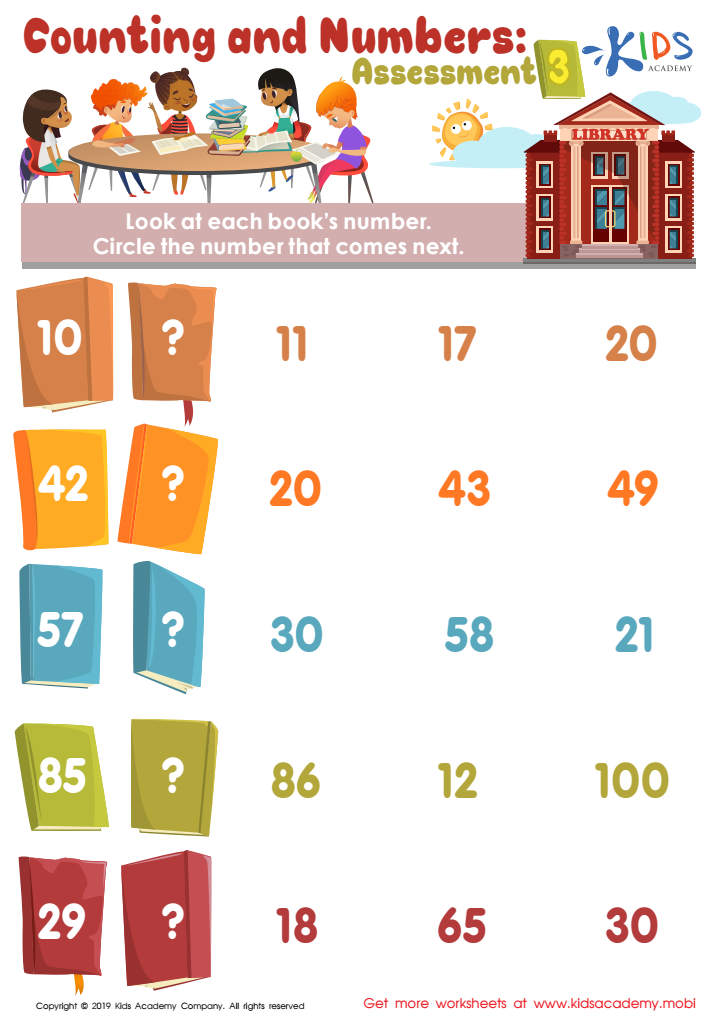
Counting and Numbers: Assessment Worksheet
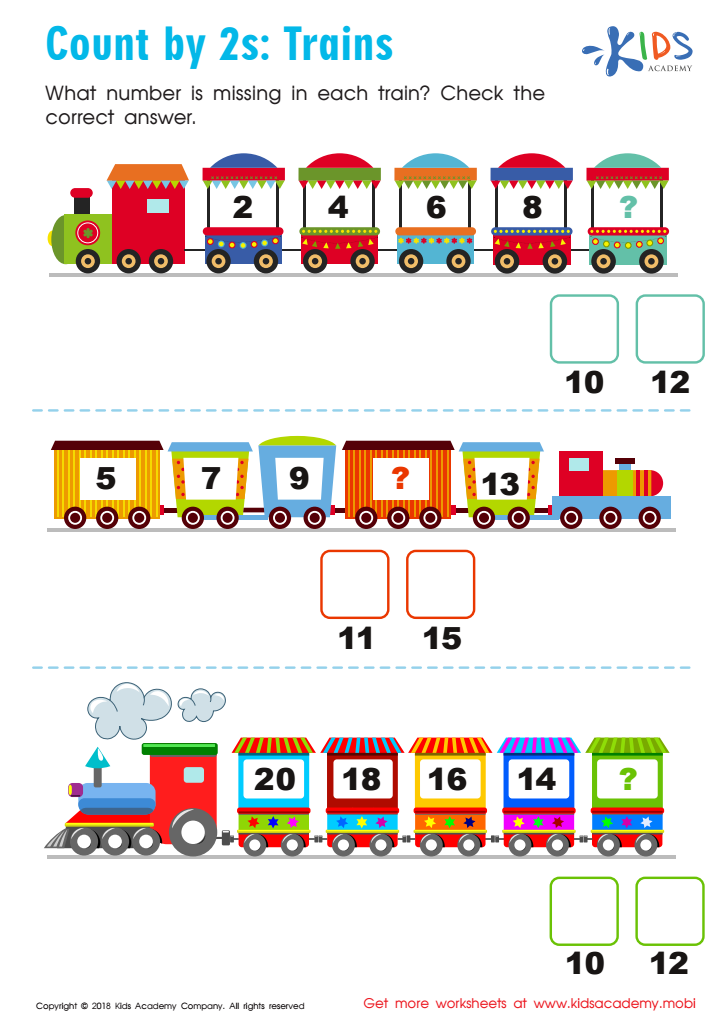
Count by 2's: Trains Worksheet





%20(1).jpg)


Number sequencing is a foundational skill crucial for young learners, especially for children aged 4-7. Understanding how to sequence numbers up to 100 lays the groundwork for essential mathematical concepts such as addition, subtraction, and patterns.
For parents and teachers, supporting children's grasp of number sequencing can enhance their cognitive development. It fosters critical thinking, problem-solving, and even memory retention. Recognizing the order of numbers helps children understand length, weight, and time, which are vital for their day-to-day experiences.
Moreover, mastering number sequencing encourages a sense of confidence and competence in math. When children can confidently count and sequence, they are more likely to engage in mathematical activities, setting a positive attitude towards learning.
Additionally, sequencing lays the foundation for higher-level skills such as skip counting and place value understanding. As students progress in their education, these skills become increasingly important, linking to data analysis and more complex mathematical operations.
Ultimately, the ability to sequence numbers enriches children’s overall academic journey, propelling them toward success not only in mathematics but across disciplines. By emphasizing number sequencing early on, both parents and teachers play a crucial role in fostering robust learning pathways for young minds.