Sorting skills Normal Sorting Worksheets for Ages 4-7
5 filtered results
-
From - To
Enhance your child's sorting skills with our engaging Normal Sorting Worksheets designed for ages 4-7. These worksheets provide an interactive way for young learners to categorize objects based on various attributes, such as colors, shapes, and sizes. With fun illustrations and age-appropriate activities, students will develop critical thinking and problem-solving abilities while improving their fine motor skills. Ideal for home or classroom use, our worksheets encourage independent learning and can easily be integrated into any educational routine. Help your child build a strong foundation in sorting and classification with these educational resources—perfect for every aspiring little learner!
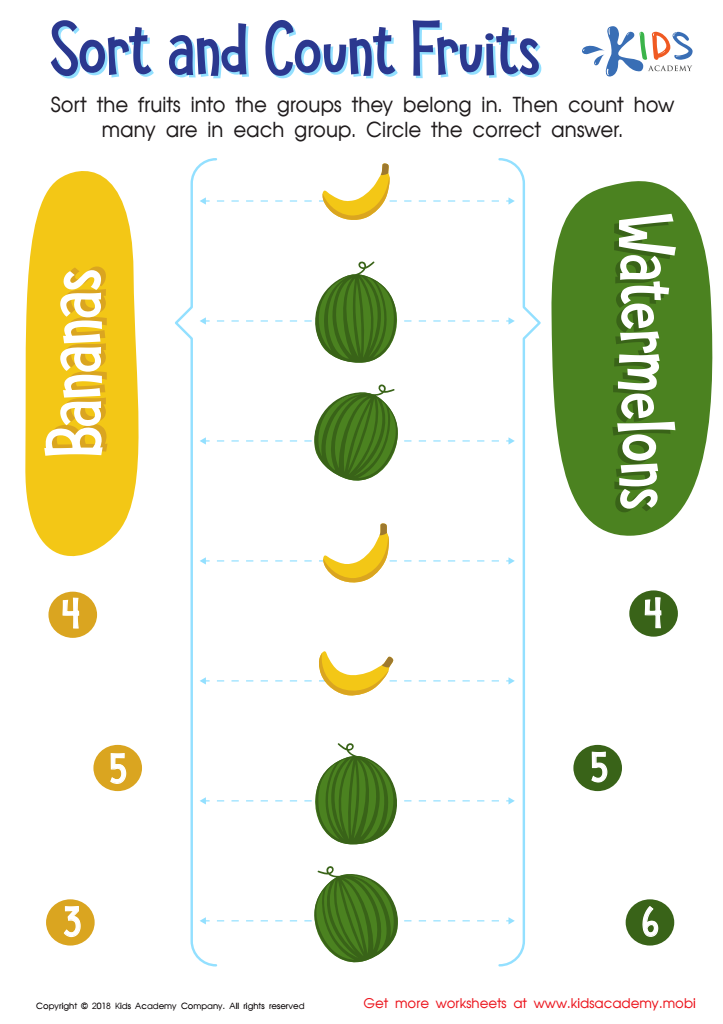
Sort and Count Fruits Worksheet
 Assign to My Students
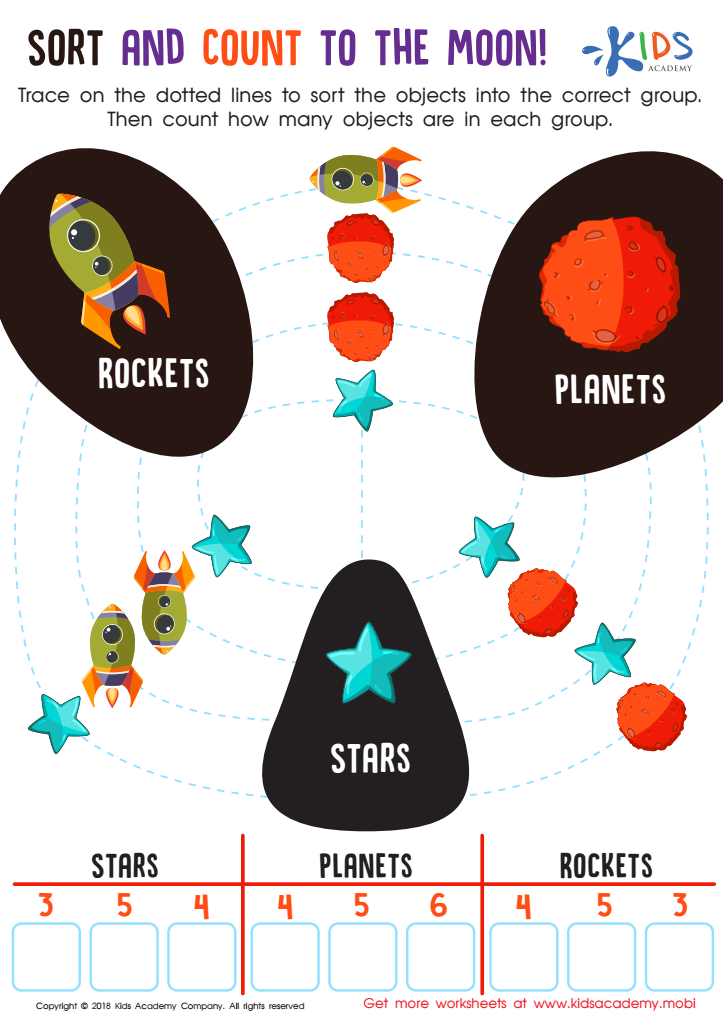
Sort and Count to the Moon Worksheet
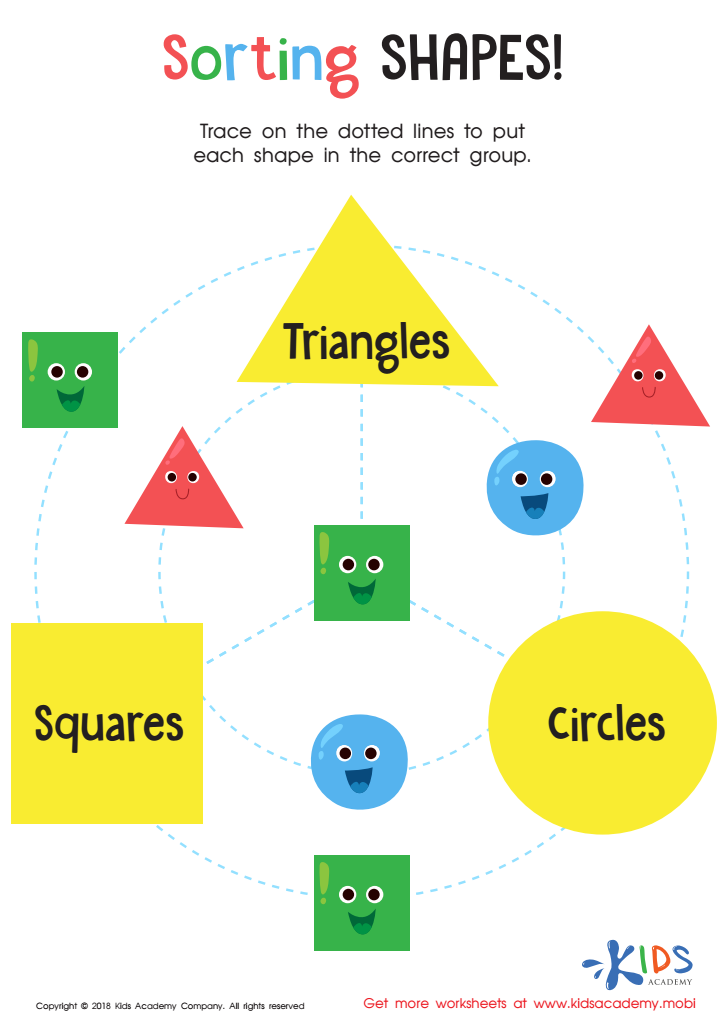
Sorting Shapes - Part 3 Worksheet
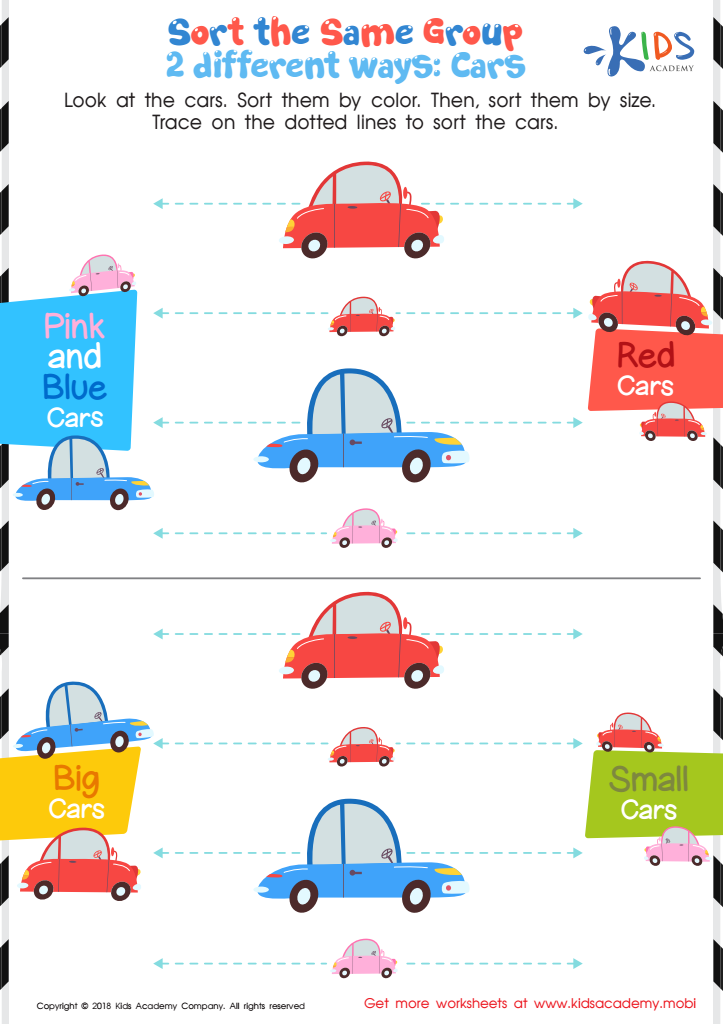
Sort the Same Group 2 Different Ways: Cars Worksheet
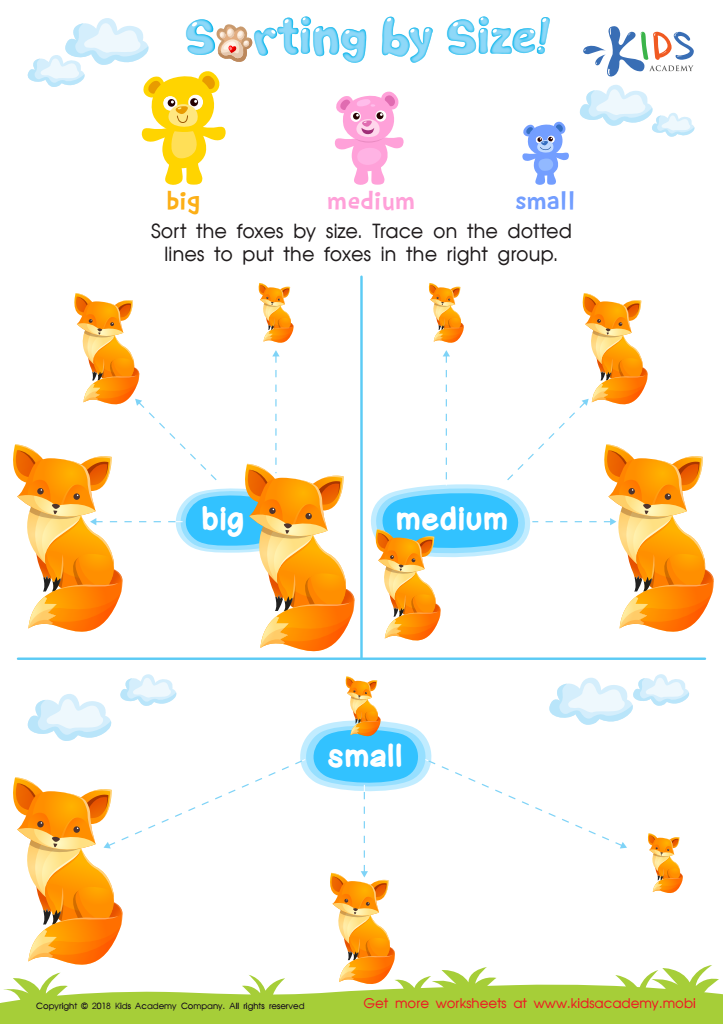
Sorting by Size Worksheet








Sorting skills are foundational for young learners aged 4-7, as they play a crucial role in cognitive and social development. At this age, children refine their ability to categorize objects based on characteristics like shape, color, size, or function, helping them develop critical thinking and problem-solving skills. Teachers and parents should prioritize normal sorting activities, as these engage children in hands-on learning while promoting observation and analytical skills.
Sorting helps children make sense of the world around them, recognizing patterns which can later aid in mathematics and science. For example, understanding how to group items or identify similarities and differences sets the stage for future skills like classification and ranking. Additionally, sorting enhances language development, as children learn new vocabulary associated with categories and characteristics.
Furthermore, sorting activities encourage social interactions when children work in groups, fostering collaboration and communication skills. This aspect of play is vital as it nurtures a sense of belonging and community. Ultimately, promoting sorting skills in early education not only enriches cognitive abilities but also prepares children for more complex academic tasks, ensuring they transition smoothly as they progress in their educational journey.








