Cognitive Development Normal Building Vocabulary Worksheets for Ages 4-7
6 filtered results
-
From - To
Discover our engaging "Cognitive Development Normal Building Vocabulary Worksheets" designed for children ages 4-7. These expertly crafted worksheets focus on enhancing vocabulary while promoting cognitive skills essential for early literacy. Children will explore words through fun exercises that challenge their thinking and comprehension abilities. Ideal for parents and educators, these resources foster independent learning and reinforce classroom instruction. Each worksheet encourages creativity and critical thinking, ensuring that your little ones build a strong linguistic foundation. Explore our collection to support your child's growth in language and cognitive development while making learning enjoyable! Perfect for at-home practice or classroom enrichment.
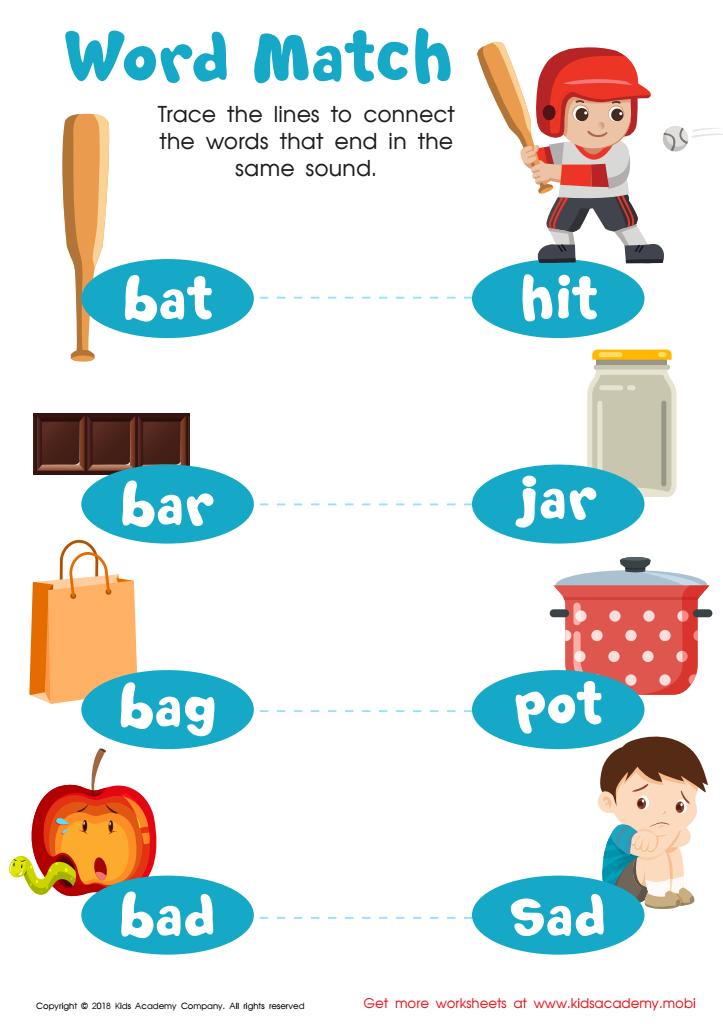
Word Match Reading Worksheet
 Assign to My Students











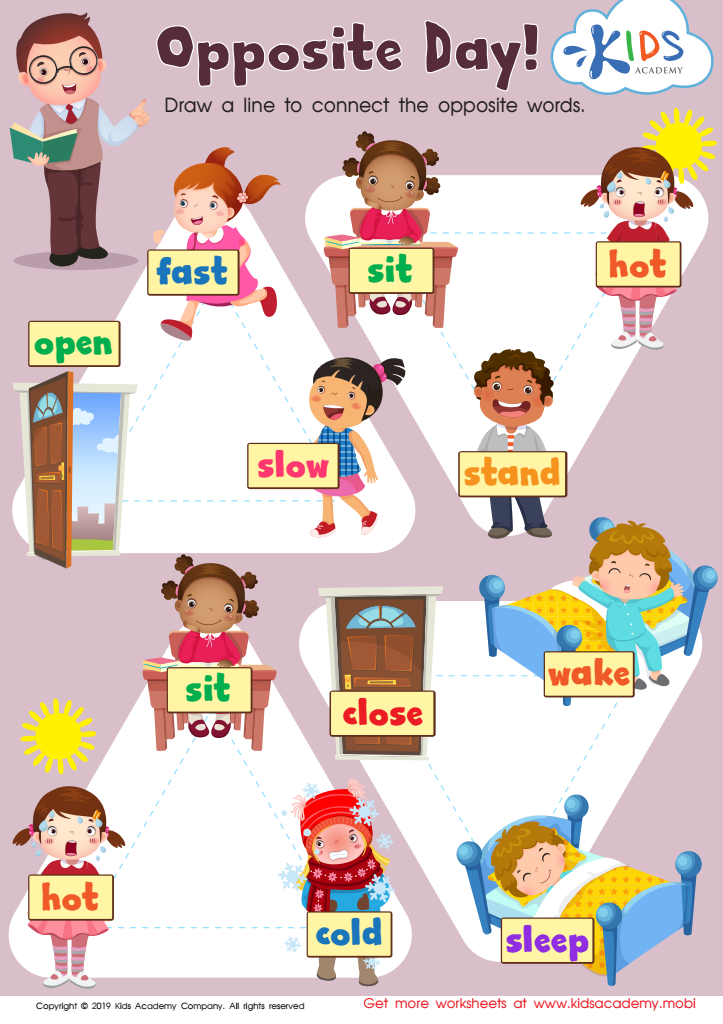
Opposite Day Worksheet
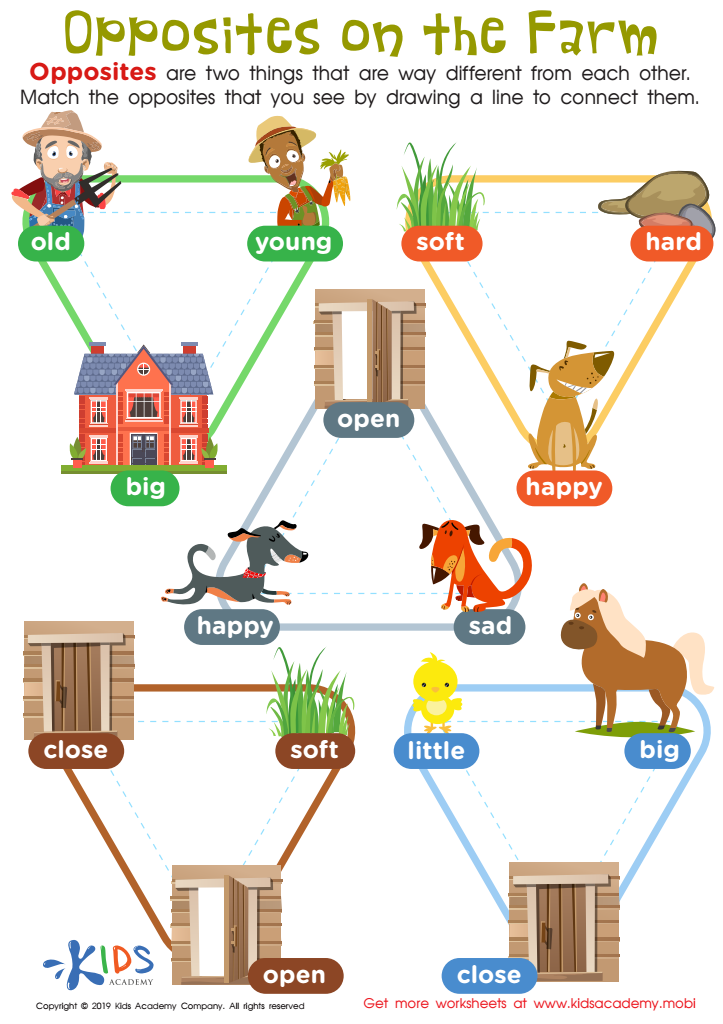
Opposites on the Farm Worksheet
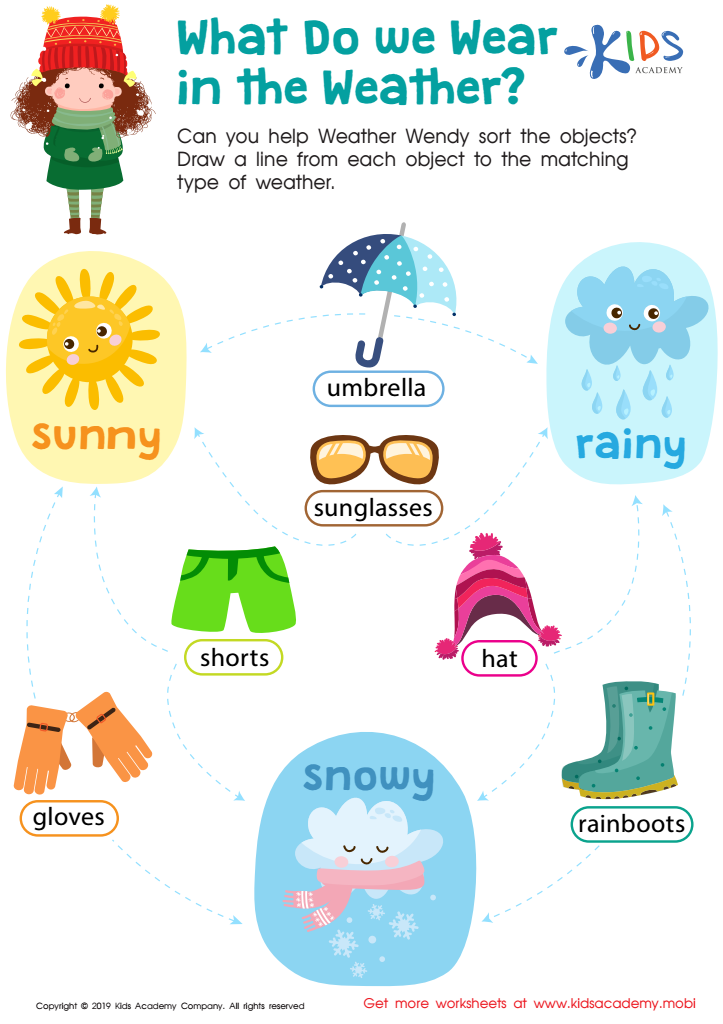
What Do We Wear in the Weather? Worksheet
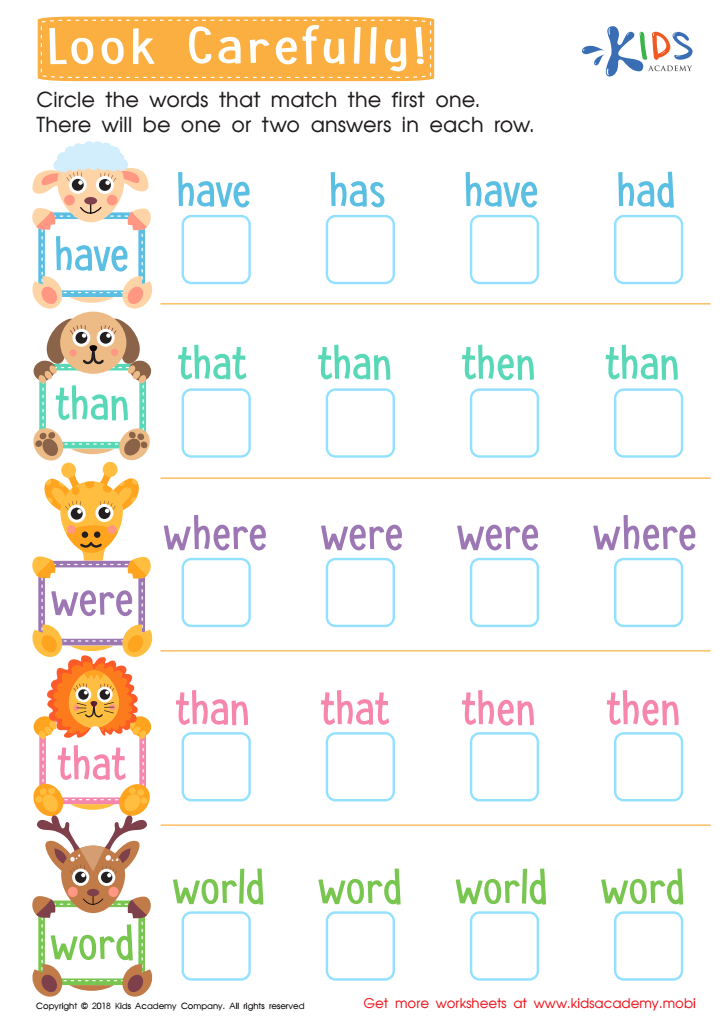
Look Carefully Worksheet
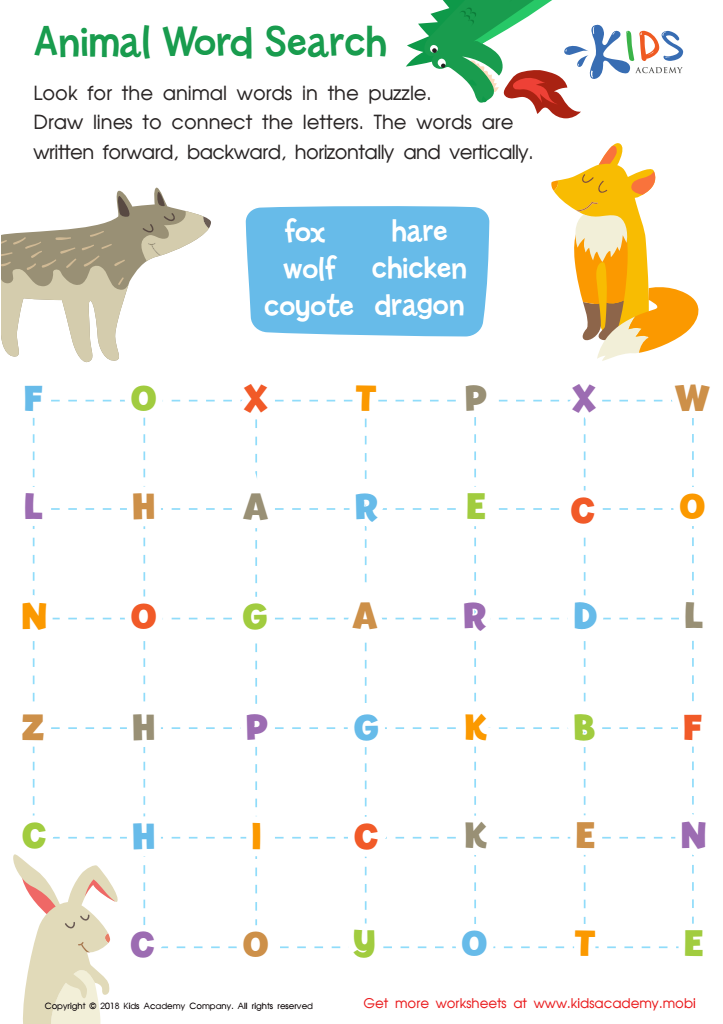
Animal Word Search Worksheet








Cognitive development in early childhood, particularly between the ages of 4-7, is crucial for building a strong foundation for lifelong learning. During this period, children are rapidly expanding their vocabulary, which is vital for effective communication, social interaction, and academic success. Parents and teachers should prioritize vocabulary development because it directly influences a child's ability to express thoughts, understand instructions, and engage in discussions.
A rich vocabulary not only aids comprehension but also enhances critical thinking skills, as children learn to categorize, compare, and analyze different concepts. By fostering a robust vocabulary, adults can encourage imaginative play, storytelling, and comprehension of complex ideas, thereby promoting cognitive flexibility and creativity.
Additionally, strong language skills contribute to increased self-confidence, making children more likely to participate in classroom activities and social gatherings. This confidence can help diminish anxiety around learning and social engagement.
Moreover, parental and teacher support in vocabulary building can bridge vocabulary gaps often seen in diverse socioeconomic backgrounds, ensuring all children have the necessary tools for success. Therefore, actively participating in language-rich activities—such as reading together, engaging in conversations, and exploring new words—should be a shared priority for parents and teachers devoted to nurturing young minds.








